Gold and Silver rally even as a December Fed hike is all but certain

Gold and Silver have been falling since January because traders expect higher US interest rates, and the Federal Reserve's December 9 increase is part of that. The bounce will last only if the Fed signals fewer increases in 2027 than traders have bet on.
Gold (XAU/USD) is about 35% below the record near $5,600 an ounce it set in late January, and Silver (XAG/USD) is about 64% below its own record above $120. Over those ten months, the Federal Reserve (Fed) went from planning interest rate cuts to raising rates. It raised rates in September for the first time since 2023, and traders are nearly certain it will raise them again on December 9.
Since Wednesday, both metals have been rising anyway. Higher rates are supposed to hurt Gold and Silver because neither pays interest, while a US Treasury bill, a short-term loan to the government, does. That reasoning applies to surprises, though, and this one has been on the calendar since September. Whether the bounce lasts depends on the part nobody knows yet: how many more increases the Fed signals for 2027.
The Fed pointed to December back in September
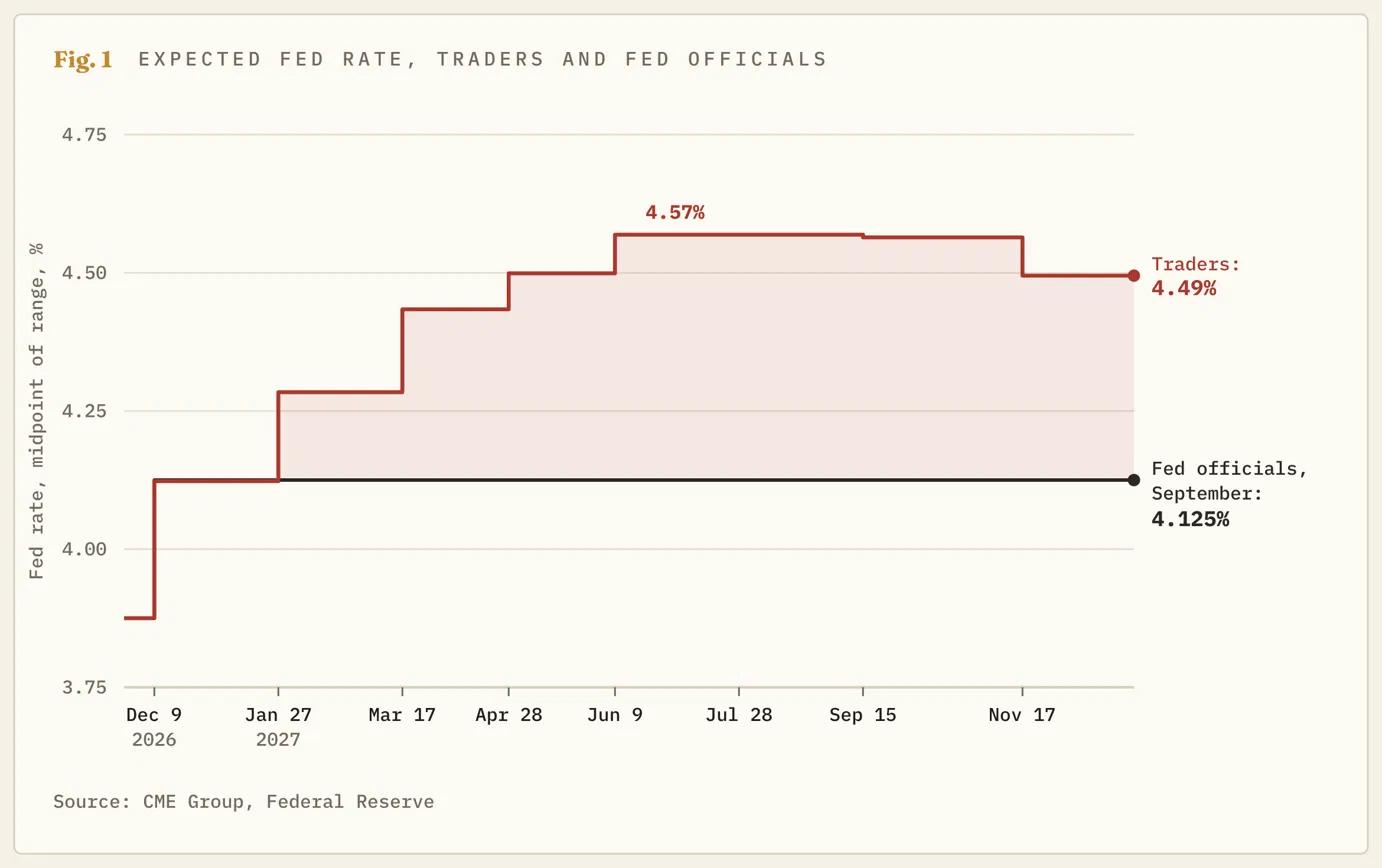
The Fed raised its rate to 3.75%-4.00% on September 16, and its officials published their projections for where the rate goes next at the same meeting. The middle projection showed one more quarter-point increase before the end of the year, and the December 9 meeting is the last one left. CME's FedWatch tool, which turns traders' bets in the futures market into odds, puts that increase at 99.2%.
With odds like that, the increase can't tell traders anything they don't already know. Prices move when expectations change, and an event that is 99.2% expected leaves very little room for them to change. Anyone who wanted to sell Gold or Silver because of a December increase has had ten weeks to get round to it.
Over those ten weeks, the number of increases traders expect after December did change. In September, the Fed's middle projection had the rate at the same level at the end of 2027 as at the end of 2026, which means no increases at all next year. FedWatch now shows a 63.5% chance of a second increase in January and a 77.5% chance that three have been delivered by June, taking the rate to 4.50%-4.75%. Those two extra increases, added since September, are the likeliest reason both metals kept falling through the autumn.
September went the same way
The September increase was just as widely expected, and investors treated it the same way. They put close to $2 billion into two US-listed Gold funds over five trading days in early September, and both metals rose as the meeting approached. Gold fell by more than 1% after the announcement and made that back the next day.
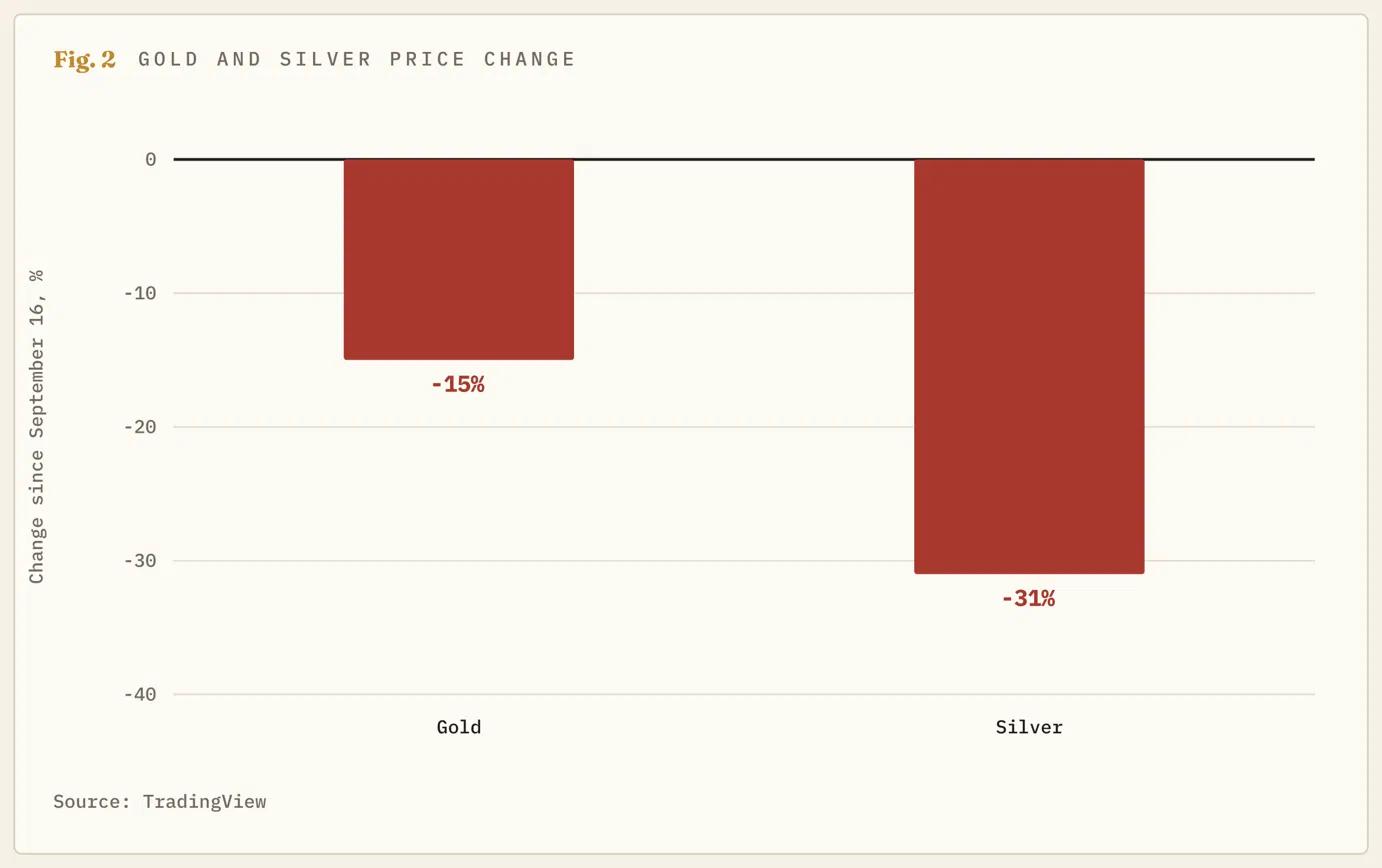
From there, Gold held steady through the end of September and then fell through October and most of November. It is now about 15% below where it was on the day of the September decision, and Silver is about 31% below. Buying ahead of a well-flagged increase worked in September for roughly two weeks.
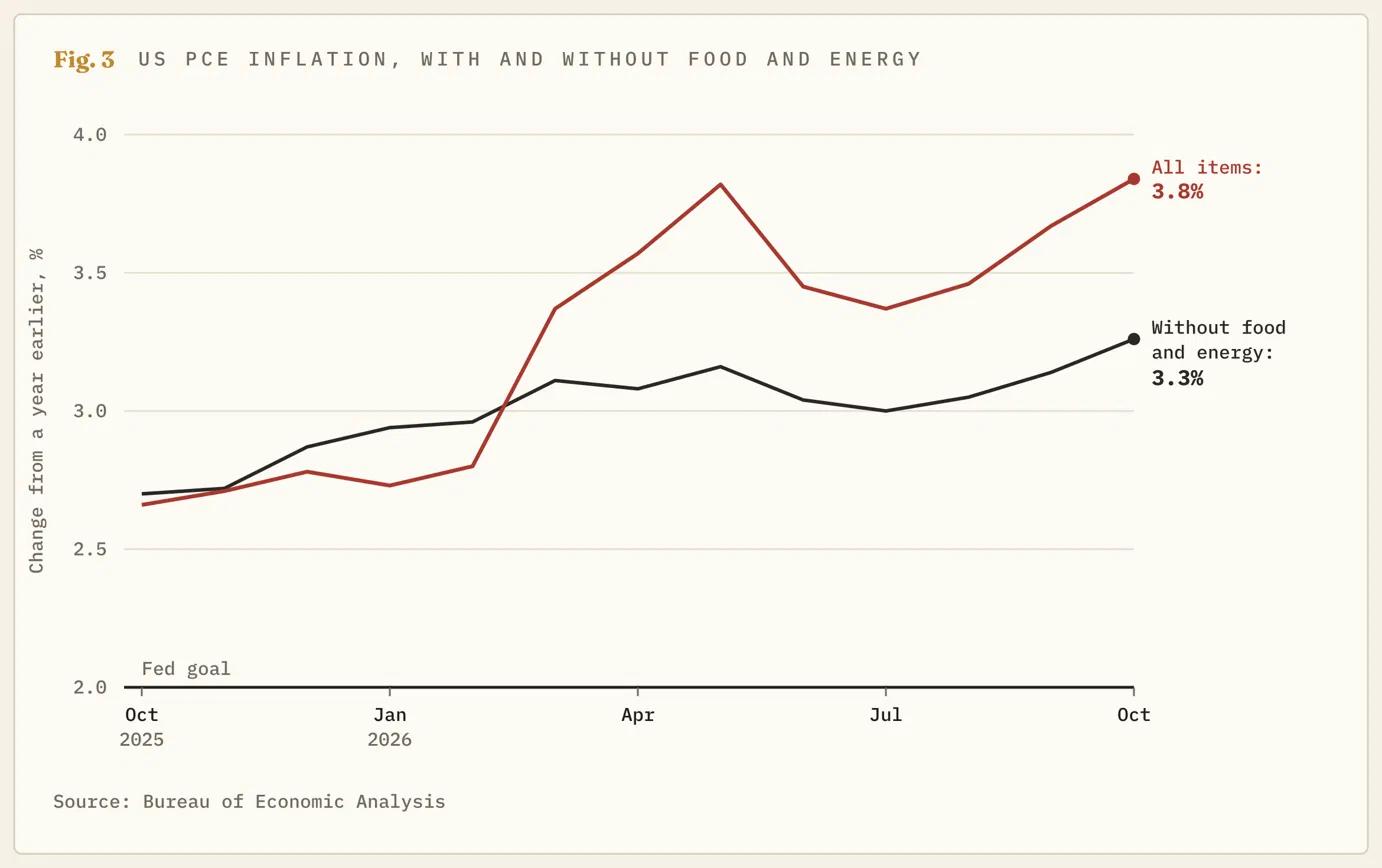
In between, the inflation numbers kept coming in high. The Personal Consumption Expenditures Price Index (PCE), the measure behind the Fed's 2% goal, rose 3.8% annually to October, and 3.3% without food and energy, against a forecast of 3.2%. Each report like that gave traders a reason to add another increase to 2027, and every added increase raises what a Treasury bill pays against a bar of metal that pays nothing. Gold and Silver got through the September increase unharmed, then lost ground to what traders learned afterward.
Most of the buyers are sellers buying back
The bounce began on Wednesday, the day the October PCE came in above forecast, and Gold touched its lowest in more than a year. Bad news for the metals arrived, and the prices stopped falling, which usually means the people who wanted to sell had already done it.
In that case, the first buyers tend to be traders who had bet on further falls. They make money by selling metal they don't own and buying it back cheaper, so taking a profit on that bet means buying. Funds have been adding to bets against Silver since October, according to the US futures regulator's figures. Several analysts have attributed the move since Wednesday to those bets being bought back in a holiday market with few traders, and with no news about Silver itself behind it.
For now, the size of the bounce fits that explanation better than a change of mind among investors. Silver has risen more than twice as far as Gold since Wednesday, and the bounce has still recovered only about a tenth of Gold's fall since January and less of Silver's. The other explanation on offer is a weaker US Dollar, which makes metals cheaper for buyers outside the US. The US Dollar Index, which measures the currency against six others, is still within a point of the 20-month high it reached on Monday.
The case that Wednesday was the low
The strongest case against that reading is that the investors with the longest view never sold. Funds that hold physical Gold for investors ended October with slightly more metal than they started with, in a month when the price fell 6.8%. Silver funds added metal as well, on figures compiled by the asset manager Sprott. If those investors also held on through November, the selling came from short-term traders, and that kind of selling tends to run out.
On top of that, traders' own bets already contain an end date for the increases. FedWatch has the rate peaking at 4.50%-4.75% by June, and by November 2027 it shows slightly better-than-even odds, about 52%, that the Fed has taken one of those increases back. Traders are betting on three increases and on the reversal of one of them inside the same twelve months. Anyone who sees the last increase seven months away could reasonably conclude that the worst rate news for Gold and Silver is already known.
Against that, the case needs inflation to turn, and it hasn't yet. The PCE measure rose to 3.8% in October, nearly twice the Fed's goal, and the September projections that showed no increases in 2027 were written before any of the autumn's inflation reports. Officials publish new projections on December 9, and they would be expected to move toward the traders' number sooner than away from it.
Three ways December 9 can go
December 9 has three plausible outcomes, and a quarter-point increase is common to the first two. In the first, the new projections show two or more further increases in 2027, or Fed Chair Kevin Warsh points to January. That outcome would confirm what traders already expect, and it would likely end the bounce the way September's ended, with both metals drifting lower once the bets against them have been bought back.
In the second, the projections show one further increase or none, and traders would have to take some of their 2027 increases out. If that happens, Gold and Silver would likely keep rising, and Silver would be expected to rise further than Gold, as it has since Wednesday. The third outcome is a half-point increase, which Fed Governor Christopher Waller raised in public twice in November and which FedWatch puts at zero. That makes it the one outcome that would come as news, and it would likely send both metals to new lows.
Ahead of that decision, the November jobs report on December 4 is the last major release, and a strong one would likely lift the 63.5% chance of a January increase. For now, the first outcome is the likeliest, because inflation has risen since the September projections were written. That leaves the bounce looking more like sellers buying back than the start of a recovery. That view is wrong if the December 9 projections show fewer than two increases for 2027 and Gold stays above Wednesday's low afterward.
Author
Joshua Gibson
FXStreet
Joshua joins the FXStreet team as an Economics and Finance double major from Vancouver Island University with twelve years' experience as an independent trader focusing on technical analysis.
















