Fed Sentiment Index
Tracking Fedspeak changes to find a trading edge
One of the biggest and most relevant challenges forex traders face is translating monetary policy adjustments into actionable trading insights. In our commitment to finding actionable insights to help retail traders in their journey, FXStreet is trying to help solve this difficult exercise with a newly minted tool: the FXStreet Fed Sentiment Index. Users now can use our live charts and add 'FXS Fed Sentiment Index' as an indicator.
Deciphering Fedspeak: Why it is crucial to understand monetary policy shifts
There are many factors that impact asset valuations, such as macroeconomic data releases, geopolitical developments, and political headlines. Nevertheless, one of the arguably most closely watched market drivers is Fedspeak – a form of forward guidance that contains official and alternative communications by the Federal Reserve (Fed) officials.
In the recently updated FAQ section of its official website, the Fed explains:
Forward guidance is a tool that central banks use to tell the public about the likely future course of monetary policy. When central banks provide forward guidance, individuals and businesses can use this information in making decisions about spending and investments. Thus, forward guidance about future policy can influence financial and economic conditions today.
The Fed has two mandates: Achieving maximum employment and promoting stable prices. The Fed doesn't take asset prices into consideration when setting its monetary policy. That, however, doesn't change the fact that monetary policy decisions and comments on the outlook have a significant impact on financial markets.
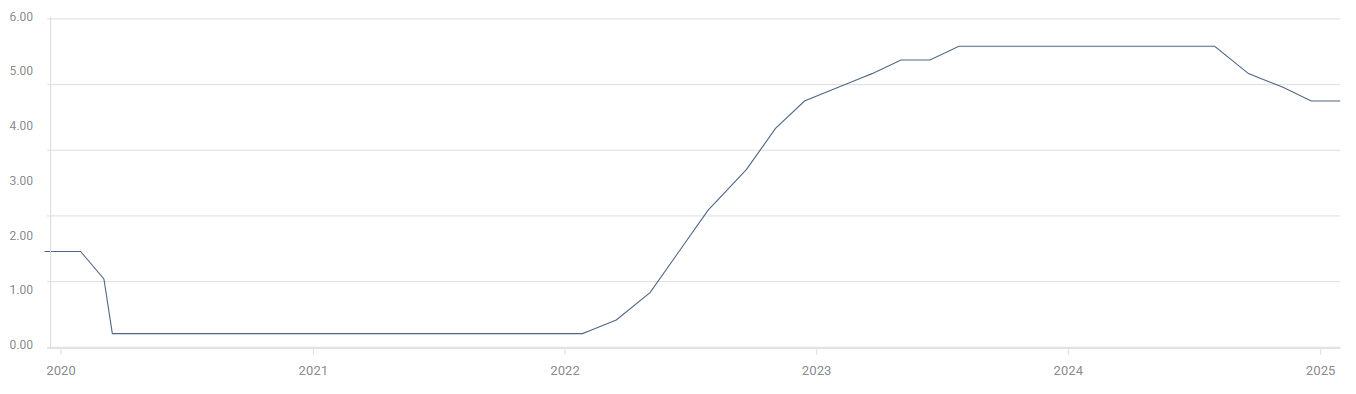
For instance, the Fed announced that it left the interest rate unchanged at the range of 5.25%-5.5% at the July 2024 policy meeting. In the post-meeting press conference, Fed Chairman Jerome Powell said that there was a real discussion about the case for reducing rates, adding that a rate cut will be on the table at the next meeting in September. These comments revived optimism about the US central bank shifting into monetary easing, triggering a US Dollar (USD) selloff and boosting US equity indexes.
Interpreting comments from Fed policymakers and reading between the lines in official communications is not an easy task, especially for beginner traders. At FXStreet, we have developed a custom AI model – the Speech Tracker, which analyzes all the relevant speeches by the FOMC members and rates them on a dove-hawk scale. This allows us to provide traders with real-time notifications on our Economic Calendar on how each Fedspeak could influence the USD's valuation.
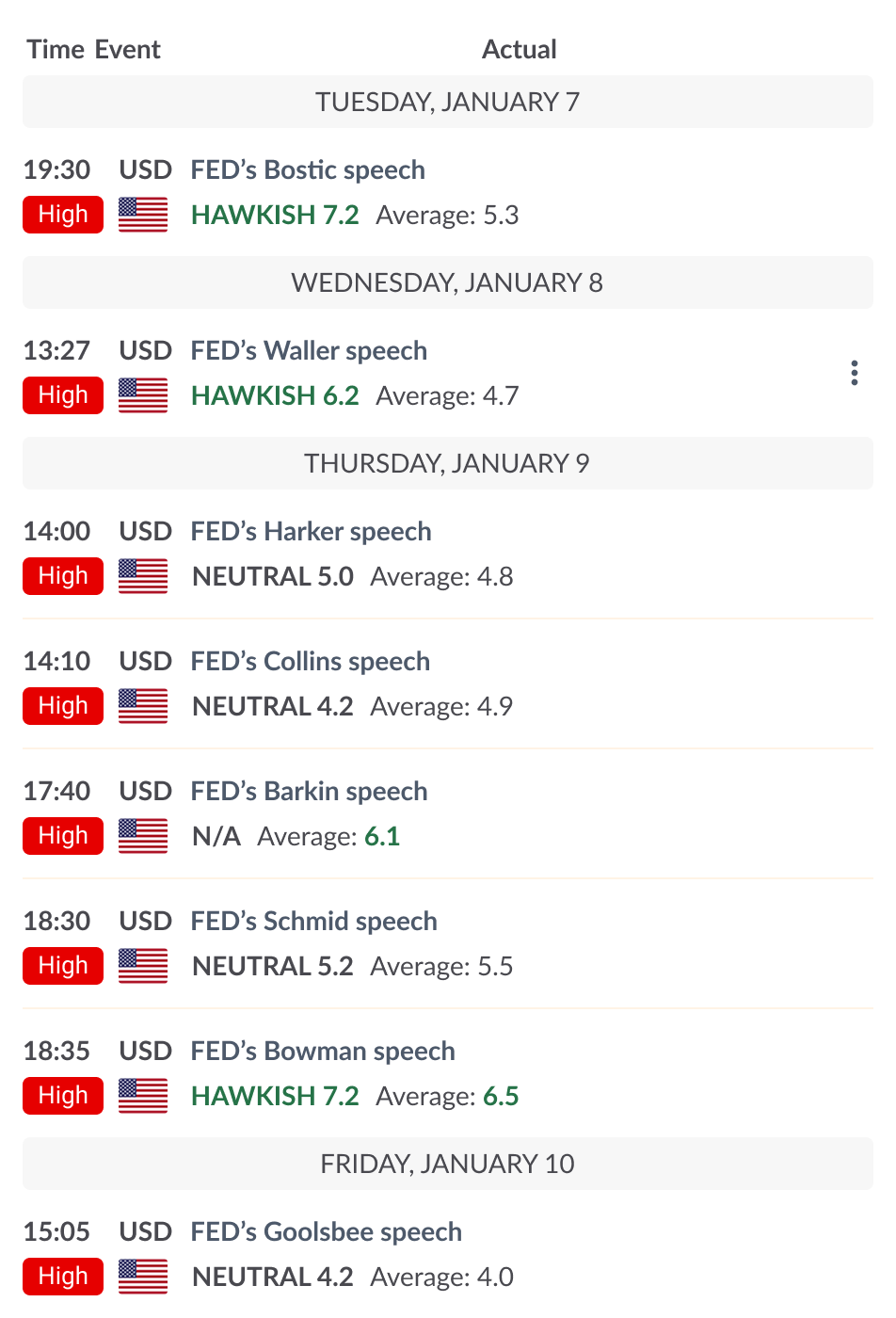
Introducing FXStreet Fed Sentiment Index
The next step in our quest to provide the best tool to help traders assess the effect of the Fed's language on financial markets was to use Speech Tracker scores to calculate an aggregate index that paints a clear picture of how the sentiment changes over time: FXStreet Fed Sentiment Index.
FXStreet Fed Sentiment Index presents the Fed's tone as a single value, taking into consideration comments from all voting and non-voting members of the FOMC in TV appearances, conferences, interviews, as well as the Fed's official written communications and more.
A value of 100 represents a neutral tone. An increasing value above 100 points to a hawkish tilt in the Fed's language, while a decreasing value below 100 suggests a dovish change in sentiment. The highest the index is, the most hawkish FOMC speakers are sounding ahead of the next monetary policy meeting and vice versa, lower levels suggest dovish shifts in the future Fed policy stance.
FXStreet Fed Sentiment Index is adjusted every time a Fed policymaker delivers comments on the policy outlook. While our Speech Tracker provides valuable insights into possible short-term reactions to individual FOMC speeches, our Fed Sentiment Index aims to explain how markets perceive the Fed language in its totality, over a longer period of time. Hence, its value cannot be understated with regard to spotting changes in USD-related asset price patterns, assessing inter-market correlations, and identifying divergences between near-term market reactions and long-term trends.
How to use FXStreet Fed Sentiment Index
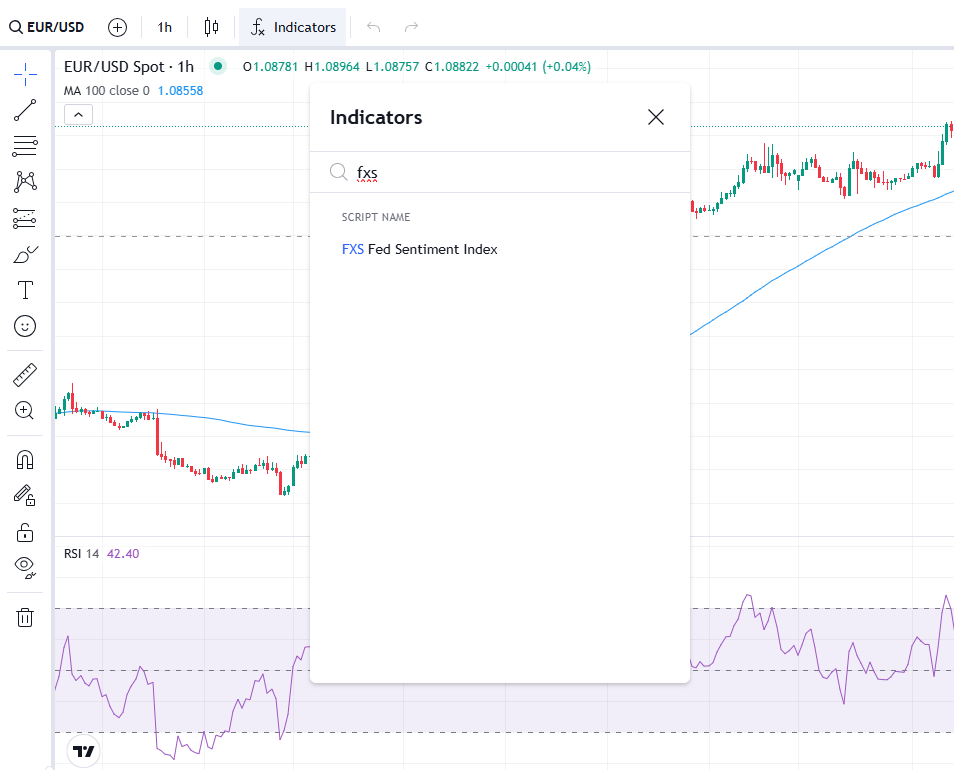
FXStreet Fed Sentiment Index can be used exclusively on FXStreet charts. After clicking on the "Indicators" button on the top pane, the user can search for the index and add it to the chart.
FXStreet Fed Sentiment Index performance in 2024: Fed's dovish quest halted by Trump's triumph
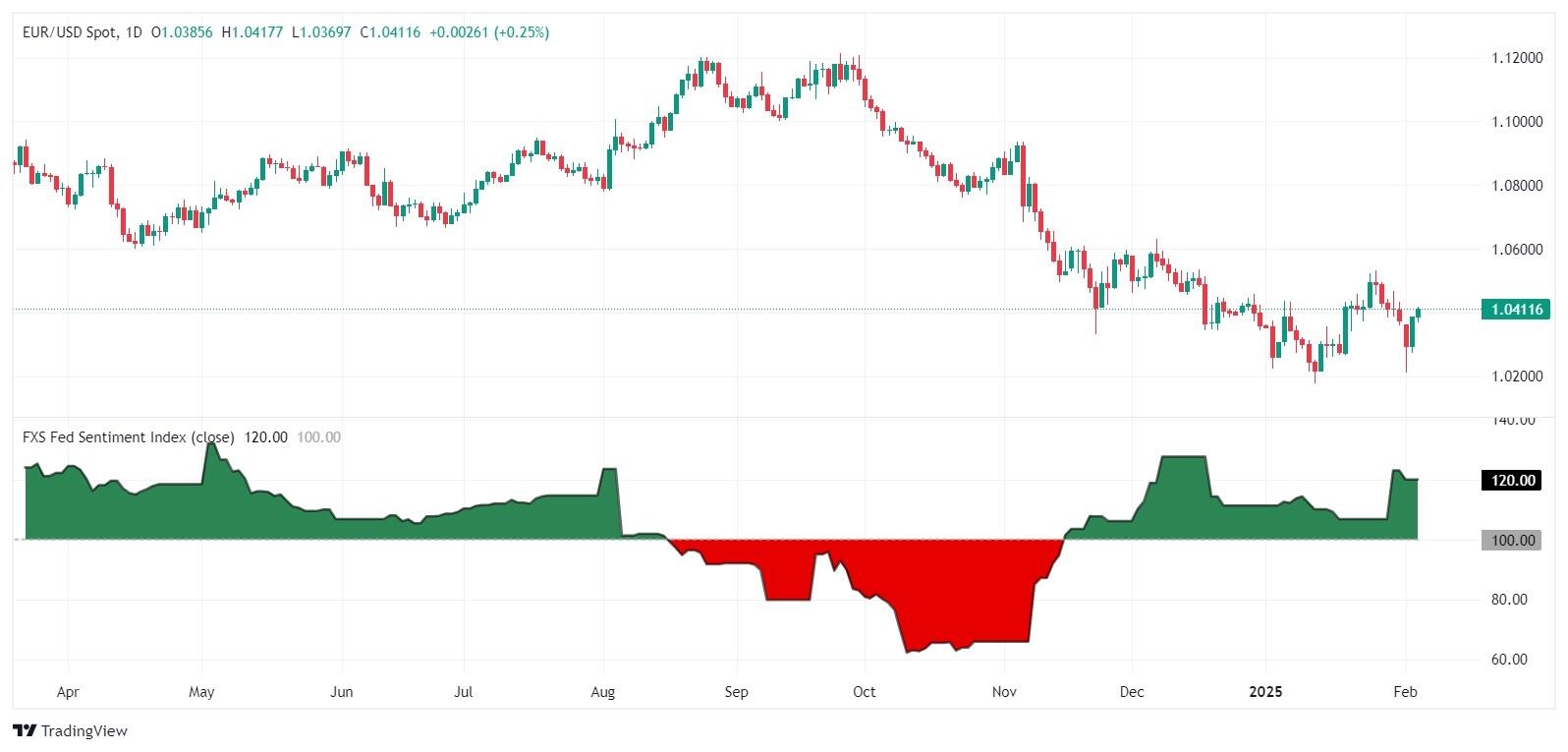
FXStreet Fed Sentiment Index starts with our Speech Tracker launch after the FOMC meeting in March. Back then, interest rate cuts were being delayed as inflation readings were still lingering above 3%. The index held near 120 until mid-May, when the Fedspeak started turning dovish. Even if the rate cuts did not materialize until the September meeting, the Fed Sentiment Index was already showing signs of a dovish tilt in the Fed language.
The downtrend continued for one more month, while the Fed materialized a second rate cut at its early November meeting, but it has completely turned around since the US election.
Donald Trump's clear victory, and his well-known intentions to use tariffs and tax cuts, which could trigger new legs of inflation, have seemingly affected how FOMC members perceive future monetary policy. As a result, the index turned hawkish to begin the new year.
Editor's Picks

The EUR/USD pair trades in positive territory near 1.1540 during the early Asian trading hours on Thursday. Rising bets that the European Central Bank will deliver a rate hike at its June policy meeting later on Thursday underpin the Euro against the Greenback.

The GBP/USD pair gathers strength to around 1.3385 during the Asian trading hours on Thursday. However, the potential upside might be limited amid rising expectations for higher-for-longer US interest rates. Markets might turn cautious later in the day ahead of the US Producer Price Index report.

Gold extends the recent breakdown momentum below the 200-day SMA and plummets to its lowest level since November 2025 during the Asian session on Thursday. Renewed hostilities between the US and Iran push Crude Oil prices higher, reviving inflationary concerns and bolstering bets for more hawkish central banks. This continues to drive flows away from the non-yielding bullion, though subdued US Dollar demand helps spot prices to find some support ahead of the $4,000 psychological mark.

Bitcoin's recent decline toward the $60,000 level has pushed the market further into bearish territory, with new investors suffering huge unrealized losses, according to a Glassnode report on Wednesday. The firm noted that Bitcoin's earlier May rally now appears increasingly as a "bear bounce".


More than three months after the start of the Iran war and the resulting disruption to global energy markets, the US economy continues to display remarkable resilience. The conflict has triggered a sharp rise in Oil prices, reignited inflationary pressures and fueled widespread concerns about a potential economic slowdown.