USD/CAD Forecast and News
USD/CAD: Canadian Dollar remains on the front foot vs softer USD; upside potential seems limited
The USD/CAD pair struggles to capitalize on the overnight bounce from the 1.3900 mark, or the weekly low, and ticks lower during the Asian session on Thursday. Spot prices, however, remain well within striking distance of the year-to-date high, touched on Tuesday, and currently trade just below mid-1.3900s, down less than 0.10% for the day amid mixed cues.
Latest Canadian Dollar News
USD/CAD Technical Overview
Fundamental Overview
Latest CAD Analysis
Editors' picks

USD/JPY sits near the April-May intervention level, around mid-160.00s
USD/JPY consolidates its recent gains to the highest level since late April, around mid-160.00s, where Japan conducted its last major FX intervention. Renewed speculations that authorities will step in again lend support to the Japanese Yen and cap the currency pair amid subdued US Dollar demand. However, economic risks stemming from the Middle East conflict keep the JPY bulls on the sidelines. Moreover, a fresh escalation of US-Iran tensions and bets for Fed rate hikes favor the USD bulls, suggesting that the path of least resistance for the pair remains to the upside.
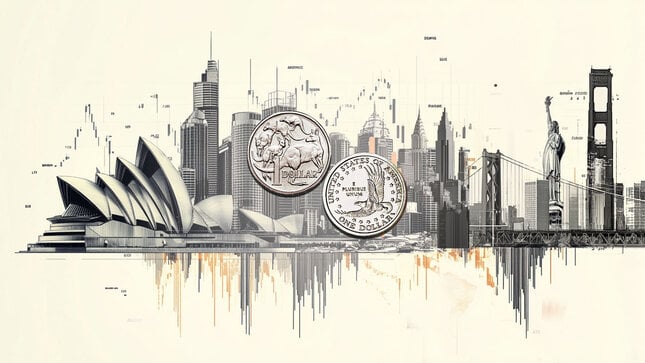
AUD/USD vulnerable near two-month low amid escalating US-Iran tensions
AUD/USD touches a fresh low since April 13 during the Asian session on Thursday, though it lacks follow-through amid subdued US Dollar price action. However, a fresh wave of US strikes on Iran and bets that the US Fed will raise rates by the end of this year, despite soft consumer inflation figures, favor the USD bulls. Apart from this, expectations for a prolonged pause by the RBA back the case for a further depreciation in the Aussie.

Gold recovers slightly from November 2025 lows; not out of the woods yet
Gold extends the recent breakdown momentum below the 200-day SMA and plummets to its lowest level since November 2025 during the Asian session on Thursday. Renewed hostilities between the US and Iran push Crude Oil prices higher, reviving inflationary concerns and bolstering bets for more hawkish central banks. This continues to drive flows away from the non-yielding bullion, though subdued US Dollar demand helps spot prices to find some support ahead of the $4,000 psychological mark.

Bitcoin faces further downside risk amid growing short-term holder losses, weak ETF demand
Bitcoin's recent decline toward the $60,000 level has pushed the market further into bearish territory, with new investors suffering huge unrealized losses, according to a Glassnode report on Wednesday. The firm noted that Bitcoin's earlier May rally now appears increasingly as a "bear bounce".

From sizzle to fizzle: Tech sinks as Oil puts the Fed tail back on the table
Majors
Cryptocurrencies
Signatures
INFLUENTIAL ORGANIZATIONS AND PEOPLE FOR THE USD/CAD
Bank of Canada (BoC)
The Bank of Canada (BoC) is the nation's central bank. Its principal role, as defined in the Bank of Canada Act, is "to promote the economic and financial welfare of Canada." The bank's responsibilities are divided into four main areas:
-
Monetary policy: The bank influences the supply of money in the economy, using its monetary policy framework to keep low and stable inflation.
-
Financial system: The bank promotes safe, sound, and efficient financial systems within Canada and internationally, conducting transactions in financial markets to support these objectives.
-
Currency: The bank designs, issues, and distributes Canada's banknotes.
-
Funds management: The bank is the fiscal agent for the Government of Canada, managing its public debt programs and foreign exchange reserves.
The Bank of Canada (BoC) sets interest rates and manages monetary policy at eight scheduled meetings a year and ad hoc emergency meetings that are held as required. The BoC's primary mandate is to maintain price stability, which means keeping inflation at between 1-3%. Its main tool for achieving this is by raising or lowering interest rates. Relatively high interest rates will usually result in a stronger Canadian Dollar (CAD) and vice versa. Other tools used include quantitative easing and tightening.
The official website, on X and YouTubeThe Federal Reserve (Fed)
The Federal Reserve (Fed) is the central bank of the United States (US) and it has two main targets: to maintain the unemployment rate at its lowest possible levels and to keep inflation around 2%. The Federal Reserve System's structure is composed of the presidentially appointed Board of Governors and the partially appointed Federal Open Market Committee (FOMC). The FOMC organizes eight scheduled meetings in a year to review economic and financial conditions. It also determines the appropriate stance of monetary policy and assesses the risks to its long-run goals of price stability and sustainable economic growth. The FOMC Minutes, which are released by the Board of Governors of the Federal Reserve weeks after the latest meeting, are a guide to the future US interest-rate policy.
Fed official website, on X and FacebookKevin Warsh
Kevin Warsh took office as chairman of the Board of Governors of the Federal Reserve in May 2026, for a four-year term ending in 2030. His term as a member of the Board of Governors will expire in May 2040. Warsh, born in Albany (New York) on April 13, 1970, is an American financier and attorney who already served as a member of the Fed Board of Governors from 2006 to 2011 and was significantly involved in the central bank's response to the financial crisis. Before that, he served as a special assistant to the president for economic policy and the executive secretary of the National Economic Council under President George W. Bush.
Tiff Macklem
Tiff Macklem was born in Montreal, Quebec, in 1961. He was appointed Governor of the Bank of Canada effective June 3, 2020, for a seven-year term. He graduated from Queen's University with a bachelor's degree in economics and completed a master's degree and a PhD in economics, both from the University of Western Ontario.
Before becoming Governor, Macklem served as a director of the Bank of Nova Scotia and chair of its risk committee. He is chair of the Group of Governors and Heads of Supervision, the oversight body of the Basel Committee on Banking Supervision, and co-chair of the Financial Stability Board's Regional Consultative Group for the Americas.
BOC NEWS & ANALYSIS
FED NEWS & ANALYSIS
About USD/CAD
THE IMPORTANCE OF OIL FOR THE ‘LOONIE’
The USD/CAD is one of the three "commodity pairs", alongside AUD/USD and NZD/USD. These pairs are closely tied to commodity price fluctuations, particularly Oil.
Canada, known as a resource-based economy, is a major producer and supplier of Oil. Its leading export market is the United States, making the Canadian dollar (CAD) particularly sensitive to US consumption data and economic health.
Rising Oil prices typically have a negative effect on the USD and a positive effect on the CAD.
ASSETS THAT INFLUENCE USD/CAD THE MOST
- Commodities: As previously mentioned, Oil is the primary focus, but traders should also consider Gold and Natural Gas.
- Currencies: The Japanese Yen (JPY) and the Euro (EUR). Another important group of influent pairs includes: EUR/USD, GBP/USD, USD/JPY, AUD/USD, USD/CHF and NZD/USD.
- Bonds: CSB (Canada Savings Bonds), CPB (Canada Premium Bonds) and T-Note 10Y (10-year US Treasury note).