Silver Price Forecasts: XAG/USD drifts below $61.00 as markets turn cautious
- XAG/USD pares last week's gains and tests levels below $61.00 on Tuesday
- Fresh tensions between Washington and Tehran are keeping precious metals on the defensive.
- Technical indicators are turning bearish, with session lows at the 60.30 area under pressure.
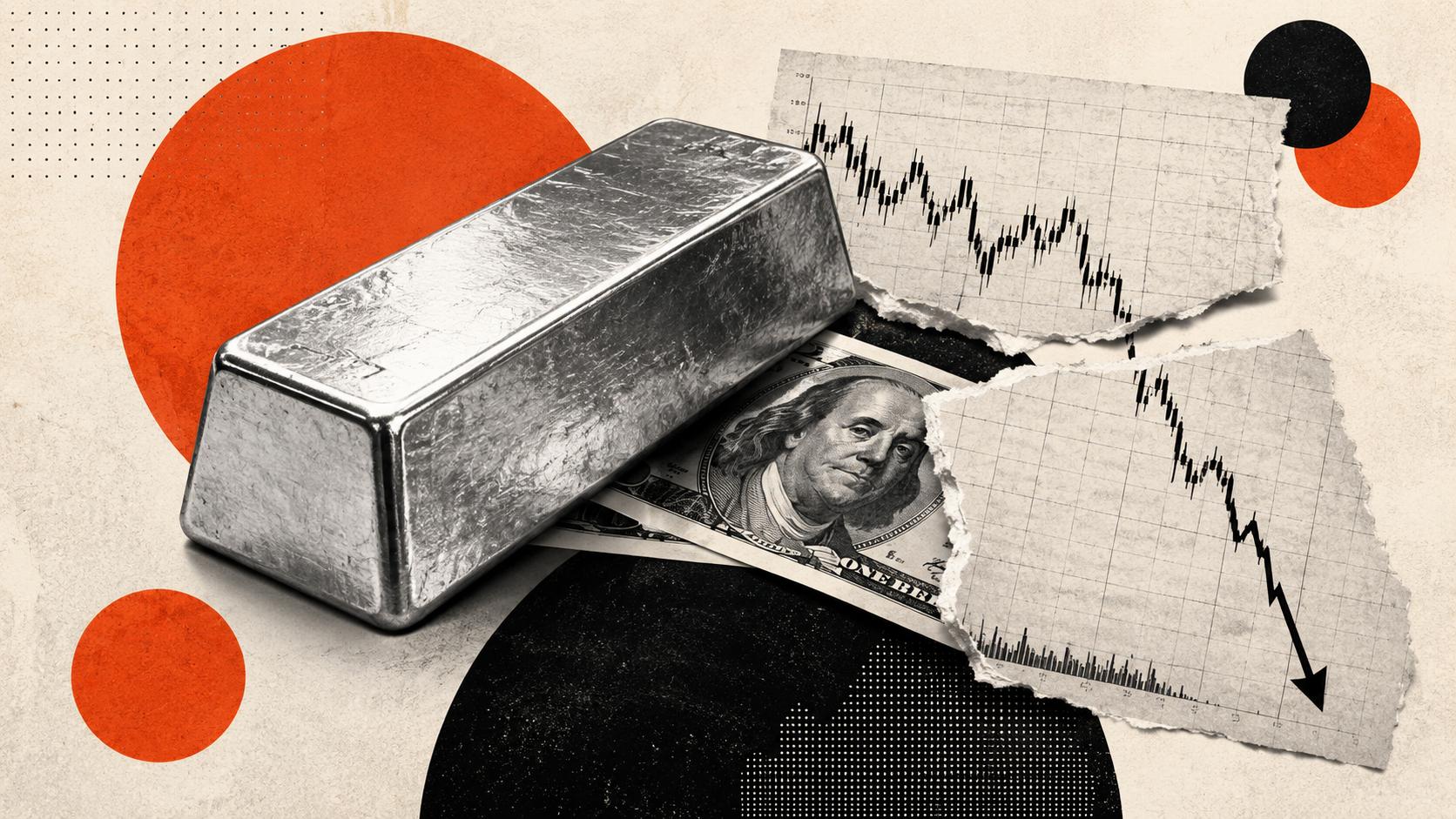
Silver (XAG/USD) pulled lower from Monday’s peak and is testing levels below $61.00 at the time of writing, paring some of last week’s gains. A more cautious stance towards the US-Iran peace deal has offset the positive impact of fading hopes of further Federal Reserve rate hikes, posing moderate pressure on precious metals on Tuesday.
Some verbal escalation between the US and Iran has clouded hopes of a swift end to the conflict and soured market sentiment this week. On Tuesday, Iran’s Foreign Minister Abbas Araghchi warned that negotiations on a final deal will not begin if threats continue following comments from US President Donald Trump, who affirmed that the US will reach an agreement or “finish the job” in Iran.
Meanwhile, reports of an attack on an Oil tanker on the Strait of Hormuz have heightened concerns, pushing investors’ enthusiasm about the lessening chances of immediate Federal Reserve (Fed) rate hikes to the background.
Technical Indicators: XAG/USD is turning bearish again
XAG/USD trades at $61.16, with momentum indicators entering bearish territory again, following Monday's rejection at the $63.30 area. The Relative Strength Index (14) on the four-hour chart is flirting with the 50 midline, while the Moving Average Convergence Divergence (MACD) dipped below zero and points to waning bullish pressure.
A clear break below the $60.40 session low would expose the 2026 lows between $55.70 and $56.70, which held bears last week. On the topside, initial resistance emerges at Monday's high near $63.33. An unlikely reaction above here would bring the June 22 high, at the $67.15 area, to the focus ahead of the mid-June highs, around $71.50.
(The technical analysis of this story was written with the help of an AI tool. Know more.)
Silver FAQs
Silver is a precious metal highly traded among investors. It has been historically used as a store of value and a medium of exchange. Although less popular than Gold, traders may turn to Silver to diversify their investment portfolio, for its intrinsic value or as a potential hedge during high-inflation periods. Investors can buy physical Silver, in coins or in bars, or trade it through vehicles such as Exchange Traded Funds, which track its price on international markets.
Silver prices can move due to a wide range of factors. Geopolitical instability or fears of a deep recession can make Silver price escalate due to its safe-haven status, although to a lesser extent than Gold's. As a yieldless asset, Silver tends to rise with lower interest rates. Its moves also depend on how the US Dollar (USD) behaves as the asset is priced in dollars (XAG/USD). A strong Dollar tends to keep the price of Silver at bay, whereas a weaker Dollar is likely to propel prices up. Other factors such as investment demand, mining supply – Silver is much more abundant than Gold – and recycling rates can also affect prices.
Silver is widely used in industry, particularly in sectors such as electronics or solar energy, as it has one of the highest electric conductivity of all metals – more than Copper and Gold. A surge in demand can increase prices, while a decline tends to lower them. Dynamics in the US, Chinese and Indian economies can also contribute to price swings: for the US and particularly China, their big industrial sectors use Silver in various processes; in India, consumers’ demand for the precious metal for jewellery also plays a key role in setting prices.
Silver prices tend to follow Gold's moves. When Gold prices rise, Silver typically follows suit, as their status as safe-haven assets is similar. The Gold/Silver ratio, which shows the number of ounces of Silver needed to equal the value of one ounce of Gold, may help to determine the relative valuation between both metals. Some investors may consider a high ratio as an indicator that Silver is undervalued, or Gold is overvalued. On the contrary, a low ratio might suggest that Gold is undervalued relative to Silver.
Author

Guillermo Alcala
FXStreet
Graduated in Communication Sciences at the Universidad del Pais Vasco and Universiteit van Amsterdam, Guillermo has been working as financial news editor and copywriter in diverse Forex-related firms, like FXStreet and Kantox.