Gold sticks to intraday losses below $4,050 as USD retains bullish bias ahead of FOMC
- Gold struggles to capitalize on its gains registered over the past two days amid a bullish USD.
- Fed rate hike bets and geopolitical uncertainties continue to underpin the safe-haven buck.
- Traders now look to the FOMC rate decision and key US macro releases for fresh impetus.

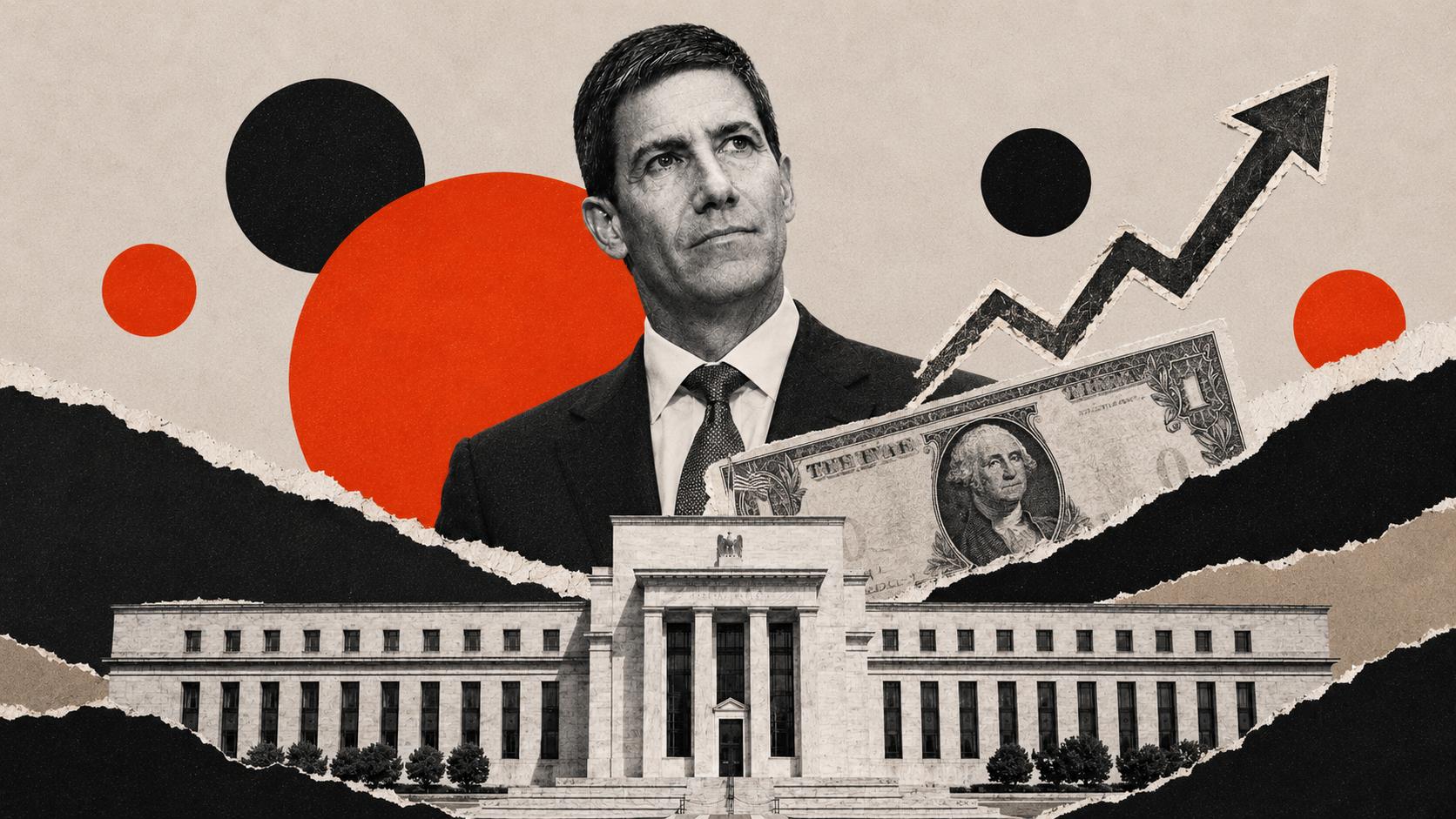
Gold (XAU/USD) remains offered below $4,050 during Wednesday's early European session, snapping a two-day winning streak ahead of the key central bank event. The US Federal Reserve (Fed) is scheduled to announce its policy decision later today and is widely expected to keep rates unchanged. Meanwhile, the focus will remain on the accompanying monetary policy statement and Fed Chair Kevin Warsh's comments during the post-meeting press conference.
Apart from this, Thursday's key US macro releases – the Advance Q3 GDP report and the Personal Consumption Expenditures (PCE) Price Index – will be looked at for more cues about the Fed's future policy path. The outlook, in turn, will play a key role in influencing the near-term US Dollar (USD) price dynamics and provide some meaningful impetus to the non-yielding bullion. In the meantime, the CME Group's CME FedWatch Tool indicates that traders are pricing in over an 80% chance that the US central bank will raise borrowing costs again in December. Adding to this, inflationary concerns stemming from elevated energy prices underpin prospects for further Fed tightening, which, in turn, keeps a lid on the non-yielding bullion.
Fed pause seen in October as markets eye December tightening
Strategists at BNY Markets align with current pricing in expecting the Fed to stand pat this week, noting that “in line with the market, we don’t foresee a rate hike in October and prefer to place our expectations for further tightening on the December meeting.” However, BNY cautions that “we do expect at least one dissent, if not more, in favor of raising rates.” In their view, “if we’re right, and there is an objection (or two), we would expect the market to interpret Wednesday’s decision hawkishly, solidifying the expectation of a hike at the end of the year.” Looking ahead to the press conference, they add that “we don’t see any preview of what we expect to be a December hike, given Chair Kevin Warsh’s disinclination to provide guidance on future policy moves. Nevertheless, we think that market expectations for a December hike will be solidified.”
Meanwhile, the geopolitical risk premium remains in play amid fears of a further escalation of tensions in the Middle East. In fact, The Wall Street Journal reported on Tuesday that the US has told several Gulf Arab countries to prepare for a short and intense military campaign against Iran after the November 3 midterm elections. Adding to this, Iran-backed Houthis in Yemen claimed that they targeted Saudi Arabia's defence ministry in Riyadh with a ballistic missile and that the hit was direct. Moreover, US–Iran negotiations remain deadlocked, triggering a fresh leg up in crude oil prices and assisting the safe-haven greenback to preserve its recent strong gains to a two-week high. This turns out to be another factor weighing on the Gold price.
The XAU/USD pair, however, holds comfortably above a three-month low touched earlier this week, warranting some caution for aggressive bearish traders. That said, the aforementioned fundamental backdrop suggests that the path of least resistance for the precious metal remains to the downside and any attempted recovery is more likely to be sold into.
XAU/USD 1-hour chart
Technical Analysis
The XAU/USD pair holds just above the 100-hour Exponential Moving Average (EMA) at $4,044.21, which underpins price and tempers immediate downside pressure. That said, the Relative Strength Index (RSI) around 55 suggests only modest bullish momentum. Moreover, the Moving Average Convergence Divergence (MACD) has slipped into negative territory, hinting that upside attempts may be losing traction as the market digests the prior advance. Adding to this, the overnight failure to find acceptance above the 38.2% Fibonacci retracement level of the latest downswing warrants caution for bullish traders.
However, sustained strength beyond the 38.2% Fibo. hurdle at $4,063.08 could pave the way for additional gains to the 50% level at $4,089.75 and the 61.8% retracement at $4,116.43, with higher barriers at $4,154.40 and the cycle high near $4,202.78. On the downside, a convincing break below the 100-hour EMA immediate support would expose the 23.6% Fibo. retracement at $4,030.07, with a deeper pullback potentially targeting the structural floor around $3,976.72.
(The technical analysis of this story was written with the help of an AI tool. Know more.)
Interest rates FAQs
Interest rates are charged by financial institutions on loans to borrowers and are paid as interest to savers and depositors. They are influenced by base lending rates, which are set by central banks in response to changes in the economy. Central banks normally have a mandate to ensure price stability, which in most cases means targeting a core inflation rate of around 2%. If inflation falls below target the central bank may cut base lending rates, with a view to stimulating lending and boosting the economy. If inflation rises substantially above 2% it normally results in the central bank raising base lending rates in an attempt to lower inflation.
Higher interest rates generally help strengthen a country’s currency as they make it a more attractive place for global investors to park their money.
Higher interest rates overall weigh on the price of Gold because they increase the opportunity cost of holding Gold instead of investing in an interest-bearing asset or placing cash in the bank. If interest rates are high that usually pushes up the price of the US Dollar (USD), and since Gold is priced in Dollars, this has the effect of lowering the price of Gold.
The Fed funds rate is the overnight rate at which US banks lend to each other. It is the oft-quoted headline rate set by the Federal Reserve at its FOMC meetings. It is set as a range, for example 4.75%-5.00%, though the upper limit (in that case 5.00%) is the quoted figure. Market expectations for future Fed funds rate are tracked by the CME FedWatch tool, which shapes how many financial markets behave in anticipation of future Federal Reserve monetary policy decisions.
Author

Haresh Menghani
FXStreet
Haresh Menghani is a detail-oriented professional with 10+ years of extensive experience in analysing the global financial markets.