Will the Fed’s emergency 50bp rate cuts in September cement a soft landing for the economy?
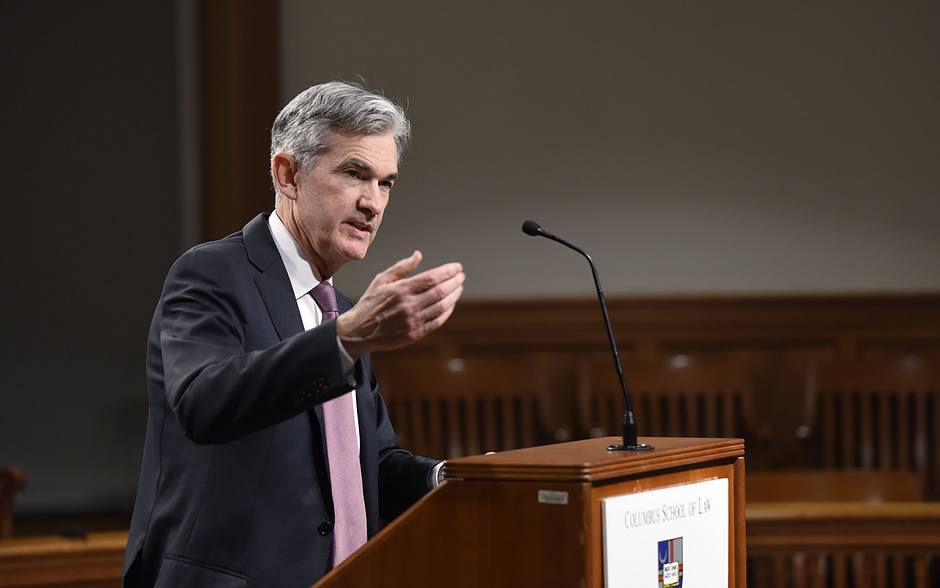

The FOMC meeting and press conference for September was projected to be a dovish one. Fed Chair Powell was expected to cut rates by 50 bps. The preponderance of Wall Street lackeys were busy begging for a series of immediate and deep reductions in borrowing costs. Some in D.C., like Senator Elizabeth Warren, were obsequiously begging for 75 bps in cuts in a thinly veiled attempt to keep a Democrat in the White House.
Well, Mr. Powell didn’t disappoint. He began his first rate cut in four years with a 50 bp cut. Thus proving that he is ignorant to the damage already done to the middle class by the level of prices. In cutting by 50 bps, he has also tacitly admitted that he and his merry band of money printers are utterly clueless regarding monetary policy and completely incompetent in discerning the direction of inflation. He was too late in raising rates in 2022—having to move by 75 bps increments, and is now having to move by larger increments because he is late in cutting rates. The FOMC has now also projected that the Fed Funds Rate (FFR) will be brought down to 4.4% at the end of this year and will be at 3.4% at the end of 2025.
The notion that the Fed must perform a rate cut of more than 25 bp increments now is absurd. After all, headline Consumer Price Inflation is still rising at 2.5% y/y, and the core rate is up 3.2% y/y, which is still well above the Fed’s target of 2%. Was there any discussion of the dangers of cutting rates aggressively while inflation is still well above target? The Atlanta Fed GDP Now estimates that Q3 GDP growth is 3%, well above the trend growth of 2%. The unemployment rate is at an historically low 4.2% level. While that is up from 3.4% in April of 2023, it is still far below the long-term average rate of 5.7%. Asset prices are at record highs. Housing is out of reach for most American consumers, and stock prices are at unprecedented valuations. And financial conditions are extremely easy and credit spreads are very tight.
The joke is that we are most likely still heading for a recession, one that is necessary for the long-term health of the economy and the viability of the middle class. But it is clear that no politician or central banker will allow even a small contraction in GDP to occur without a fight. The point being that no matter what they do, they cannot repeal the business cycle. A recession is coming and the only question is will it be accompanied by deflation or will it be marred by devastating stagflation? I believe the interest rate cuts currently on the schedule will most likely end up being too little too late to stop the economic contraction.
Again, we may need to bring the level of prices lower and a recession may go along with that process. But so be it! The alternative is to continue to try and usurp free market forces, as we continuet to destroy the purchasing power of the dollar and the living standards of most consumers.
Here are some fun facts. The government has laid out $1.049 trillion on debt service, up 30% from the same period a year ago. The budget deficit for this fiscal year is $2 trillion, up 24% from the year prior. The budget deficit for just the month of August last year was actually a surplus of $89.2 billion. Do you want to know what the Federal deficit for August of this year was? Well, I'll tell you. It was a staggering $380 billion for one freaking month! That, my friends, is the real reason why the Fed cut rates by 50 bps. It was to help out the Treasury with its soaring debt service payments.
It isn't any wonder why gold is hitting all-time highs! The sad truth is the Fed cannot allow interest rates to be high because the Treasury would become insolvent. There are not enough free-market buyers who want to purchase the gargantuan mountain of existing U.S. debt, especially at low interest rates. So, our central bank has to be the predominate buyer. And that sadly means that after this current battle with disinflation, and quite likely, recession and deflation are over, intractable and inexorable stagflation will be our destiny. Moreover, while the Fed’s latest dovish move to lower the overnight interbank lending rate will bring down short-term rates, it may also cause long-term rates to rise. What else would you expect to occur when the market loses faith in the government’s willingness and ability to fight inflation.
As of today, we remain in disinflation and slowing growth mode. Recession probabilities increase as we go through the end of this year and can increase greatly as we go through 2025, depending on the outcome of the election, which is now less than two months away. Investors need to myopically focus on the second derivative of inflation and growth. It is the only way to know for sure if this latest Powell pivot is enough to ensure a soft economic landing or will just have the same effect as performing CPR on a cadaver.
Author
Michael Pento
Pento Portfolio Strategies
Mr. Michael Pento is the President of Pento Portfolio Strategies and serves as Senior Market Analyst for Baltimore-based research firm Agora Financial. Pento Portfolio Strategies provides strategic advice and research for institutional clients.

















