Why the Korean Won is falling while the KOSPI holds up

South Korea’s markets are sending a mixed signal. While the KOSPI continues to ride the global tech wave, the Korean Won (KRW) is hovering near two-decade lows against the US Dollar (USD). This unusual split reveals how investors are really positioning in Korea.
The divergence is striking, and more importantly, it is telling. Equity strength is no longer translating into currency support, a shift that speaks volumes about how global investors are approaching Korea.
KOSPI resilience, global cycle doing the heavy lifting
The equity side of the story still looks constructive. South Korea’s benchmark index remains supported by:
- The global semiconductor cycle
- Strong demand tied to AI and high-end chips
- Heavyweight names like Samsung Electronics and SK Hynix
In that sense, the KOSPI is trading less like a domestic index and more like a proxy for the global tech cycle. That helps explain why equities can hold up even as the currency weakens.
KRW under pressure, rates and flows telling a different story
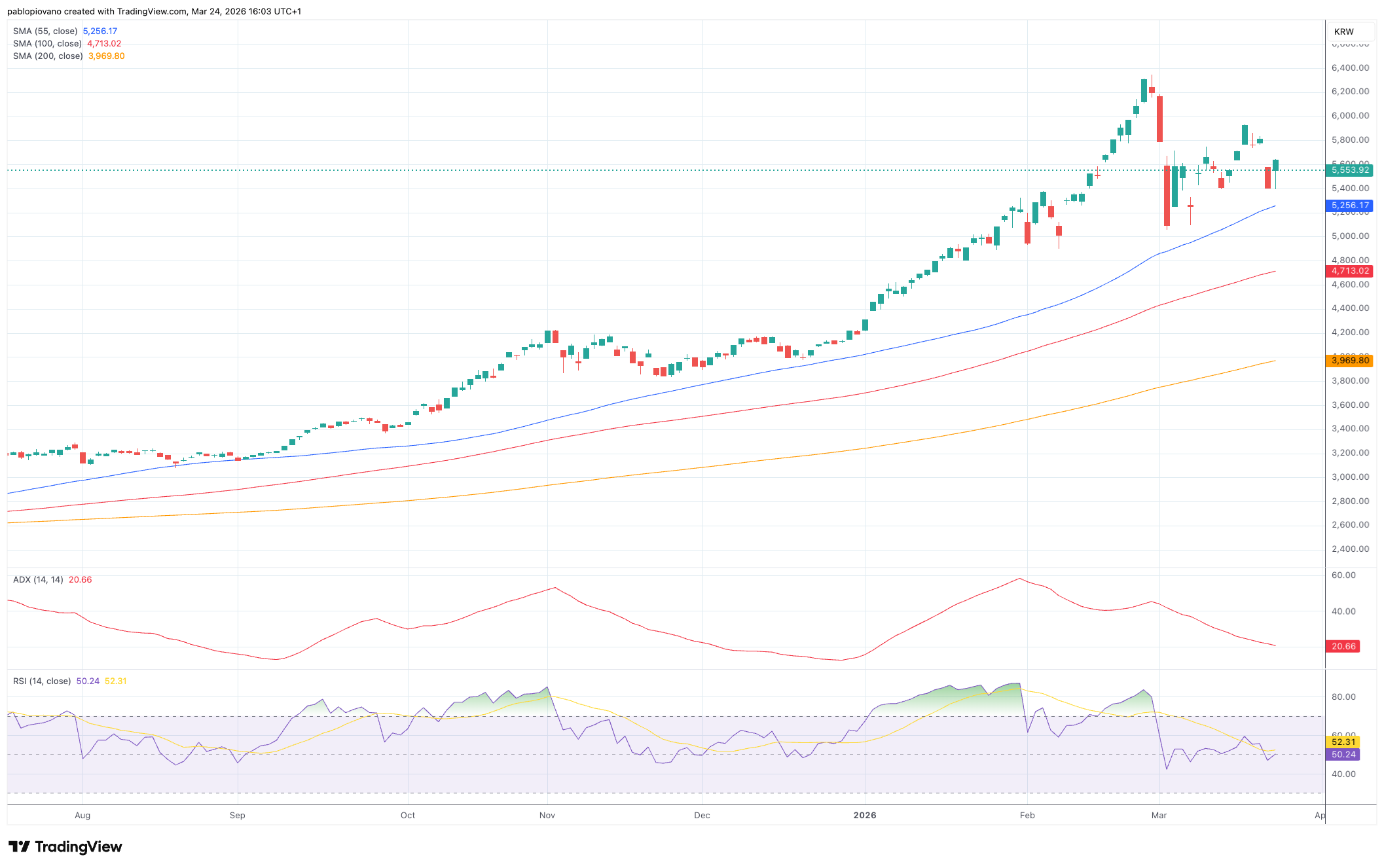
The currency, however, is reflecting a very different macro reality. USD/KRW recently tested the vicinity of 1,515, its highest level in nearly 20 years. The pair’s move past the 1,510 region has been driven by a familiar combination:
- Persistent US Dollar strength
- Wide rate differentials, with the Fed still leaning higher for longer
- A cautious Bank of Korea (BoK), constrained by growth concerns and financial stability risks
The result is a steady bias to sell KRW, even in the absence of fresh domestic shocks.
The fact that the USD/KRW pair is now consolidating near those highs suggests the market is not yet ready to turn, only to pause.
-1774364528408-1774364528409.png)
The key shift: equity inflows no longer support the currency
This is the real story. In the past, strong foreign demand for Korean equities would typically generate KRW inflows and, by extension, support the currency.
That link is weakening.
Foreign investors appear increasingly willing to:
- hedge FX exposure
- or keep positions effectively USD-denominated
In other words, capital is still flowing into equities, but not into the currency.
That decoupling is a classic late-cycle signal and a sign that FX risk is being actively managed, not embraced.
Asia FX and China, the external drag remains
KRW does not trade in isolation. It remains one of the most liquid proxies for:
- broader Asia FX sentiment
- and, crucially, China
Ongoing concerns around Chinese growth and the softer tone in the Yuan continue to weigh on the Won, reinforcing the downside pressure regardless of Korea’s domestic fundamentals.
What it means for markets
For FX, the message is fairly clear: KRW is increasingly behaving like a funding currency, while USD/KRW dips are likely to find buyers as long as rate differentials persist.
When it comes to broader markets, the KOSPI-KRW divergence is a warning signal that suggests global investors are participating in upside but hedging the macro risk.
South Korea’s market split is becoming harder to ignore. As long as US rates remain elevated and external pressures dominate, the Korean currency is likely to stay under pressure, even as equities hold firm.
For now, the pause in USD/KRW looks more like consolidation near the highs than the start of a reversal, and that keeps the broader bias tilted towards further KRW weakness.
Author

Pablo Piovano
FXStreet
Born and bred in Argentina, Pablo has been carrying on with his passion for FX markets and trading since his first college years.