The Canadian Dollar's crude problem
Crude prices have climbed in 2026 while the Canadian Dollar (CAD) has weakened against the US Dollar (USD). Oil now moves the currency only when it falls, because cheaper fuel removes the Bank of Canada's (BoC) reason for raising interest rates.
West Texas Intermediate (WTI), the US Crude Oil benchmark, has risen by about half since January, and the Canadian Dollar has lost almost 4% against the US Dollar over the same stretch. The Loonie didn't gain when Oil went up, and it's losing ground now that Oil is coming down. Norway's Krone, the other big Oil currency, has gained about 6% against the US Dollar on the same barrels.
USD/CAD is trading near 1.4200 after three straight gains, as WTI fell about 18% from its late-October high amid talk of a deal to end the Iran war. The Bank of Canada raised its rate on October 28 because of fuel prices, and fuel is getting cheaper. The Federal Reserve (Fed) is raising its rate on US inflation that has spread well beyond fuel, so the gap between the two banks is set to widen as Oil falls.
Oil rose by half and the Loonie went the other way
The war was the cleanest test. WTI rose about 70% from February 27, the day before the first US and Israeli strikes on Iran, to its March high. USD/CAD climbed from near 1.3650 to near 1.3950 over the same weeks. On 12 of the 19 days, crude Oil rose between late February and April 7, USD/CAD rose too, because war news sent investors into US Dollars as a safe place to hold money.
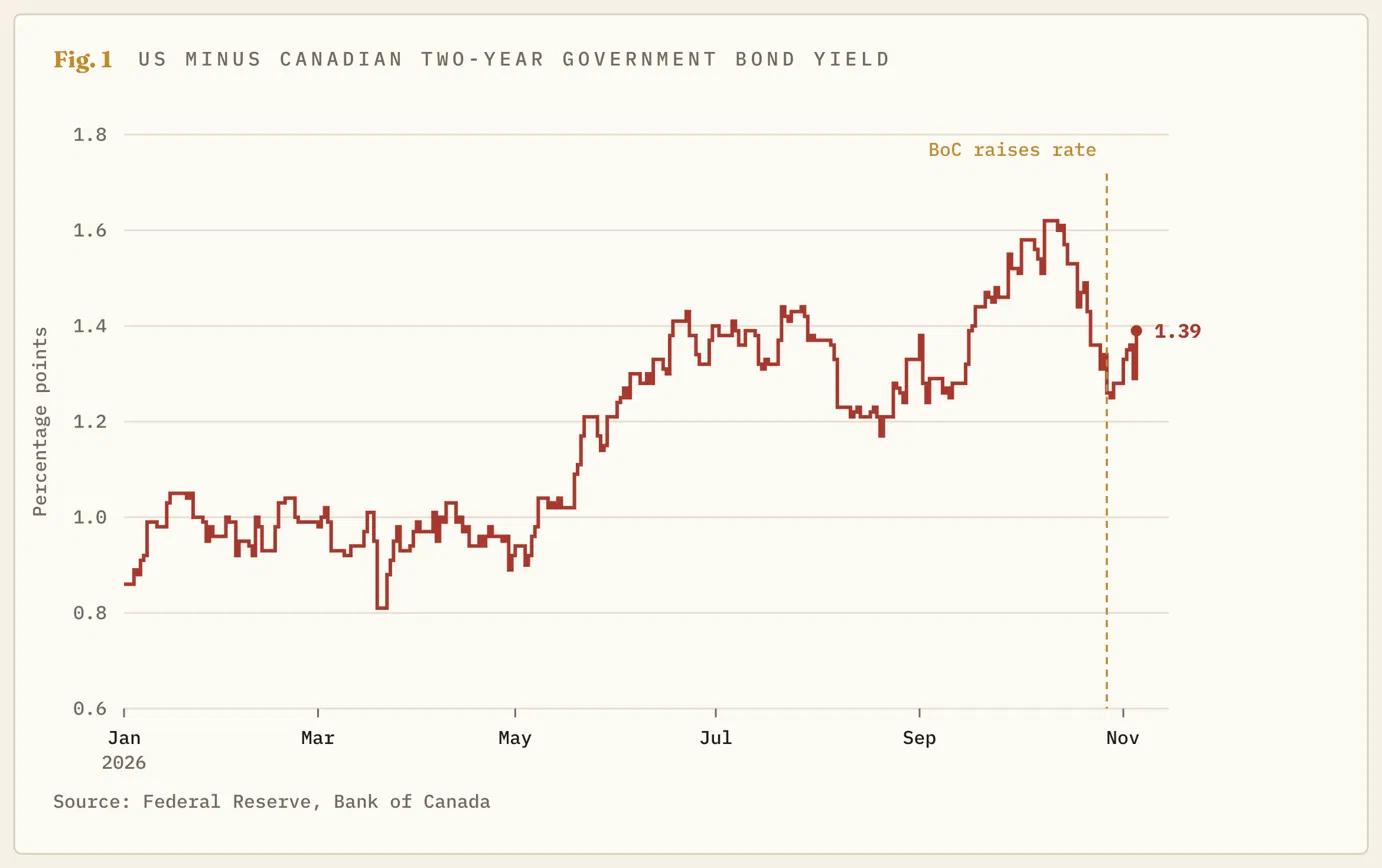
Across the whole year, the Loonie and Oil have moved together day to day about as often as they've moved apart. What has tracked the Loonie is the gap between US and Canadian two-year government bond yields. It widened from under 0.9 points in January to about 1.4 points, as markets began expecting US rate rises and the BoC held rates at 2.25% until October. Money tends to go where it earns more, and that's the US side of the gap.
Norway got paid for the same barrels
The Krone has gained about 6% against the US Dollar in 2026, and the broad US Dollar index is up about 2%. The Canadian Dollar has done worse against the US Dollar than the average currency, in a year when the price of its biggest export rose by half.
The Oil money is arriving. Canada's crude and bitumen exports rose 10.2% in September, almost all of it on price, and the surplus with the US widened to CAD $12.3 billion, Statistics Canada reported on November 4. Excluding energy and precious metals, exports fell 5.6% in the month. About 70% of Canada's exports go to the US, where new tariffs are expected to slow Canadian growth in the fourth quarter, according to the BoC. Norway sells most of its Oil and gas to Europe. Canada sold its crude for more in September, and USD/CAD rose more than 2% that month.
The BoC's only reason to raise rates is getting cheaper
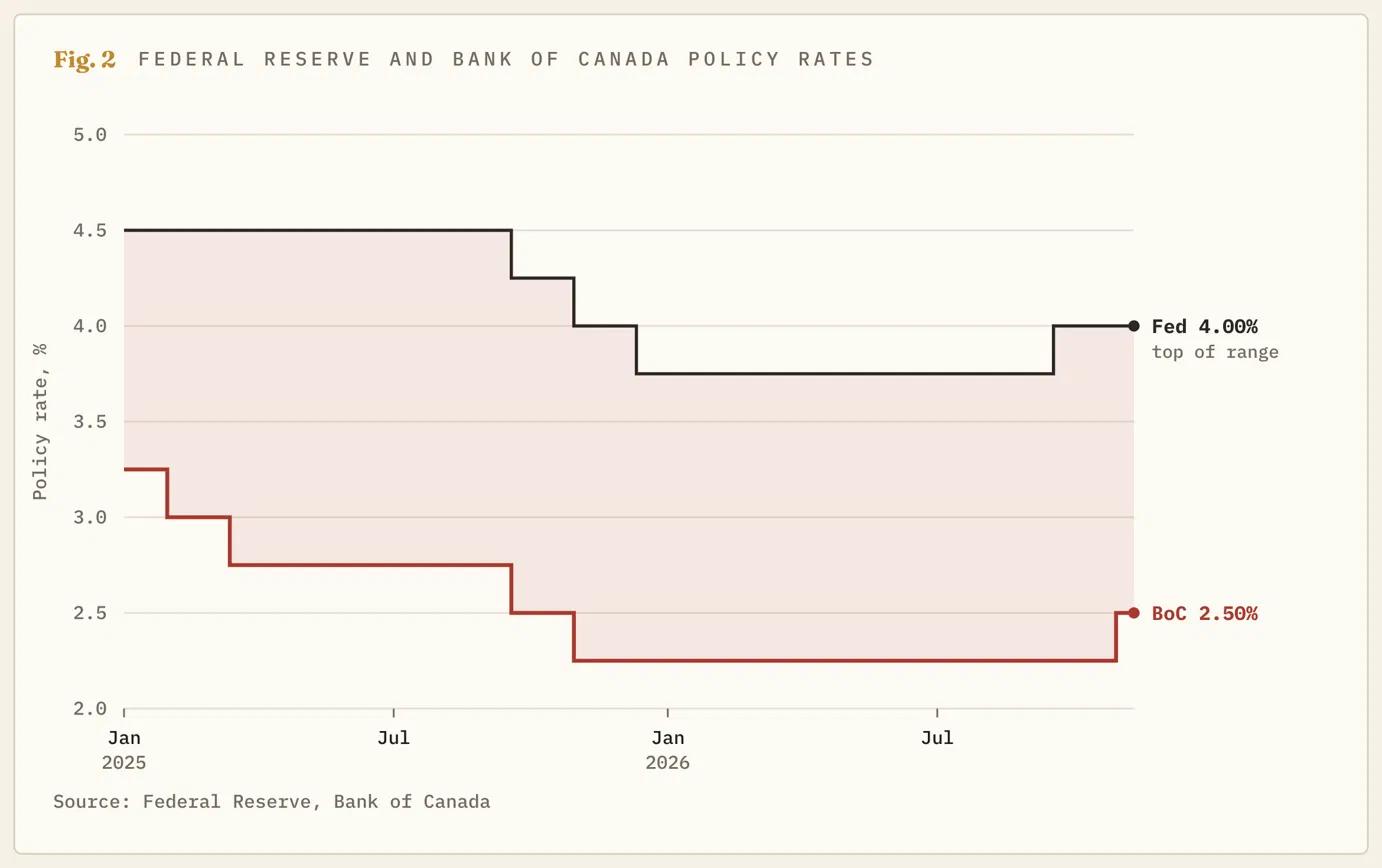
The BoC raised its rate to 2.50% on October 28, its first increase since July 2023. BoC Governor Tiff Macklem said the move was about the risk of higher gasoline, diesel and heating Oil prices spreading into other prices, not about inflation as it stands. Core measures, which strip out the most volatile prices, are close to 2%, and prices outside gasoline are up 2.2% on the year.
Statistics Canada's numbers since then have pointed the other way. The economy lost 4.7K jobs in October, the third monthly fall in a row, and unemployment rose to 6.7%. Wages were up 2.2% on the year, which isn't the kind of labour market that turns a fuel bill into lasting inflation. Alberta, Canada's Oil province, lost 24K jobs in the month. After the jobs report, swap markets, where traders bet on future rates, priced in about a 35% chance of a second BoC rise in December, Reuters reported on November 6.
The Fed is in a different position. It raised its rate to 3.75%-4.00% in September, and US prices outside food and energy have risen about 3.8% year over year over the past three months. Fed Governor Christopher Waller said on Tuesday that a half-point rise should be considered in December. If the Fed raises and the BoC holds, the gap between their rates widens by a quarter-point. Money that can earn more in US Dollars tends to leave the Loonie to get it. Both banks decide on December 9, and only one of them has a reason that doesn't depend on the price of Oil.
A peace deal is the worst outcome for the Loonie
USD/CAD has made higher lows since August, and the early-November pullback stopped at its 200-day moving average near 1.3950. The three-session run since then has recovered nearly three-quarters of the slide from the October high. The Stochastic Relative Strength Index (Stoch RSI), a 0-100 gauge of how hard a move is running, is turning up from near zero, so the move isn't stretched. WTI is trading at its own 200-day moving average after its fall from late October, with momentum still pointing down. The October high at 1.4300 is the top of the year's range, and a daily close above it would put USD/CAD at its highest of 2026.
A deal that reopens the Strait of Hormuz would push Oil lower and take most of the BoC's case for a December rise off the table. The Fed would keep raising rates on US inflation that doesn't depend on fuel. That's a wider rate gap and a weaker Loonie, and it makes a break of 1.4300 more likely. If the war flares instead, Oil goes back up, and the Loonie is likely to repeat March, losing ground to safe-haven buying of US Dollars while the Fed keeps going. The ceasefire the rest of the world is hoping for is the one Canada's currency can least afford.
The lean is higher for USD/CAD on both branches. It's wrong if the BoC raises rates again on December 9, or if Canada's October inflation numbers on November 16 show prices outside gasoline picking up. A daily close back below the 200-day moving average near 1.3950 would say something other than Oil and the rate gap is moving the pair.
Author

Joshua Gibson
FXStreet
Joshua joins the FXStreet team as an Economics and Finance double major from Vancouver Island University with twelve years' experience as an independent trader focusing on technical analysis.

















