The $40 trillion debt is not America's only problem - Buy gold

Precious metals markets have been rattled by investors' concerns over higher inflationary readings and the likelihood of Federal Reserve monetary tightening. Yet, over the past month, gold prices have climbed from around $4,000 per ounce to nearly $4,700 in the latter half of August. Most analysts attribute this surge to the U.S. debt reaching the $40 trillion mark, but the bond market has also played a significant role in this price recovery.
The Federal Reserve
Here are a few quotes from the Fed: "The Fed's price-stability objective of 2 percent, as measured by the personal consumption expenditures (PCE) price index, is a firm, fixed target. Let's be equally clear about another aspect of the objective: Price stability is not self-executing, nor is inflation necessarily mean-reverting. It is the Fed's job to deliver stable prices." Additionally, in an interview at Jackson Hole, Cleveland Federal Reserve Bank President Beth Hammack stated: "I don't want to prejudge anything. But I believe now is the time to act." She also added, "I believe that we've been in an inflationary situation for more than five years. It's been running well above our target. I don't see any restriction in policy when I look at financial conditions and when I talk to market participants." In other words, the Federal Reserve's primary focus is currently on inflation. Thus, it appears clear that the Fed's stance is hawkish, and it is likely to tighten monetary policies soon and decisively. The Fed's position will only shift if the U.S. economy encounters serious hardships.
However, the unemployment rate - another key economic indicator - is not low enough to signal robust economic growth.
The US unemployment rate
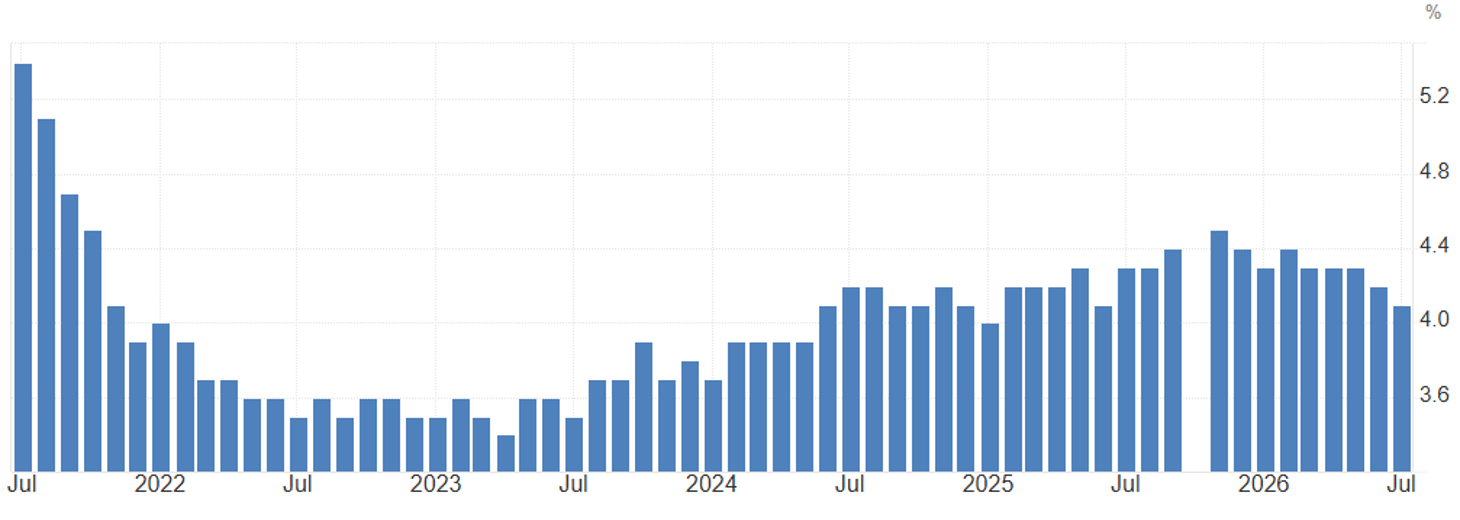
The U.S. unemployment rate remains substantially above the low reached in 2023, currently hovering above 4%.
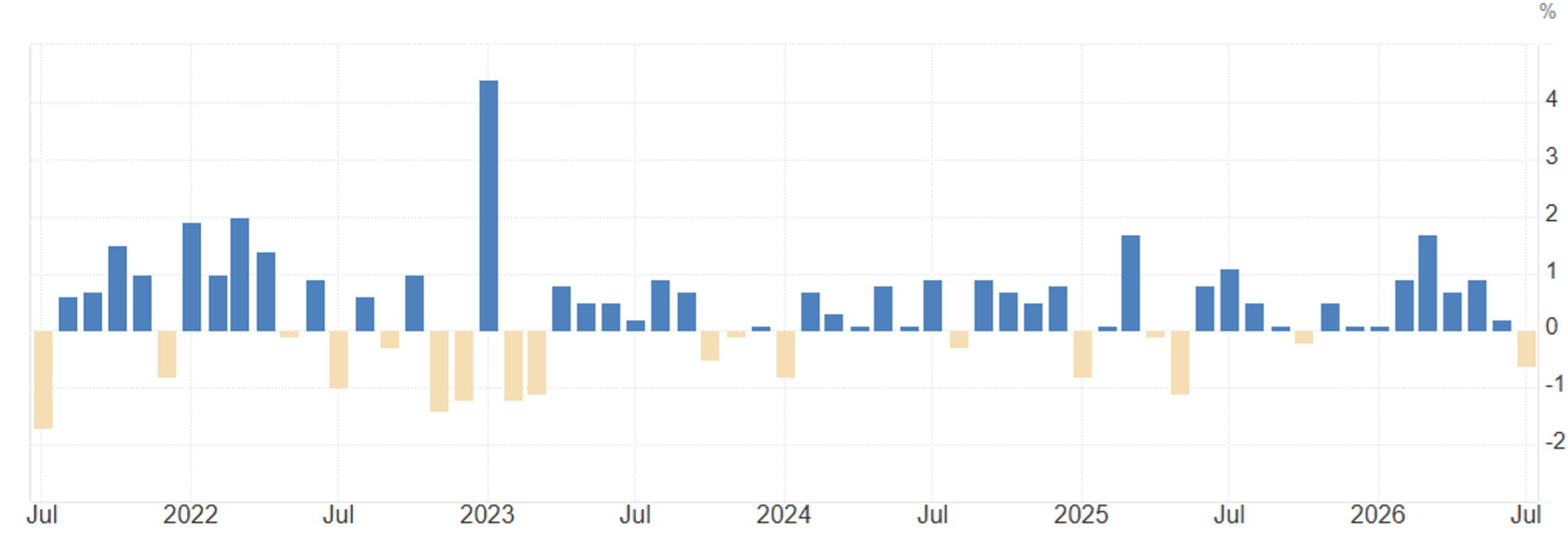
Moreover, consumer spending is not expanding either, as evidenced by the retail sales data presented below; in fact, retail sales contracted in July of this year.
Retail sales
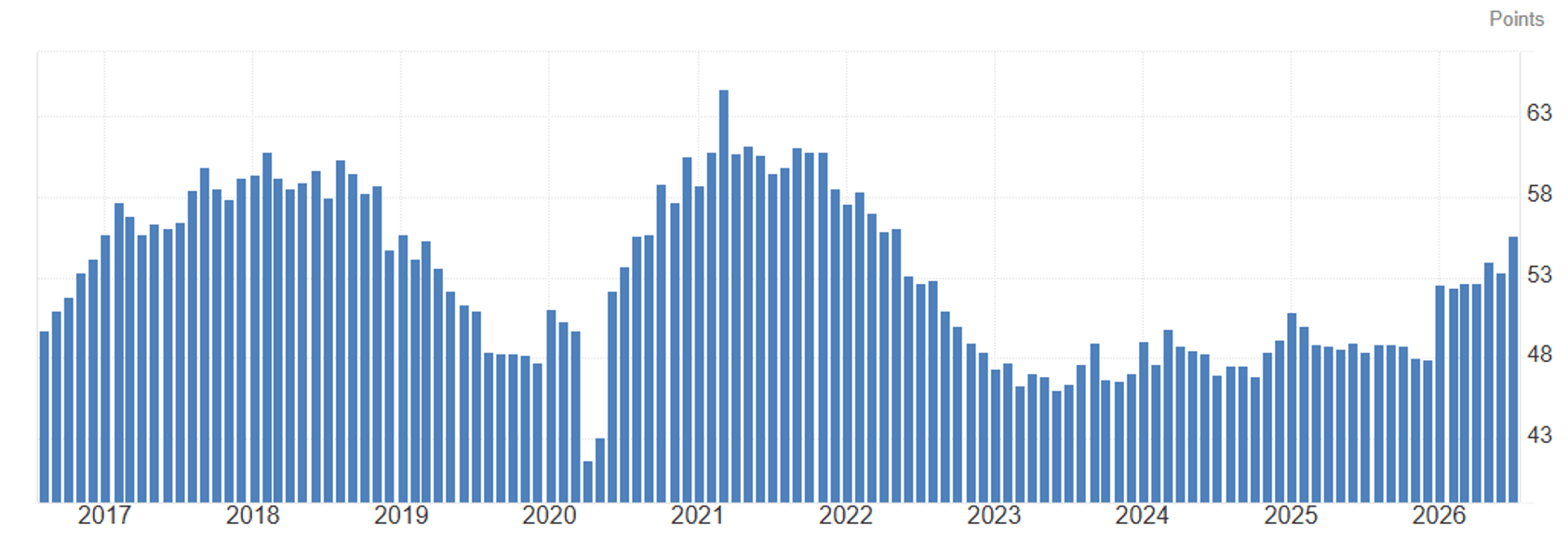
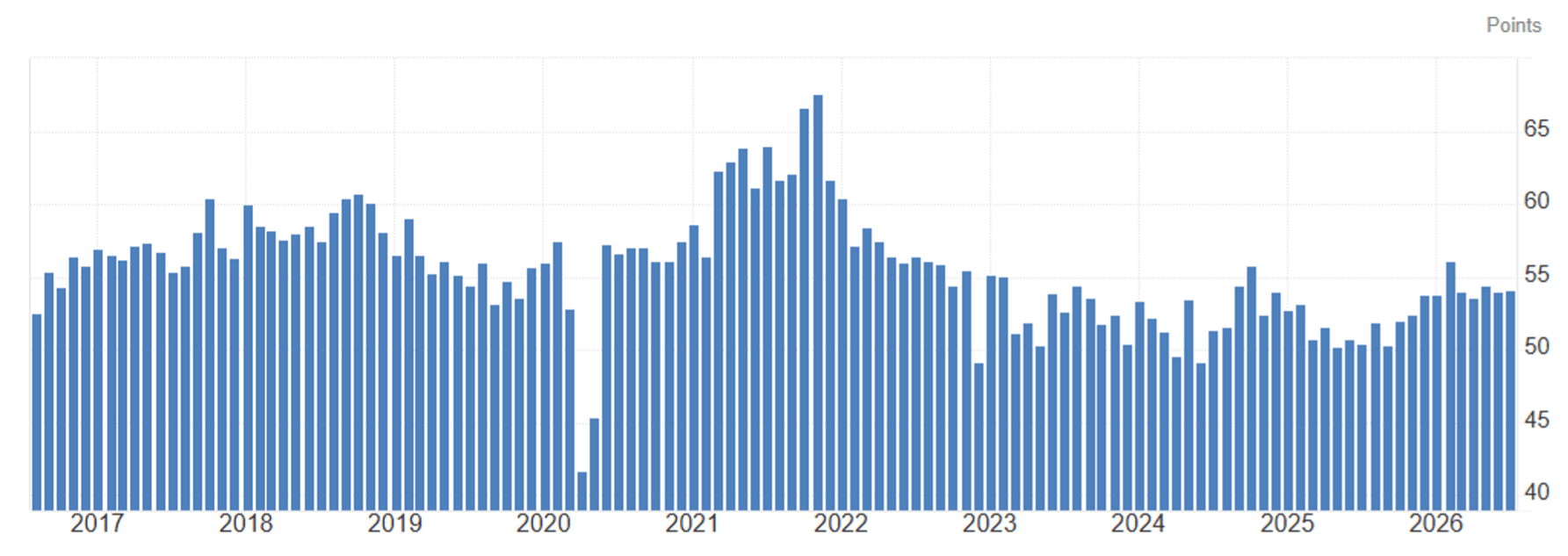
Also, both manufacturing and non-manufacturing Purchasing Managers' Indices (PMIs) indicate very modest economic growth.
Manufacturing PMI reported by the ISM
Services PMI reported by the ISM
Should monetary conditions tighten further, the growth rate is likely to decelerate or even turn negative.
If the Fed tightens too aggressively, the U.S. economy is likely to slip into a recession. Moreover, higher interest rates would make servicing the U.S. debt considerably more expensive, especially given that the national debt has reached the $40 trillion threshold.
The $40 trillion debt
Even though the monetary environment may seem contractionary, the U.S. government has recently reported an exceedingly high debt level. It is well known that high government debt leads to currency debasement due to the expanding money supply. At the same time, such a hefty government debt is costly to service. Therefore, if the Fed raises interest rates, interest expenses will escalate further, boosting government expenditures and widening budget deficits. To manage the debt, the Fed would likely have to print more dollars to buy back Treasuries, which would also push down government bond yields - a necessity given the current debt predicament. This is exactly what is unfolding in the U.S. bond market right now.
The bond market
Additionally, as I have discussed in previous articles, demand for U.S. debt is declining rapidly. Recently, Japan sold off some of its U.S. Treasury holdings to support the yen. Consequently, bond yields are rising, which increases interest expenses - a problematic trend given the U.S. national debt's $40 trillion milestone. This is why Treasury Secretary Scott Bessent announced that the Treasury would buy U.S. bonds to curb rising yields. This approach closely resembles a quantitative easing (QE) program, which is currently taking place despite the Fed's hawkish rhetoric.
What does this mean for Gold?
Despite the Fed's hawkish stance and its potential negative impact on precious metals prices, the U.S. debt is surging while Treasuries lose their appeal. This situation makes a quantitative easing program necessary to keep debt servicing manageable. Quantitative easing entails money printing, which exacerbates currency devaluation and makes precious metals more attractive to investors - a trend that is likely emerging now. Therefore, even if the Fed raises interest rates, gold prices are still likely to rise as long as the Fed buys back Treasuries.
Author

Anna Sokolidou
Independent Analyst
A research analyst, a freelance finance writer and an economics teacher looking for interesting investment opportunities. I have been investing for years. I am mostly interested in writing about commodities, precious metals and large corporations.