Is stagflation back? Middle East war, Oil prices rattle global markets
Stagflation —a combination of rising inflation and decelerating growth— may be making a comeback. Tensions in the Middle East are not new — but a full-scale war is. Following decades of failed negotiations, the United States took the initiative and joined forces with Israel to destroy Iran’s nuclear program by force. The war is pretty much 10 days in, still in an escalating stage, and disrupting financial markets.
“Uncertainty” took over financial markets in 2025, and just when financial markets were anticipating some clarity, United States President Donald Trump screamed not that fast.
A long pre-announced war
The war started well before the US and Israel's joint strikes on Israel on February 28. It began on January 3, when President Trump announced a military operation in Venezuela that ended with the capture of former President Nicolás Maduro, while agreeing a deal with former vice-president, now leader of Venezuela, Delcy Rodriguez.
Trump opened up Venezuela to US drilling companies, who, anyway, hesitate to invest in the country. Still, the White House took control of crude sales, and Trump proudly announced sales valued at $500 million, with the proceeds held in US government-controlled bank accounts.
On the one hand, it is no coincidence that both took place on a Saturday, so as to give the markets time to digest the disruptive news before the weekly opening. On the other hand, and despite Trump's claims, none of the events were meant to protect the “good people” living in those troubled countries.
Taking control of Venezuelan oil was the prequel to Iran’s invasion. The move in the South-American country may also reflect a broader effort by Washington to strengthen its influence over global energy supply. US President Trump's intention was to restrain China’s allies and have more of a say in the global energy market, after boosting production in the country.
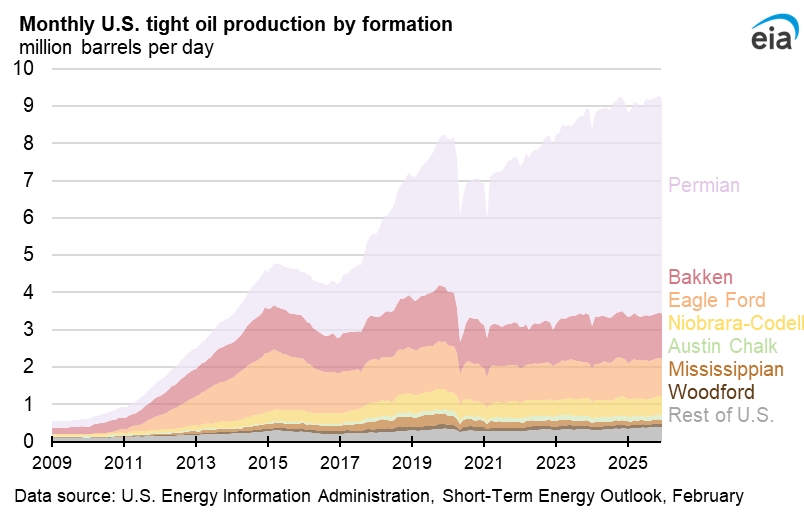
Is neither a coincidence that Trump’s desire to “bring peace” to Ukraine or to seize Greenland, as taking control of rare-earth metals is also an indirect attack on China, which specializes in alternative energy sources, such as solar or wind. Chinese alternatives are cheap and efficient, threatening the appeal of fossil fuels. And the US has been putting much more effort into drilling than ever.
Make America Great Again, right?
But Trump is forgetting about one thing: Actions have consequences.
Most economies, even the American one, are struggling to maintain the fragile balance achieved after two long years of economic turmoil. The US Dollar is indeed benefiting from global geopolitical turmoil in the near term, but if stagflation kicks in fully, the Greenback could depreciate sharply.
And not only that.
Slowing growth and rising inflation are exactly the opposite of what the economy needs right now, not to mention they could force the Federal Reserve to hike interest rates despite slowing economic progress.
Stock markets, which reached record highs on hopes that lower rates will reduce borrowing costs, could erase gains, exacerbating the setback.
Treasury yields could rise, as investors will seek better returns to compensate for inflation-eroded returns.
Consumption could shrink and the labor market suffer, again, exacerbating the pain.
And the US debt continues to skyrocket, with the country running out of funding twice in the last few months.
It’s well known that President Trump wants exactly the opposite.
Not only for Trump, but the ideal scenario will be steady growth, balanced inflation, a stable job market, and much lower interest rates. That’s not possible if the Iran war extends beyond a few more weeks, or if oil prices remain at current or higher levels.
Even further, stagflation does not really need to fully kick in to take its toll: fears are already doing the job.
The extent of the damage will depend on the duration of the Iran war. The longer the war, the greater the probability that the current Oil shock evolves into a full stagflationary cycle —an outcome financial markets have not faced since the late 1970s.
Author

Valeria Bednarik
FXStreet
Valeria Bednarik was born and lives in Buenos Aires, Argentina. Her passion for math and numbers pushed her into studying economics in her younger years.