WTI appreciates to near $69.00 due to PBoC rate cuts, easing geopolitical tensions
- WTI could receive support as PBoC rate cuts could stimulate China’s economic activity, potentially increasing Oil demand.
- US President Joe Biden stated that there is an opportunity to end the conflict between Israel and Iran for a while.
- Shell and Singapore's Maritime and Port Authority have implemented clean-up measures in response to a leak from a land-based pipeline.
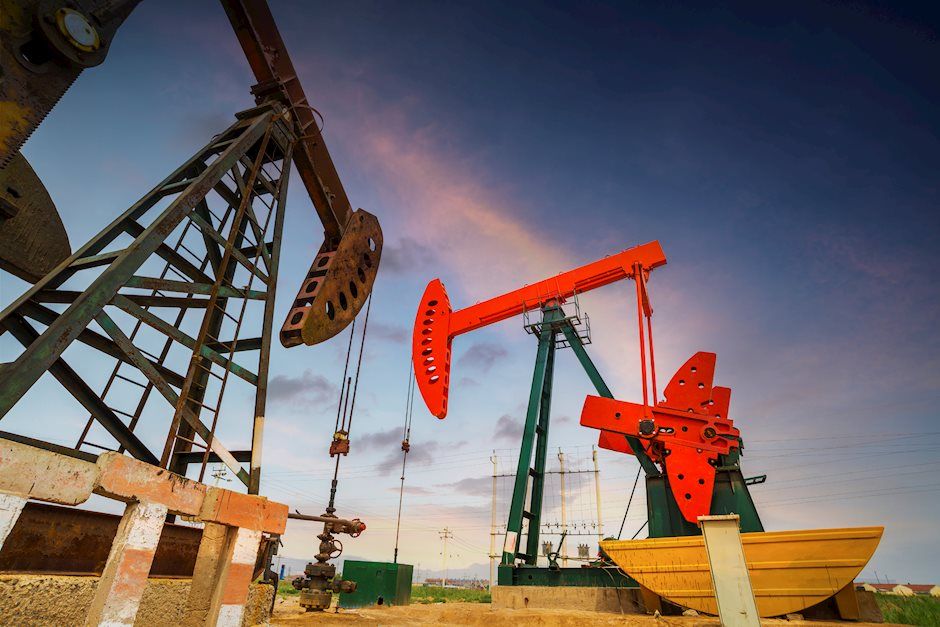

West Texas Intermediate (WTI) Oil price edges higher following a more than 7% decline registered in the previous week, trading around $68.90 per barrel during the Asian hours on Monday. However, the downside may be limited as rate cuts in China, the largest Oil importer, are expected to stimulate domestic economic activity, potentially increasing demand for Oil. The People's Bank of China (PBoC) lowered the 1-year Loan Prime Rate (LPR) to 3.10% from 3.35% and the 5-year LPR to 3.6% from 3.85%, aligning with expectations.
However, crude Oil prices received downward pressure, partly due to slowing economic growth in China. On Friday, China’s Gross Domestic Product (GDP) grew at an annual rate of 4.6% in the third quarter of 2024, slightly down from the 4.7% growth recorded in the second quarter but surpassing market expectations of 4.5%.
Additionally, easing geopolitical tensions in the Middle East have lessened concerns over supply disruptions from the region. US President Joe Biden stated on Friday that there is an opportunity to "deal with Israel and Iran in a way that ends the conflict for a while." However, on Sunday, Israel announced that it was preparing to target sites in Beirut linked to Hezbollah's financial operations, according to Reuters.
In another development, Reuters reported that Shell and Singapore's Maritime and Port Authority implemented clean-up measures following a leak from a land-based pipeline. The leak has reportedly been contained at the source, with no impact on navigation safety. A Shell spokesperson confirmed the leak at the Shell Energy and Chemicals Park, stating that emergency response specialists had been dispatched to manage the situation.
WTI Oil FAQs
WTI Oil is a type of Crude Oil sold on international markets. The WTI stands for West Texas Intermediate, one of three major types including Brent and Dubai Crude. WTI is also referred to as “light” and “sweet” because of its relatively low gravity and sulfur content respectively. It is considered a high quality Oil that is easily refined. It is sourced in the United States and distributed via the Cushing hub, which is considered “The Pipeline Crossroads of the World”. It is a benchmark for the Oil market and WTI price is frequently quoted in the media.
Like all assets, supply and demand are the key drivers of WTI Oil price. As such, global growth can be a driver of increased demand and vice versa for weak global growth. Political instability, wars, and sanctions can disrupt supply and impact prices. The decisions of OPEC, a group of major Oil-producing countries, is another key driver of price. The value of the US Dollar influences the price of WTI Crude Oil, since Oil is predominantly traded in US Dollars, thus a weaker US Dollar can make Oil more affordable and vice versa.
The weekly Oil inventory reports published by the American Petroleum Institute (API) and the Energy Information Agency (EIA) impact the price of WTI Oil. Changes in inventories reflect fluctuating supply and demand. If the data shows a drop in inventories it can indicate increased demand, pushing up Oil price. Higher inventories can reflect increased supply, pushing down prices. API’s report is published every Tuesday and EIA’s the day after. Their results are usually similar, falling within 1% of each other 75% of the time. The EIA data is considered more reliable, since it is a government agency.
OPEC (Organization of the Petroleum Exporting Countries) is a group of 12 Oil-producing nations who collectively decide production quotas for member countries at twice-yearly meetings. Their decisions often impact WTI Oil prices. When OPEC decides to lower quotas, it can tighten supply, pushing up Oil prices. When OPEC increases production, it has the opposite effect. OPEC+ refers to an expanded group that includes ten extra non-OPEC members, the most notable of which is Russia.
Author
Akhtar Faruqui
FXStreet
Akhtar Faruqui is a Forex Analyst based in New Delhi, India. With a keen eye for market trends and a passion for dissecting complex financial dynamics, he is dedicated to delivering accurate and insightful Forex news and analysis.