USD/INR trades strongly as Fed’s hawkish comments spur US Dollar demand
- Indian Rupee loses ground on Thursday on the firmer USD and the Fed governor’s hawkish comments.
- The INR’s downside might be limited by the potential intervention from the Indian central bank.
- The RBI is expected to hold rates steady in its April meeting amid strong economic growth and elevated inflation.
- The Annualized US GDP (Q4) growth number will be released on Thursday.
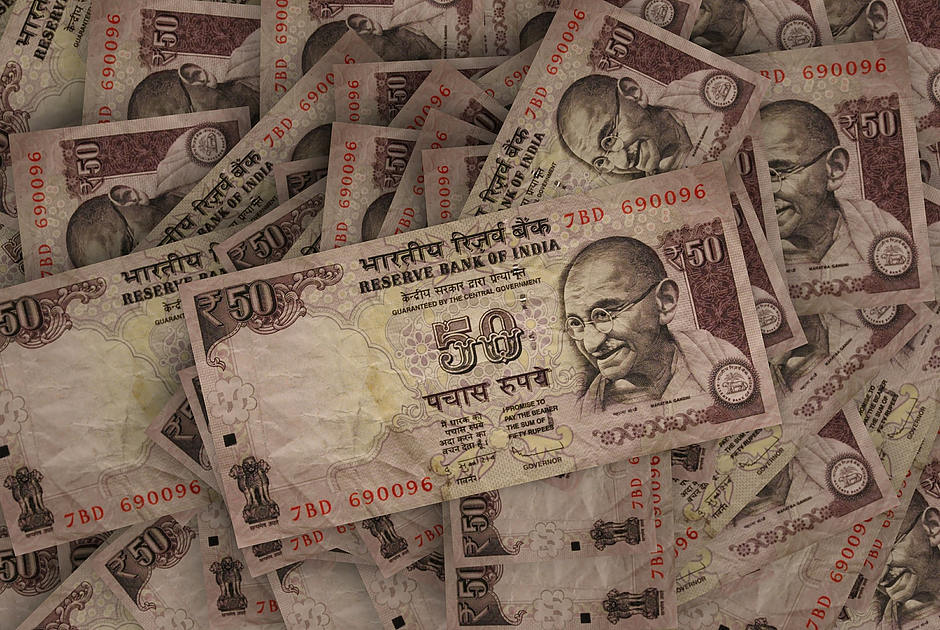

Indian Rupee (INR) edges lower on Thursday amid the higher demand for the US Dollar (USD) from oil importers and the hawkish remarks from the Federal Reserve (Fed) officials. Furthermore, the ongoing weakening of Asian peers will continue to exert pressure on the INR. However, the downside of INR might be capped on the back of the Reserve Bank of India's (RBI) intervention in the foreign exchange market to help limit the depreciation in INR.
The Indian Central Bank released its monetary policy committee (MPC) schedule for the upcoming financial year 2024–25, starting from April 1, 2024. The first policy meeting will be held from April 3–5, and the RBI is anticipated to keep interest rates unchanged until at least July amid strong economic growth and elevated inflation. Moving on, investors await the release of the US Gross Domestic Product Annualized (Q4) on Thursday, which is estimated to grow at a steady pace at 3.2%. The US February Personal Consumption Expenditures Price Index (PCE) data will take center stage on Friday even though the markets are closed for Good Friday.
Daily Digest Market Movers: Indian Rupee remains weak despite the robust economic outlook
- India’s Current Account Deficit narrowed to $10.5 billion or 1.2% of Gross Domestic Product (GDP) in the fourth quarter (Q4) that ended December 2023 from $11.4 billion in the previous reading.
- Morgan Stanley has raised India’s GDP growth projection for FY 24-25 to 6.8% from 6.5% estimated earlier, citing the ongoing growth in industrial and capex activities.
- S&P Global raised India's GDP growth forecast for FY25 to 6.8%, lower than the RBI’s estimation of 7%. Furthermore, S&P expects RBI to cut rates by 75 bps by the end of this fiscal year.
- The Fed Governor Christopher Waller said early Thursday that the central bank is in no rush to cut the benchmark rate and may need to “maintain the current rate target for longer than expected.”
- Fed’s Waller further stated that he needs to see more inflation progress before supporting rate cuts.
Technical Analysis: Indian Rupee weakens, further upside is likely to remain limited
Indian Rupee trades on a softer note on the day. USD/INR extends its uptrend in the longer term since the pair rose above a multi-month-old descending trend channel last week.
In the near term, USD/INR remains above the key 100-day Exponential Moving Average (EMA) on the daily chart, with the 14-day Relative Strength Index holding above the 50 midline. This upward momentum of the pair indicates the support levels are more likely to hold than to break, and there’s more room for further upside.
The potential upside barrier for USD/INR will emerge at an all-time high of 83.49. A decisive break above this level will see a rally to 84.00 (round figure). On the downside, the initial support level is seen at 83.20 (high March 21), followed by 83.00 (psychological level, the 100-day EMA). A breach of the mentioned level could confirm that sellers are returning and ready to let the downtrend resume.
US Dollar price this week
The table below shows the percentage change of US Dollar (USD) against listed major currencies this week. US Dollar was the strongest against the Swiss Franc.
| USD | EUR | GBP | CAD | AUD | JPY | NZD | CHF | |
| USD | -0.11% | -0.24% | -0.21% | -0.11% | 0.05% | 0.02% | 0.87% | |
| EUR | 0.12% | -0.12% | -0.09% | 0.03% | 0.16% | 0.19% | 0.99% | |
| GBP | 0.24% | 0.12% | 0.03% | 0.15% | 0.25% | 0.31% | 1.11% | |
| CAD | 0.20% | 0.08% | -0.03% | 0.09% | 0.26% | 0.28% | 1.07% | |
| AUD | 0.11% | -0.02% | -0.12% | -0.13% | 0.11% | 0.12% | 0.98% | |
| JPY | -0.05% | -0.16% | -0.18% | -0.24% | -0.11% | -0.01% | 0.87% | |
| NZD | -0.08% | -0.15% | -0.26% | -0.24% | -0.12% | -0.03% | 0.87% | |
| CHF | -0.88% | -1.00% | -1.12% | -1.09% | -0.97% | -0.83% | -0.80% |
The heat map shows percentage changes of major currencies against each other. The base currency is picked from the left column, while the quote currency is picked from the top row. For example, if you pick the Euro from the left column and move along the horizontal line to the Japanese Yen, the percentage change displayed in the box will represent EUR (base)/JPY (quote).
Indian economy FAQs
The Indian economy has averaged a growth rate of 6.13% between 2006 and 2023, which makes it one of the fastest growing in the world. India’s high growth has attracted a lot of foreign investment. This includes Foreign Direct Investment (FDI) into physical projects and Foreign Indirect Investment (FII) by foreign funds into Indian financial markets. The greater the level of investment, the higher the demand for the Rupee (INR). Fluctuations in Dollar-demand from Indian importers also impact INR.
India has to import a great deal of its Oil and gasoline so the price of Oil can have a direct impact on the Rupee. Oil is mostly traded in US Dollars (USD) on international markets so if the price of Oil rises, aggregate demand for USD increases and Indian importers have to sell more Rupees to meet that demand, which is depreciative for the Rupee.
Inflation has a complex effect on the Rupee. Ultimately it indicates an increase in money supply which reduces the Rupee’s overall value. Yet if it rises above the Reserve Bank of India’s (RBI) 4% target, the RBI will raise interest rates to bring it down by reducing credit. Higher interest rates, especially real rates (the difference between interest rates and inflation) strengthen the Rupee. They make India a more profitable place for international investors to park their money. A fall in inflation can be supportive of the Rupee. At the same time lower interest rates can have a depreciatory effect on the Rupee.
India has run a trade deficit for most of its recent history, indicating its imports outweigh its exports. Since the majority of international trade takes place in US Dollars, there are times – due to seasonal demand or order glut – where the high volume of imports leads to significant US Dollar- demand. During these periods the Rupee can weaken as it is heavily sold to meet the demand for Dollars. When markets experience increased volatility, the demand for US Dollars can also shoot up with a similarly negative effect on the Rupee.
Author
Lallalit Srijandorn
FXStreet
Lallalit Srijandorn is a Parisian at heart. She has lived in France since 2019 and now becomes a digital entrepreneur based in Paris and Bangkok.