USD/CHF posts modest gains to near 0.9000 in thin holiday trading
- USD/CHF trades with mild gains near 0.8990 in Tuesday’s European session.
- Fed indicated fewer rate reductions ahead, supporting the US Dollar.
- Geopolitical risks might boost the safe-haven currency like the CHF and cap the upside for the pair.
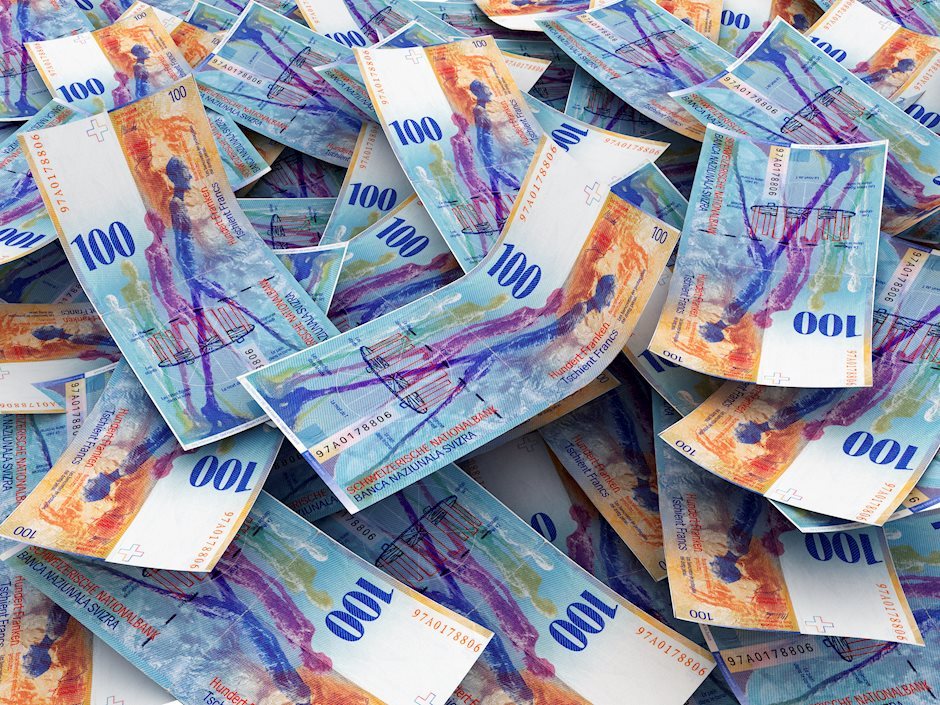

The USD/CHF pair posts modest gains to around 0.8990 during the early European session on Tuesday. The prospect of higher-for-longer US interest rates continues to underpin the Greenback for the time being. Trading volumes are likely to thin out as the year-end approaches.
The Federal Reserve (Fed) projections outlined a slower pace of rate cuts than traders had expected, supporting the US Dollar (USD). The Summary of Economic Projections, or ‘dot-plot’, indicated a half-percentage point rate cut in 2025, compared with a full percentage cut projected in September.
Data released by the Census Bureau on Monday showed that the US New Home Sales jumped 5.9% to a seasonally adjusted annual rate of 664,000 in November. The reading for October was revised higher to a rate of 627,000 units from the previously reported 610,000 units. Additionally, Durable Goods Orders in the US declined by 1.1% in November to $285.1 billion, followed by a 0.8% increase reported in October, weaker than the expectations of a 0.4% decline.
On the Swiss front, traders will closely monitor the development surrounding escalating geopolitical tensions in the Middle East. Ant signs of geopolitical risks could boost the safe-haven currency like the Swiss Franc (CHF) and act as a headwind for USD/CHF. Israel’s defence minister has confirmed that Israel killed Hamas's political leader Ismail Haniyeh in Tehran in July and warned that the military would also “decapitate” the leadership of Yemen’s Houthi rebels, per BBC. On the other hand, Israeli Prime Minister Benjamin Netanyahu said some progress had been made towards agreeing a ceasefire in Gaza with Hamas, but he could not give a timeline for when a deal would be reached.
Swiss Franc FAQs
The Swiss Franc (CHF) is Switzerland’s official currency. It is among the top ten most traded currencies globally, reaching volumes that well exceed the size of the Swiss economy. Its value is determined by the broad market sentiment, the country’s economic health or action taken by the Swiss National Bank (SNB), among other factors. Between 2011 and 2015, the Swiss Franc was pegged to the Euro (EUR). The peg was abruptly removed, resulting in a more than 20% increase in the Franc’s value, causing a turmoil in markets. Even though the peg isn’t in force anymore, CHF fortunes tend to be highly correlated with the Euro ones due to the high dependency of the Swiss economy on the neighboring Eurozone.
The Swiss Franc (CHF) is considered a safe-haven asset, or a currency that investors tend to buy in times of market stress. This is due to the perceived status of Switzerland in the world: a stable economy, a strong export sector, big central bank reserves or a longstanding political stance towards neutrality in global conflicts make the country’s currency a good choice for investors fleeing from risks. Turbulent times are likely to strengthen CHF value against other currencies that are seen as more risky to invest in.
The Swiss National Bank (SNB) meets four times a year – once every quarter, less than other major central banks – to decide on monetary policy. The bank aims for an annual inflation rate of less than 2%. When inflation is above target or forecasted to be above target in the foreseeable future, the bank will attempt to tame price growth by raising its policy rate. Higher interest rates are generally positive for the Swiss Franc (CHF) as they lead to higher yields, making the country a more attractive place for investors. On the contrary, lower interest rates tend to weaken CHF.
Macroeconomic data releases in Switzerland are key to assessing the state of the economy and can impact the Swiss Franc’s (CHF) valuation. The Swiss economy is broadly stable, but any sudden change in economic growth, inflation, current account or the central bank’s currency reserves have the potential to trigger moves in CHF. Generally, high economic growth, low unemployment and high confidence are good for CHF. Conversely, if economic data points to weakening momentum, CHF is likely to depreciate.
As a small and open economy, Switzerland is heavily dependent on the health of the neighboring Eurozone economies. The broader European Union is Switzerland’s main economic partner and a key political ally, so macroeconomic and monetary policy stability in the Eurozone is essential for Switzerland and, thus, for the Swiss Franc (CHF). With such dependency, some models suggest that the correlation between the fortunes of the Euro (EUR) and the CHF is more than 90%, or close to perfect.
Author
Lallalit Srijandorn
FXStreet
Lallalit Srijandorn is a Parisian at heart. She has lived in France since 2019 and now becomes a digital entrepreneur based in Paris and Bangkok.

















