US stocks suffered heavy losses after Tuesday's US CPI inflation data
- Major equity indexes traded deep in negative territory on Tuesday.
- Inflation in the US declined at a softer pace than expected in January.
- All major sectors of S&P 500 suffered heavy losses post-CPI.
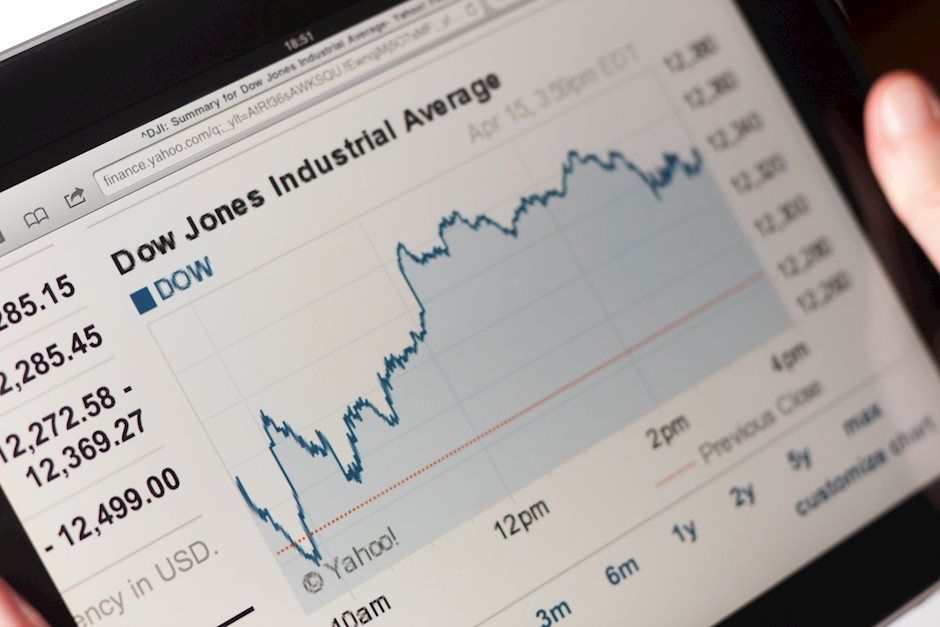

The S&P 500 (SPX) index fell 1.37% to close the session at 4,953.17. The Dow Jones (DJIA) dropped 1.35% to end at 38,272.49, while the Nasdaq (IXIC) lost 1.80% to finish at 15,655.6.
Related content
Breaking: US CPI inflation softens to 3.1% in January vs. 2.9% forecast.
Stock market news
- All major sectors of the S&P 500 fell deep into negative territory in the first half of the session. A thin recovery saw limited rebound, with the Consumer Discretionary ending Tuesday as the worst-performing S&P 500 sector, down 1.96% on the day.
- Ecolab Inc. (ECL) climbed nearly 9%, ending at $221.18 as the top gainer for Tuesday. On the flip side, Moody's Corp tumbled 7.9% to end the day at $369.23 as the day's single worst performer.
- The CBOE Volatility Index (.VIX), Wall Street's fear gauge, is up more than 6% on the day after rising 7.7% on Monday.
- Inflation in the US, as measured by the change in the Consumer Price Index (CPI), softened to 3.1% on a yearly basis in January from 3.4% in December, the US Bureau of Labor Statistics (BLS) reported on Tuesday. This reading came in above the market expectation of 2.9%. The Core CPI, which excludes volatile food and energy prices, rose 3.9% in the same period, matching the December's increase and surpassing analysts' estimate of 3.7%.
- The Federal Reserve Bank of New York's latest Survey of Consumer Expectations showed on Monday that the US consumers' one-year inflation expectation held steady at 3%.
- The US Bureau of Labor Statistics (BLS) announced on Friday that it revised the monthly Consumer Price Index (CPI) increase for December lower to 0.2% from 0.3%.
- Dallas Federal Reserve (Fed) Bank President Lorie Logan said that there is no urgency to cut interest rates. Logan acknowledged that there has been "tremendous progress" on bringing down inflation but noted that she would want to see further evidence on inflation to confirm the progress is durable.
- Airbnb Inc. (ABNB) and MGM Resorts International (MGM) are among top companies that will release earnings reports after the closing bell.
- Later in the week, January Retail Sales, Industrial Production and Producer Price Index (PPI) data will be featured in the US economic calendar.
S&P 500 hourly chart
Inflation FAQs
What is inflation?
Inflation measures the rise in the price of a representative basket of goods and services. Headline inflation is usually expressed as a percentage change on a month-on-month (MoM) and year-on-year (YoY) basis. Core inflation excludes more volatile elements such as food and fuel which can fluctuate because of geopolitical and seasonal factors. Core inflation is the figure economists focus on and is the level targeted by central banks, which are mandated to keep inflation at a manageable level, usually around 2%.
What is the Consumer Price Index (CPI)?
The Consumer Price Index (CPI) measures the change in prices of a basket of goods and services over a period of time. It is usually expressed as a percentage change on a month-on-month (MoM) and year-on-year (YoY) basis. Core CPI is the figure targeted by central banks as it excludes volatile food and fuel inputs. When Core CPI rises above 2% it usually results in higher interest rates and vice versa when it falls below 2%. Since higher interest rates are positive for a currency, higher inflation usually results in a stronger currency. The opposite is true when inflation falls.
What is the impact of inflation on foreign exchange?
Although it may seem counter-intuitive, high inflation in a country pushes up the value of its currency and vice versa for lower inflation. This is because the central bank will normally raise interest rates to combat the higher inflation, which attract more global capital inflows from investors looking for a lucrative place to park their money.
How does inflation influence the price of Gold?
Formerly, Gold was the asset investors turned to in times of high inflation because it preserved its value, and whilst investors will often still buy Gold for its safe-haven properties in times of extreme market turmoil, this is not the case most of the time. This is because when inflation is high, central banks will put up interest rates to combat it.
Higher interest rates are negative for Gold because they increase the opportunity-cost of holding Gold vis-a-vis an interest-bearing asset or placing the money in a cash deposit account. On the flipside, lower inflation tends to be positive for Gold as it brings interest rates down, making the bright metal a more viable investment alternative.
Author
FXStreet Team
FXStreet