US Dollar sees further green on quiet Monday
- US Dollar recovers following last Friday’s gains.
- Inflation data takes center stage, CPI expected to show moderation.
- Fed easing expectations have steadied with market pricing in less aggressive cuts.
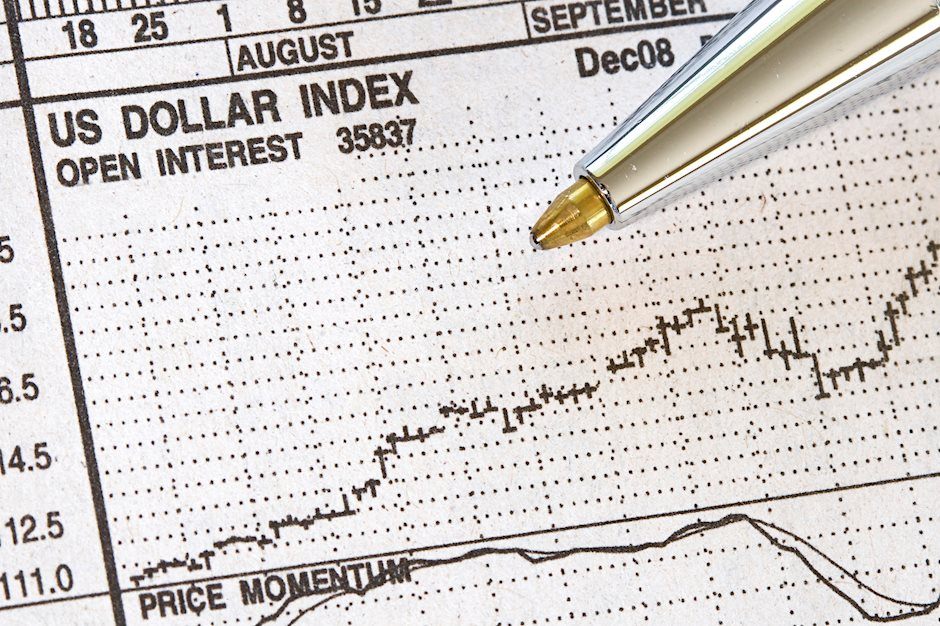

The US Dollar Index (DXY), a measure of the US Dollar against a basket of six currencies, extended its recovery on Monday ahead of key inflation data releases this week. Following the mixed labor market figures reported last Friday, the focus shifts to upcoming inflation data, with Consumer Price Index (CPI) figures expected to show moderation. Technical analysis indicates the potential for further US Dollar gains in the near term.
Despite positive growth indicators, the US economy faces potential risks. While the economy remains strong, the market may be overly optimistic in pricing future interest rate cuts.
Daily digest market movers: US Dollar continues recovering while market digests mixed NFPs
- US Dollar continues to make gains after last Friday’s dovish Fed comments and weaker-than-expected jobs data initially saw a sell-off.
- Greenback has staged a strong recovery and posted bullish engulfing patterns against every major currency except JPY and CHF.
- August CPI data will be reported on Wednesday with headline inflation expected at 2.6% YoY vs. 2.9% in July. Core inflation is expected to remain steady at 3.2% YoY.
- PPI data will be reported on Thursday with headline inflation expected at 1.7% YoY vs. 2.2% in July.
- Fed easing expectations have steadied with odds of a 50 bps cut this month falling to 20-25%. The market is still pricing in 100-125 bps of Fed easing by year-end.
- No Fed speakers are scheduled until Chair Powell’s press conference on September 18.
DXY technical outlook: DXY seeks 101.60 resistance
Indicators show some momentum but stay negative, striving to reclaim the 20-day Simple Moving Average (SMA) of 101.60. A breakout above this level signals a buying opportunity and enhances the short-term outlook.
Support levels exist at 101.30, 101.15 and 101.00. Resistance lies at 101.80, 102.00 and 102.30.
Fed FAQs
Monetary policy in the US is shaped by the Federal Reserve (Fed). The Fed has two mandates: to achieve price stability and foster full employment. Its primary tool to achieve these goals is by adjusting interest rates. When prices are rising too quickly and inflation is above the Fed’s 2% target, it raises interest rates, increasing borrowing costs throughout the economy. This results in a stronger US Dollar (USD) as it makes the US a more attractive place for international investors to park their money. When inflation falls below 2% or the Unemployment Rate is too high, the Fed may lower interest rates to encourage borrowing, which weighs on the Greenback.
The Federal Reserve (Fed) holds eight policy meetings a year, where the Federal Open Market Committee (FOMC) assesses economic conditions and makes monetary policy decisions. The FOMC is attended by twelve Fed officials – the seven members of the Board of Governors, the president of the Federal Reserve Bank of New York, and four of the remaining eleven regional Reserve Bank presidents, who serve one-year terms on a rotating basis.
In extreme situations, the Federal Reserve may resort to a policy named Quantitative Easing (QE). QE is the process by which the Fed substantially increases the flow of credit in a stuck financial system. It is a non-standard policy measure used during crises or when inflation is extremely low. It was the Fed’s weapon of choice during the Great Financial Crisis in 2008. It involves the Fed printing more Dollars and using them to buy high grade bonds from financial institutions. QE usually weakens the US Dollar.
Quantitative tightening (QT) is the reverse process of QE, whereby the Federal Reserve stops buying bonds from financial institutions and does not reinvest the principal from the bonds it holds maturing, to purchase new bonds. It is usually positive for the value of the US Dollar.
Author
Patricio Martín
FXStreet
Patricio is an economist from Argentina passionate about global finance and understanding the daily movements of the markets.