US Dollar chalks in a third straight gain as markets pivot into Greenback
- The Greenback has found a firm bidding floor after weeks of being pinned to boards.
- With Fed rate cuts contingent on labor data, expectations for more cuts hang in the balance.
- Geopolitical risks remain a key sticking point for global markets on Wednesday.

The US Dollar (USD) Index (DXY) rose for a third consecutive day as broad-market risk appetite takes a beating. Geopolitical concerns have weighed down investor sentiment this week as conflicts in the Middle East bubble over, and better-than-expected US job data is crimping hopes for follow-up jumbo rate cuts from the Federal Reserve (Fed).
US ADP Employment Change figures printed far higher than markets expected on Wednesday, making it difficult for investors to keep hoping for outsized rate cuts after several Fed officials hit the newswires this week warning that September’s 50 bps rate cut was likely a one-off and not a signal of future policy.
Daily digest market movers
- US Dollar Index (DXY) clears 101.50 as Greenback rally extends on nervous markets.
- The Middle East escalation is threatening to boil over following Iran’s missile attack on Israel on Tuesday.
- Investors are waiting to see how Israel will retaliate against Iran, who were retaliating after Israel launched a ground invasion into Lebanon last week.
- US ADP Employment Change figures came in at 143K for September, clearing the forecast 120K and vaulting over the previous month’s revised 103K.
- Rising employment figures limit market hopes for further outsized Fed rate cuts.
- Investors still look ahead to Friday’s looming Nonfarm Payrolls (NFP) jobs print.
DXY price forecast
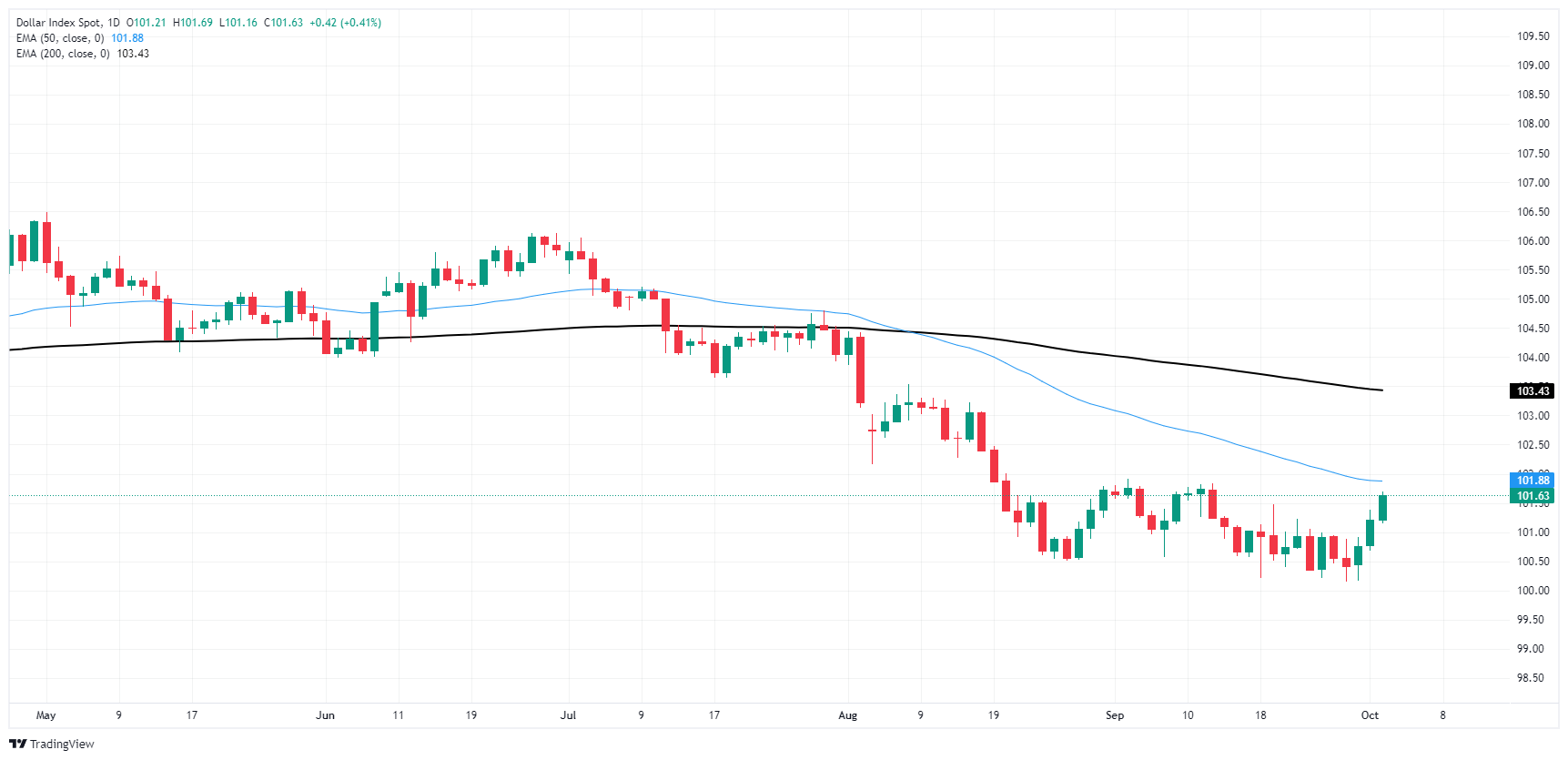
Despite a near-term upswing, the US Dollar Index remains fairly tepid overall, with the major currency index still hobbled below previous highs made near 102.00. Greenback traders have grappled with a rough go of things since the US Dollar peaked near 106.50 earlier in 2024. The DXY has recovered over 1.5% from last week’s swing low into the 100.00 handle, but USD flows remain down 4.5% overall from 2024’s peak bid of 106.52.
DXY daily chart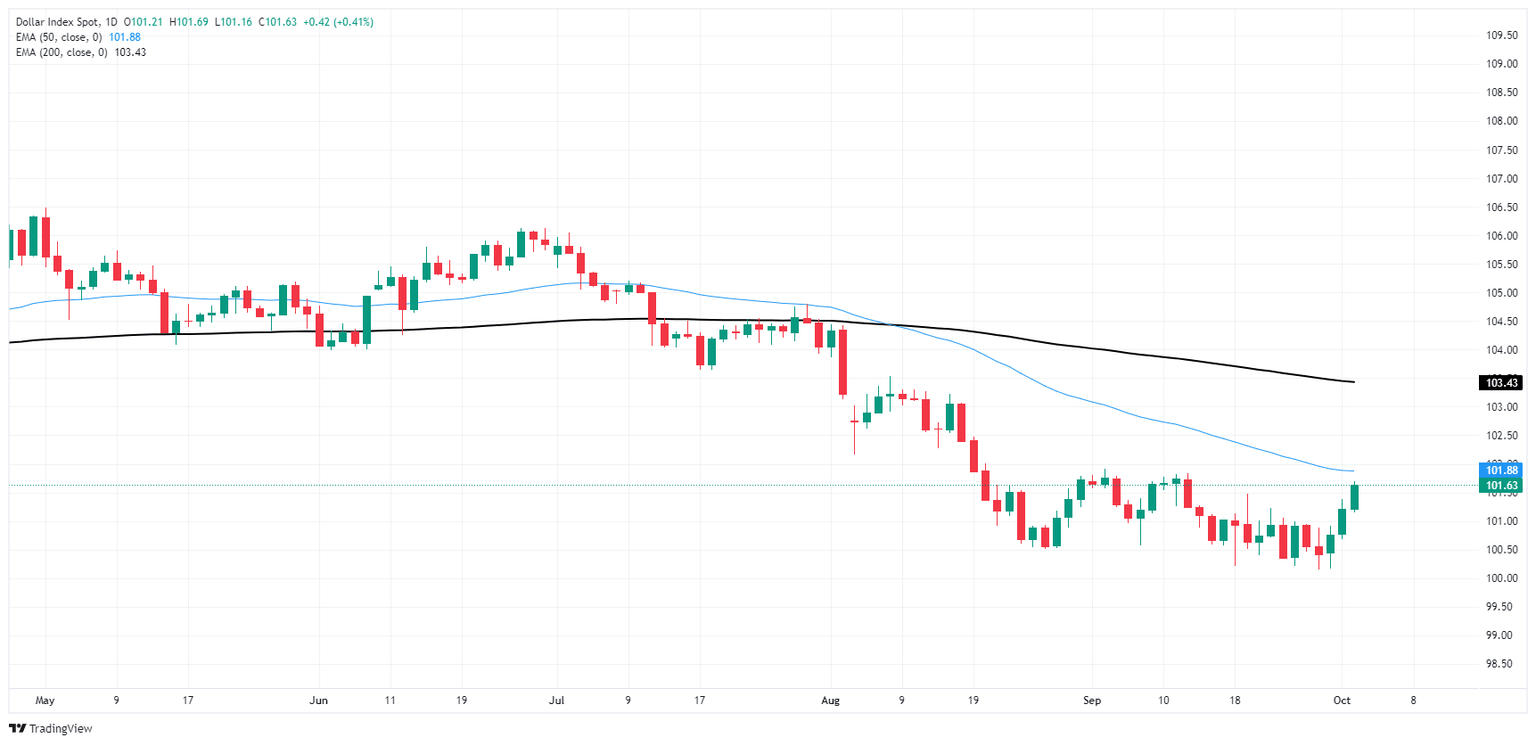
Fed FAQs
Monetary policy in the US is shaped by the Federal Reserve (Fed). The Fed has two mandates: to achieve price stability and foster full employment. Its primary tool to achieve these goals is by adjusting interest rates. When prices are rising too quickly and inflation is above the Fed’s 2% target, it raises interest rates, increasing borrowing costs throughout the economy. This results in a stronger US Dollar (USD) as it makes the US a more attractive place for international investors to park their money. When inflation falls below 2% or the Unemployment Rate is too high, the Fed may lower interest rates to encourage borrowing, which weighs on the Greenback.
The Federal Reserve (Fed) holds eight policy meetings a year, where the Federal Open Market Committee (FOMC) assesses economic conditions and makes monetary policy decisions. The FOMC is attended by twelve Fed officials – the seven members of the Board of Governors, the president of the Federal Reserve Bank of New York, and four of the remaining eleven regional Reserve Bank presidents, who serve one-year terms on a rotating basis.
In extreme situations, the Federal Reserve may resort to a policy named Quantitative Easing (QE). QE is the process by which the Fed substantially increases the flow of credit in a stuck financial system. It is a non-standard policy measure used during crises or when inflation is extremely low. It was the Fed’s weapon of choice during the Great Financial Crisis in 2008. It involves the Fed printing more Dollars and using them to buy high grade bonds from financial institutions. QE usually weakens the US Dollar.
Quantitative tightening (QT) is the reverse process of QE, whereby the Federal Reserve stops buying bonds from financial institutions and does not reinvest the principal from the bonds it holds maturing, to purchase new bonds. It is usually positive for the value of the US Dollar.
Author
Joshua Gibson
FXStreet
Joshua joins the FXStreet team as an Economics and Finance double major from Vancouver Island University with twelve years' experience as an independent trader focusing on technical analysis.