Tesla Inc. ( $TSLA) Elliott Wave analysis: The rally and what’s next


In today’s article, we’ll examine the recent performance of Tesla Inc. ($TSLA) through the lens of Elliott Wave Theory. We’ll review how the rally from the November 4, 2024, low unfolded as a 5-wave impulse and discuss our forecast for the next move. Let’s dive into the structure and expectations for this stock.
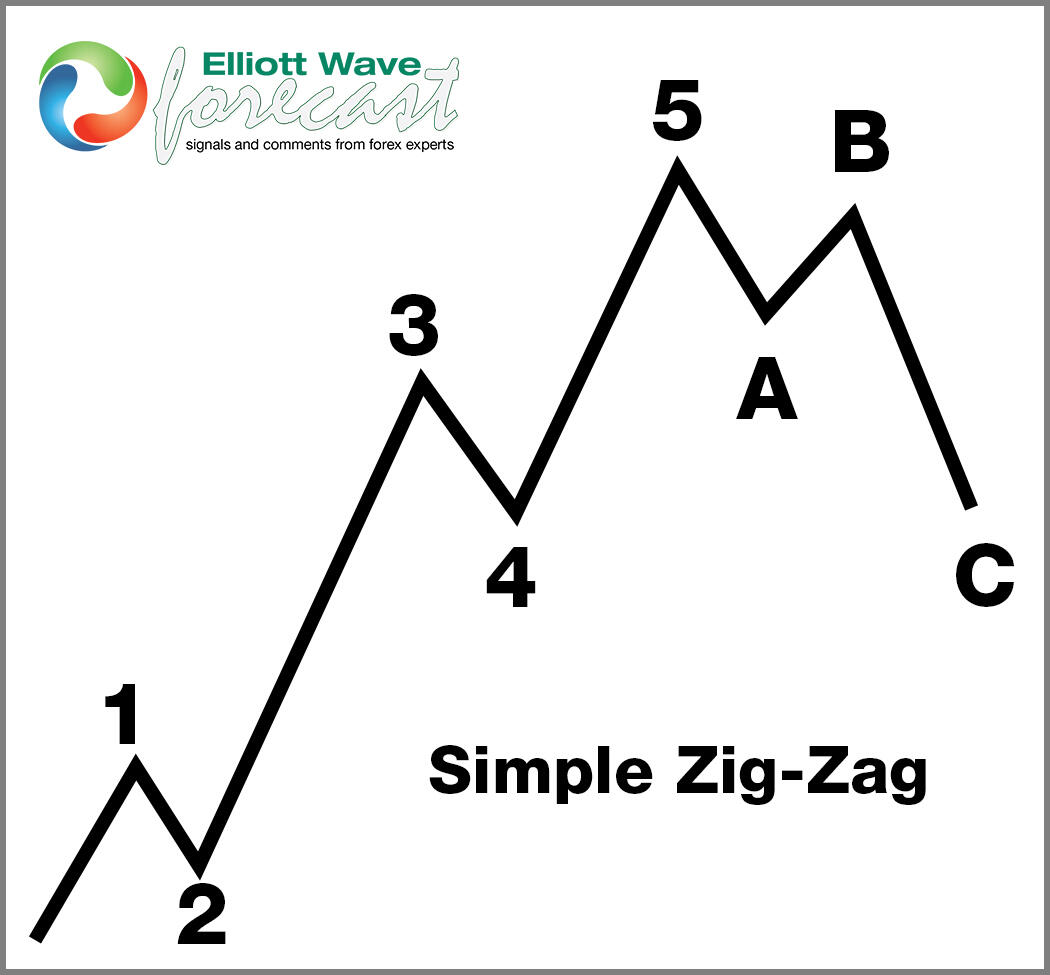
Five wave impulse structure + ABC correction
$TSLA one-hour Elliott Wave chart 11.15.2024
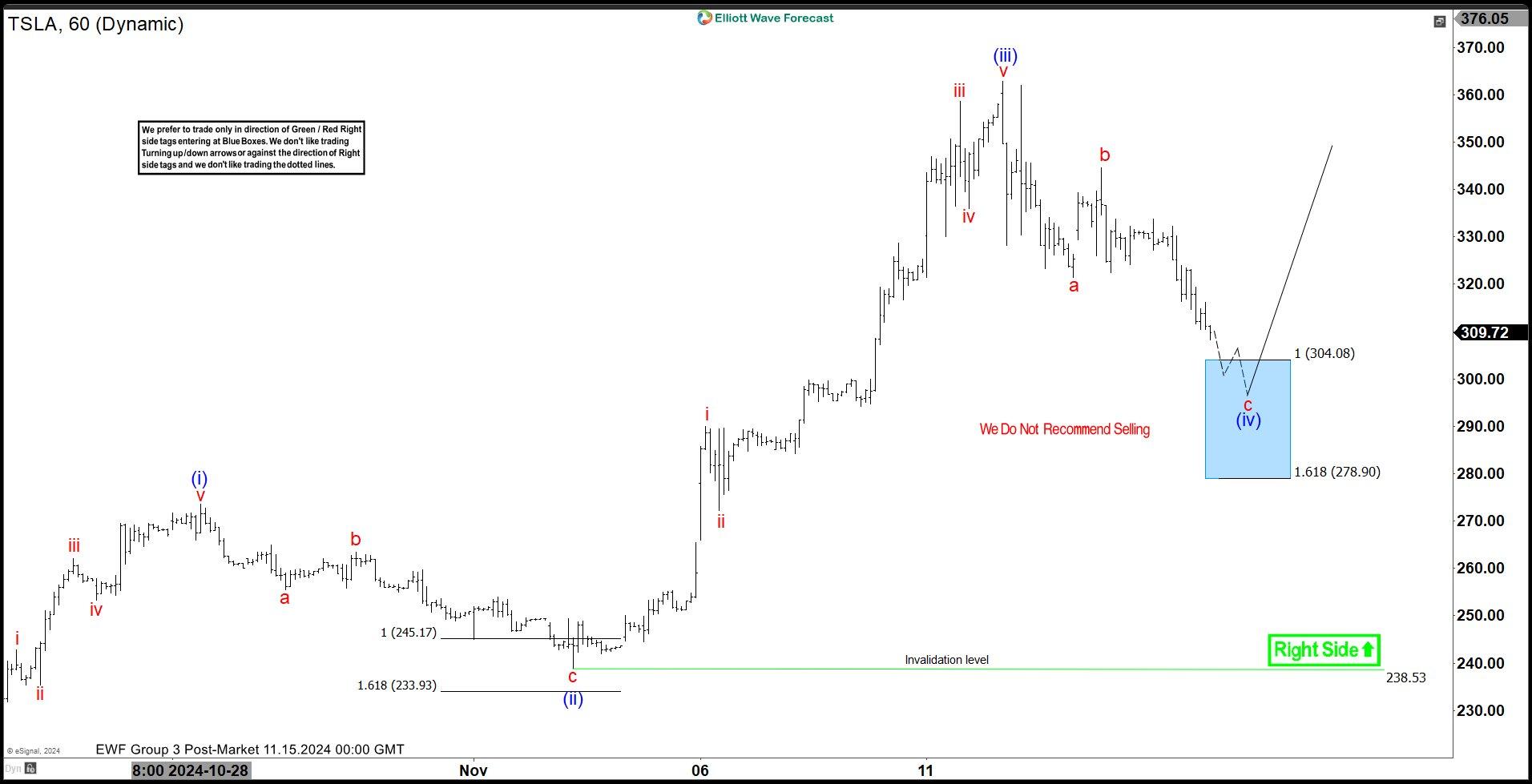
In the 1-hour Elliott Wave count from November 15, 2024, we see that $TSLA completed a 5-wave impulsive cycle beginning on November 4, 2024, and ending on November 12, 2024, at the blue (iii). As expected, this initial wave prompted a pullback. We anticipated this pullback to unfold in 3 swings, likely finding buyers in the equal legs area between $304.08 and $278.90.
This setup aligns with a typical Elliott Wave correction pattern (ABC), where the market pauses briefly before resuming the main trend.
$TSLA one-hour Elliott Wave chart 11.18.2024
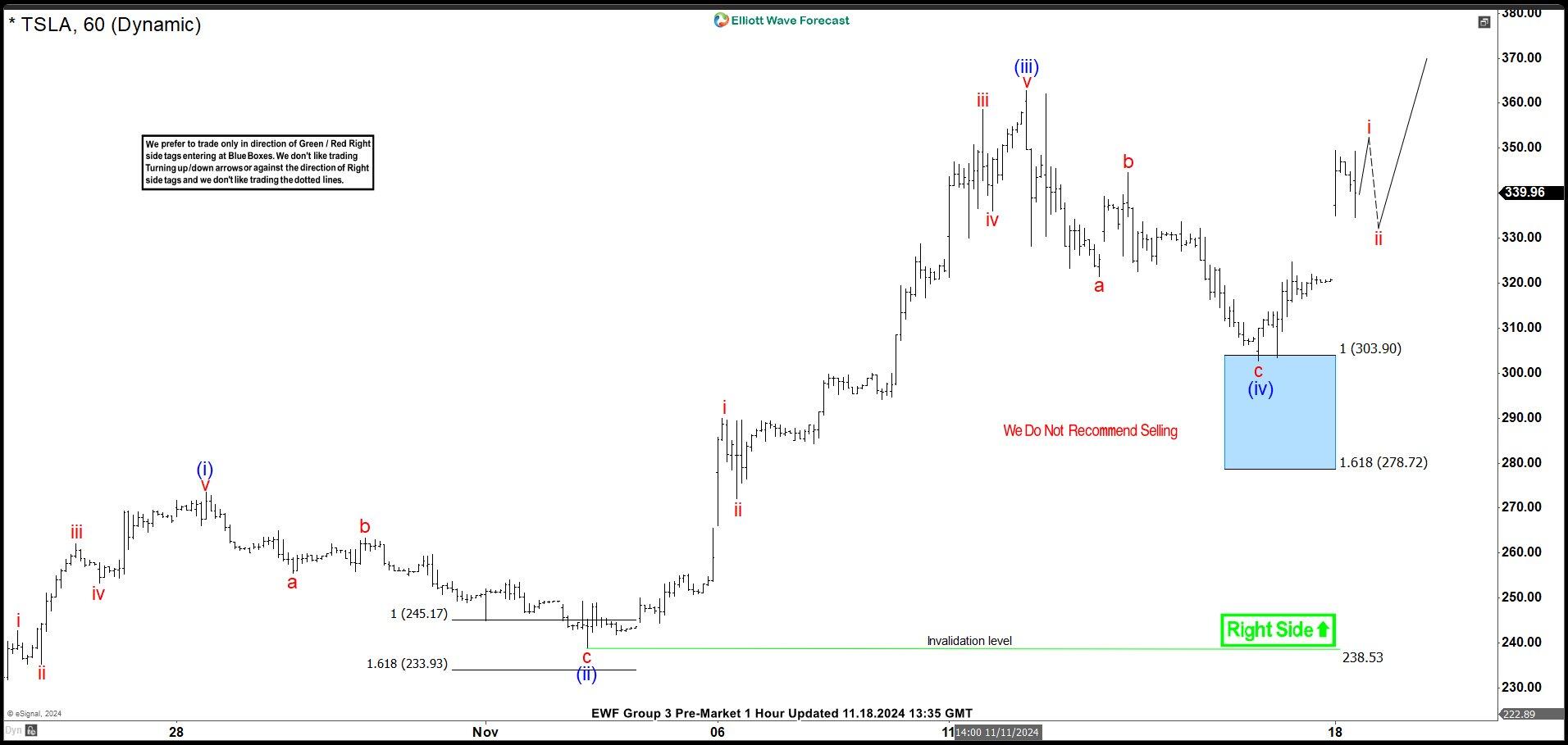
The most recent update, from November 18, 2024, shows that $TSLA reacted as predicted. After the decline from the blue (iii) peak, the stock found support in the equal legs area, leading to a renewed rally. As a result, traders could adjust to go risk-free, which confirmed that the bullish trend remains intact.
What’s next for $TSLA?
With the current rally, $TSLA appears well-supported. Based on the Elliott Wave structure, we expect the stock to continue its upward trajectory, targeting the $377 – $400 range before another potential pullback. Therefore, it is essential to keep monitoring this zone as we approach it.
Conclusion
In conclusion, our Elliott Wave analysis of Tesla Inc. ($TSLA) suggests that it could continue its bullish run, with significant upside potential in the short term. Therefore, traders should monitor the $377 – $400 zone as the next target, keeping an eye out for any corrective pullbacks. By using Elliott Wave Theory, we can identify potential buying areas and enhance risk management in volatile markets.
Author
Elliott Wave Forecast Team
ElliottWave-Forecast.com

















