S&P BSE Sensex (India) Elliott Wave technical analysis [Video]
![S&P BSE Sensex (India) Elliott Wave technical analysis [Video]](https://editorial.fxstreet.com/images/Markets/Equities/SP500/wall_street_nyse3-637299021683820849_XtraLarge.jpg)

S&P BSE Sensex (India) Elliott Wave Analysis - Trading Lounge Day Chart
S&P BSE Sensex (India) Elliott Wave technical analysis
-
Function: Counter Trend
-
Mode: Impulsive
-
Structure: Gray Wave A
-
Position: Orange Wave 4
-
Direction (next higher degrees): Gray Wave B
-
Details: Navy blue wave 4 of A appears completed; navy blue wave 5 of A is now underway.
-
Wave cancel invalidation level: 89,555.31
The S&P BSE Sensex daily chart analysis by Trading Lounge identifies a counter-trend movement within the Elliott Wave framework. The current wave structure is impulsive, focusing on gray wave A as the market progresses through its components.
The analysis suggests that navy blue wave 4 of gray wave A seems to have concluded, paving the way for navy blue wave 5 of A to develop. This progression marks the final phase of gray wave A, as wave 5 typically signifies the completion of an impulsive wave sequence.
After the conclusion of wave A, the market is expected to transition into gray wave B, consistent with the Elliott Wave principle of alternating corrective and impulsive phases.
A critical invalidation level is defined at 89,555.31. If the price exceeds this level, the current wave count will be invalidated, signaling either a change in market dynamics or a misinterpretation of the wave structure. This level acts as an essential reference point for assessing the accuracy of the analysis and managing risk effectively.
Summary
The S&P BSE Sensex daily chart reflects a counter-trend phase, with navy blue wave 5 of gray wave A actively unfolding. This stage represents the final segment of the current impulsive wave and sets the foundation for the anticipated corrective gray wave B. Traders should closely monitor the invalidation level at 89,555.31 to validate the wave count and adapt their strategies in response to any unexpected market movements.
.png.eacdbc175a7473956827db6e044b699f.png)
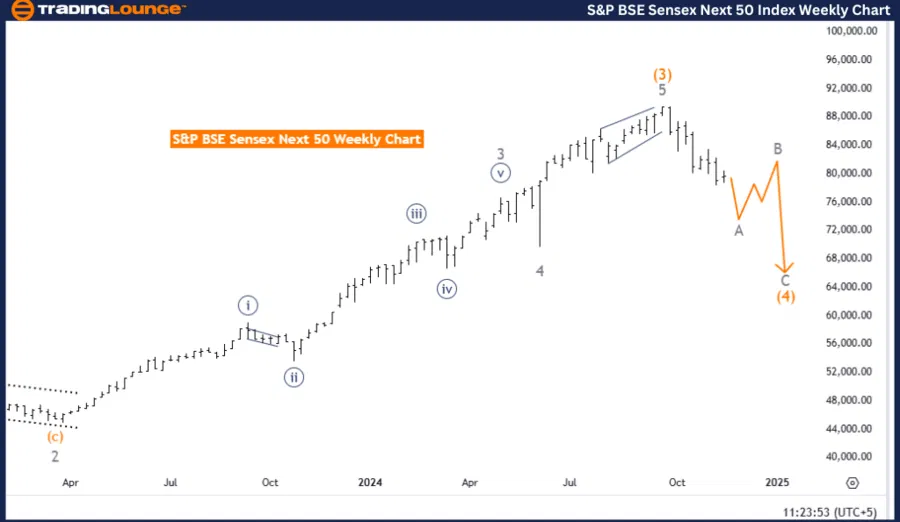
S&P BSE Sensex (India) Elliott Wave Analysis - Trading Lounge Weekly Chart.
S&P BSE Sensex (India) Elliott Wave technical analysis
-
Function: Counter Trend.
-
Mode: Impulsive.
-
Structure: Gray Wave A.
-
Position: Orange Wave 4.
-
Direction (next higher degrees): Gray Wave B.
-
Details: Navy blue wave 4 of A appears completed; navy blue wave 5 of A is now unfolding.
-
Wave cancel invalidation level: 89,555.31.
The S&P BSE Sensex weekly chart analysis highlights a counter-trend phase within the Elliott Wave framework. The wave structure is identified as impulsive, with gray wave A actively progressing through its components.
Gray wave A consists of smaller waves, with navy blue wave 4 appearing to have completed. The market has now transitioned into navy blue wave 5 of gray wave A. This wave signifies the final stage of the current impulsive sequence. Following the completion of navy blue wave 5, the market is expected to enter a corrective phase, gray wave B, in line with the broader Elliott Wave principles.
The analysis specifies an invalidation level at 89,555.31. If the market surpasses this level, the current wave count will be invalidated, necessitating a reevaluation of the wave structure and market dynamics. This threshold serves as a critical point for traders to monitor, confirming or invalidating the ongoing analysis.
Summary
The S&P BSE Sensex weekly chart indicates the market is nearing the conclusion of an impulsive gray wave A, with navy blue wave 5 currently underway. The next phase, gray wave B, is anticipated to bring a corrective movement. Traders should closely watch the invalidation level at 89,555.31 to validate the current wave count and adjust strategies in response to potential deviations from the expected market behavior.
S&P BSE Sensex (India) Elliott Wave technical analysis [Video]
Author
Peter Mathers
TradingLounge
Peter Mathers started actively trading in 1982. He began his career at Hoei and Shoin, a Japanese futures trading company.