Sensex settles flat after range-bound trading on Thursday
- India’s Sensex ended muted on Thursday after rebounding toward record highs.
- Sensex hit fresh record highs above 74,000 on Wednesday, helped by banking stocks.
- US Nonfarm Payrolls and Fed Chair Powell testimony eyed after poor US ADP and JOLTs data.
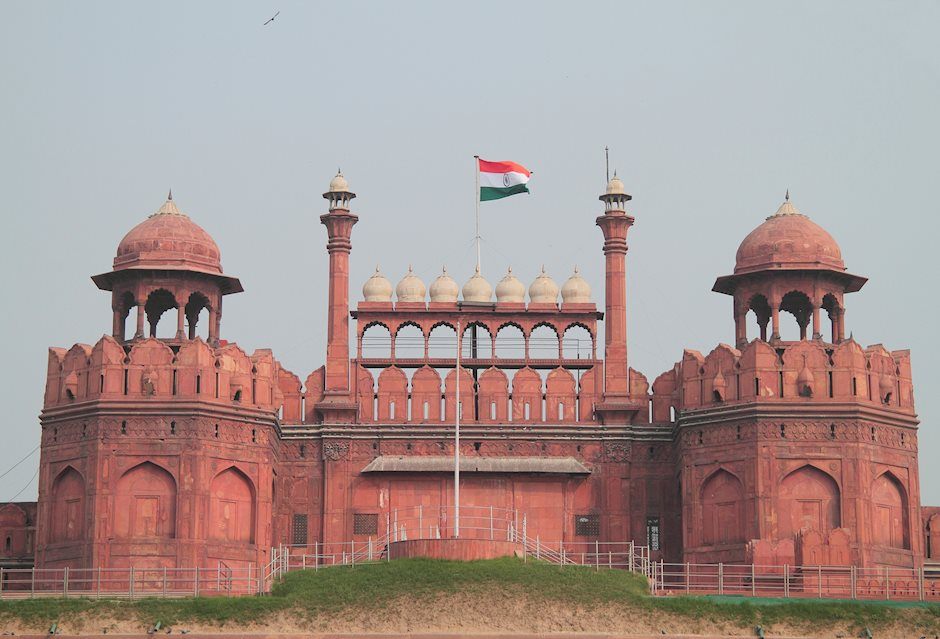

The Sensex 30, one of India’s key benchmark indices, closed modestly flat on Thursday, having recovered toward fresh record highs of 74,245.17.
The Indian index took account of negative global stock markets and a softer risk tone but the downside was capped by the rally in Tata Group shares.
The Bombay Stock Exchange (BSE) Sensex 30 ended almost unchanged on the day at 74,115.
Stock market news
- The top gainers on Sensex were JSW Steel, Tata Steel, Bajaj Finance, Bajaj FinServ and Tata Motors. Meanwhile, the top losers were Mahindra & Mahindra, ICICI Bank, Axis Bank, Power Grid and Reliance Industries.
- Among the Tata Group stocks, Tata Chemicals, Tata Consumer Products, Tata Investment Corporation and Tata Steel clinched their respective record highs in intra-day trade.
- Tata Motors is set to increase commercial vehicle prices by up to 2% from April.
- Tata Power announced that it became an Indian Integrated Power entity with validated science-based targets.
- Larsen and Toubro Ltd’s (L&T) hydrocarbon vertical secured an offshore order from ONGC for a project.
- SingTel sold 0.8% stake in Bharti Airtel for $711 mn to GQG Partners.
- Bajaj Auto hit a new high; rallied 12% in one week after robust February sales.
- The US stock markets stayed afloat on Wednesday, following US Federal Reserve Chair Jerome Powell’s testimony before the House Financial Services Committee. Powell said that interest rate cuts are still likely in the coming months if inflation continues to ease.
- Meanwhile, the US private sector added 140,000 jobs in February, an increase from the upwardly revised 111,000 in January but a bit below the expected 150,000 additions, ADP reported on Wednesday.
- The number of job openings on the last business day of January stood at 8.86 million, the US Bureau of Labor Statistics (BLS) reported in the Job Openings and Labor Turnover Survey (JOLTS) on Wednesday. The data followed 8.88 million (revised from 9.02 million) openings in December and came in slightly below the market forecast of 8.9 million.
- Markets are currently pricing in about a 70% chance that the Fed could begin easing rates in June, slightly higher than a 63% probability seen a day ago, according to the CME FedWatch Tool.
- It’s a holiday-shortened week for the Indian markets, as they will be closed, in observance of the Mahashivratri festival on Friday.
- The main event risks for markets this week will be the US Federal Reserve (Fed) Chair Jerome Powell’s testimony and the all-important US Nonfarm Payrolls data. Powell will appear before the Senate Banking Committee later in the day.
- The focus continues to remain on the week-long China's National People's Congress (NPC) meeting which could flag new stimulus measures.
Sensex FAQs
The Sensex is a name for one of India’s most closely monitored stock indexes. The term was coined in the 1980s by analyst Deepak Mohoni by mashing the words sensitive and index together. The index plots a weighted average of the share price of 30 of the most established stocks on the Bombay Stock Exchange. Each corporation's weighting is based on its "free-float capitalization", or the value of all its shares readily available for trading.
Given it is a composite, the value of the Sensex is first and foremost dependent on the performance of its constituent companies as revealed in their quarterly and annual results. Government policies are another factor. In 2016 the government decided to phase out high value currency notes, for example, and certain companies saw their share price fall as a result. When the government decided to cut corporation tax in 2019, meanwhile, the Sensex gained a boost. Other factors include the level of interest rates set by the Reserve Bank of India, since that dictates the cost of borrowing, climate change, pandemics and natural disasters
The Sensex started life on April 1 1979 at a base level of 100. It reached its highest recorded level so far, at 73,328, on Monday, January 15, 2024 (this is being written in Feb 2024). The Index closed above the 10,000 mark for the first time on February 7, 2006. On March 13, 2014 the Sensex closed higher than Hong Kong’s Hang Seng index to become the major Asian stock index with the highest value. The index’s biggest gain in a single day occurred on April 7, 2020, when it rose 2,476 points; its deepest single-day loss occurred on January 21, 2008, when it plunged 1,408 points due the US subprime crisis.
Major companies within the Sensex include Reliance Industries Ltd, HDFC Bank, Axis Bank, ITC Ltd, Bharti Airtel Ltd, Tata Steel, HCL Technologies, Infosys, State Bank of India, Sun Pharma, Tata Consultancy Services and Tech Mahindra.
Author
FXStreet Team
FXStreet