PBOC: Will continue supportive monetary policy
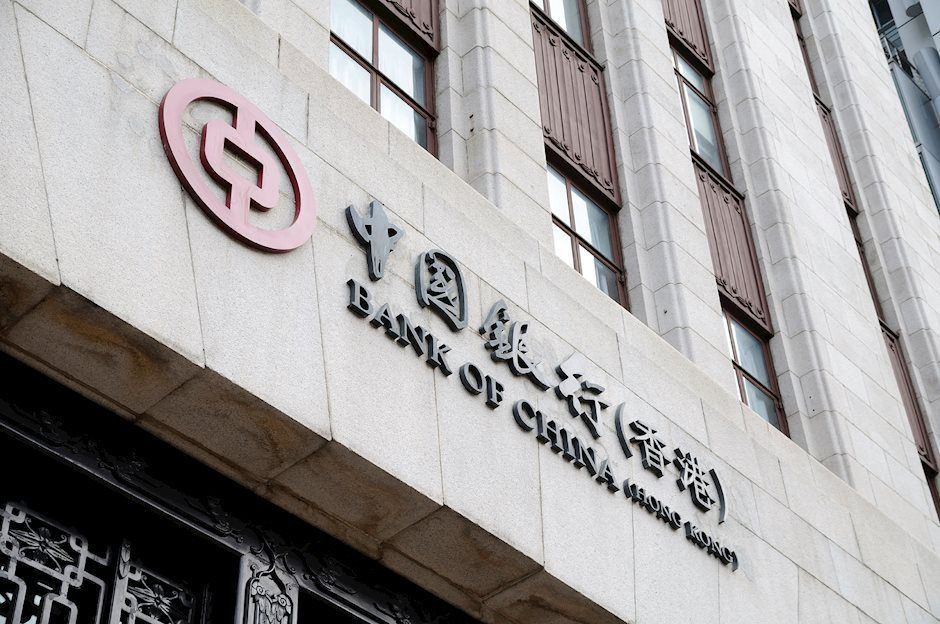

The People’s Bank of China (PBOC) published its third-quarter monetary policy report on Friday, with the key findings noted below.
Will continue supportive monetary policy.
Will increase monetary policy regulation.
Will increase the precision of monetary policy.
Will maintain liquidity reasonably ample.
Guide reasonable credit increase.
Will make the promotion of a reasonable rebound in prices an important consideration of monetary policy.
Will push prices to stay at reasonable levels.
Will continue to enrich the monetary policy toolkit to improve the efficient use of funds.
Will maintain the yuan exchange rate basically stable at a reasonable equilibrium level.
Will study and revise money supply statistics to better reflect the real situation of money supply.
Will strengthen forex market management.
Will actively support the purchase of existing commercial housing for use as affordable housing to support the revitalization of idle land.
Will firmly guard against the risk of exchange rate overshooting.
Increased counter-cyclical adjustment needed for current economic operation.
Further interest rate cuts face dual constraints of net interest margin and exchange rate.
Market reaction
AUD/USD has paused its recovery attempt near 0.6650 following the report publication, losing 0.40% on the day.
Australian Dollar FAQs
One of the most significant factors for the Australian Dollar (AUD) is the level of interest rates set by the Reserve Bank of Australia (RBA). Because Australia is a resource-rich country another key driver is the price of its biggest export, Iron Ore. The health of the Chinese economy, its largest trading partner, is a factor, as well as inflation in Australia, its growth rate and Trade Balance. Market sentiment – whether investors are taking on more risky assets (risk-on) or seeking safe-havens (risk-off) – is also a factor, with risk-on positive for AUD.
The Reserve Bank of Australia (RBA) influences the Australian Dollar (AUD) by setting the level of interest rates that Australian banks can lend to each other. This influences the level of interest rates in the economy as a whole. The main goal of the RBA is to maintain a stable inflation rate of 2-3% by adjusting interest rates up or down. Relatively high interest rates compared to other major central banks support the AUD, and the opposite for relatively low. The RBA can also use quantitative easing and tightening to influence credit conditions, with the former AUD-negative and the latter AUD-positive.
China is Australia’s largest trading partner so the health of the Chinese economy is a major influence on the value of the Australian Dollar (AUD). When the Chinese economy is doing well it purchases more raw materials, goods and services from Australia, lifting demand for the AUD, and pushing up its value. The opposite is the case when the Chinese economy is not growing as fast as expected. Positive or negative surprises in Chinese growth data, therefore, often have a direct impact on the Australian Dollar and its pairs.
Iron Ore is Australia’s largest export, accounting for $118 billion a year according to data from 2021, with China as its primary destination. The price of Iron Ore, therefore, can be a driver of the Australian Dollar. Generally, if the price of Iron Ore rises, AUD also goes up, as aggregate demand for the currency increases. The opposite is the case if the price of Iron Ore falls. Higher Iron Ore prices also tend to result in a greater likelihood of a positive Trade Balance for Australia, which is also positive of the AUD.
The Trade Balance, which is the difference between what a country earns from its exports versus what it pays for its imports, is another factor that can influence the value of the Australian Dollar. If Australia produces highly sought after exports, then its currency will gain in value purely from the surplus demand created from foreign buyers seeking to purchase its exports versus what it spends to purchase imports. Therefore, a positive net Trade Balance strengthens the AUD, with the opposite effect if the Trade Balance is negative.
Author
Dhwani Mehta
FXStreet
Residing in Mumbai (India), Dhwani is a Senior Analyst and Manager of the Asian session at FXStreet. She has over 10 years of experience in analyzing and covering the global financial markets, with specialization in Forex and commodities markets.

















