Mexican Peso trims some losses after hawkish FOMC minutes

Most recent article: Mexican Peso clings to gains against the US Dollar despite mixed economic signals
- Mexican Peso has paused its seven-day rally against the US Dollar, with the USD/MXN pair having seen a slight uptick on Tuesday.
- Mexico's economic calendar remains relatively quiet, with upcoming mid-November inflation report relevant to Banxico's future monetary policy decisions.
- USD/MXN traders await the latest Federal Reserve (Fed) meeting minutes.
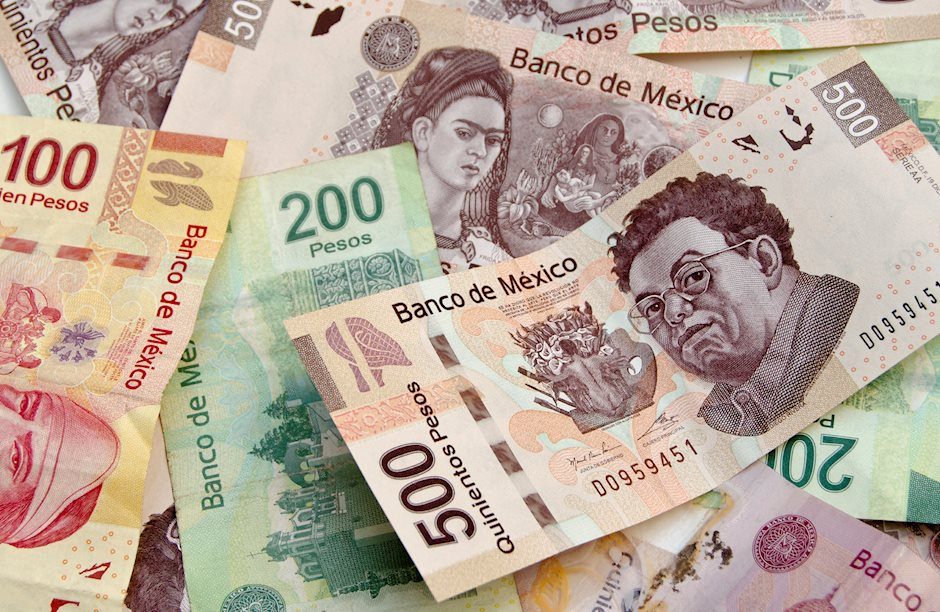
Mexican Peso (MXN) loses some ground against the US Dollar (USD) during Tuesday's North American session, despite overall US Dollar weakness, mostly against G8 currencies in the Forex space. The Peso’s seven-day rally halted after refreshing a two-month high of 17.06, but the USD/MXN has reversed its downtrend and climbed 0.60%, trading at 17.21.
Mexico’s economic calendar remains light, with USD/MXN traders eyeing economic data that could weigh on the Bank of Mexico (Banxico) futures decisions, regarding monetary policy. Preliminary estimates reported by Reuters showed the local economy grew 2.9% in October, compared with the same month a year earlier.
On Wednesday, Mexican Retail Sales are expected to show an improvement, and on Thursday, the November mid-month inflation report most likely witnessed a jump in headline inflation, in contrast to the core, expected to dip further toward the 5% threshold.
Meanwhile, the USD/MXN pair trimmed some of is losses after the US Federal Reserve released its last meeting minutes, which said that all participants voted to keep rates unchanged at the 5.25%-5.50% range and that upcoming meetings would be data-dependent. The minutes showed a neutral approach by Fed officials, as participants noted that further tightening would be appropriate, even though they acknowledged that inflation has moderated.
Daily digest movers: Mexican Peso retreats as USD/MXN sellers surrender 17.20
- The USD/MXN pair is trading well below the 20, 50, 100, and 200-day Simple Moving Averages (SMAs), portraying a bearish bias.
- The US Dollar Index (DXY), which measures the Greenback’s value against a basket of peers, posts losses of more than 0.15%, trading at 103.28.
- The US 10-year Treasury bond yield tumbles two basis points (bps) to 4.39%.
- US Existing Home Sales plunged 4.1% from 3.95 million to 3.79 million, missing estimates of 3.9 million in October.
- Mexico’s Gross Domestic Product (GDP) figures will be revealed on Friday, alongside the third quarter current account.
- Data published last week showed prices paid by consumers and producers in the US dipped, increasing investors' speculations that the Fed’s tightening cycle has ended.
- The swap market suggests traders expect 100 basis points of rate cuts by the Fed in 2024.
- The latest inflation report in Mexico, published on November 9, showed prices grew by 4.26% YoY in October, below forecasts of 4.28% and prior rate of 4.45%. On a monthly basis, inflation came at 0.39%, slightly above the 0.38% consensus and September’s 0.44%.
- Banxico revised its inflation projections from 3.50% to 3.87% for 2024, which remains above the central bank’s 3.00% target (plus or minus 1%).
Technical Analysis: Mexican Peso loses a step as USD/MXN exchanges hands above 17.20
The USD/MXN bearish bias remains intact, but Tuesday’s price action is forming a ‘bullish engulfing’ candlestick pattern, which suggests the pair could shift upwards in the near term. If the pair breaks above 17.28, that could pave the way for a test of the 100-day Simple Moving Average (SMA) At 17.34. Once cleared, that could open the door to challenge the confluence of the 20 and 200-day SMAs at around 17.61.
On the flip side, if USD/MXN sellers keep the spot price below 17.28, they would remain in charge but must drag prices below 17.00 to cement the downward bias on its way toward the year-to-date (YTD) low of 16.62.
Fed FAQs
What does the Federal Reserve do, how does it impact the US Dollar?
Monetary policy in the US is shaped by the Federal Reserve (Fed). The Fed has two mandates: to achieve price stability and foster full employment. Its primary tool to achieve these goals is by adjusting interest rates.
When prices are rising too quickly and inflation is above the Fed’s 2% target, it raises interest rates, increasing borrowing costs throughout the economy. This results in a stronger US Dollar (USD) as it makes the US a more attractive place for international investors to park their money.
When inflation falls below 2% or the Unemployment Rate is too high, the Fed may lower interest rates to encourage borrowing, which weighs on the Greenback.
How often does the Fed hold monetary policy meetings?
The Federal Reserve (Fed) holds eight policy meetings a year, where the Federal Open Market Committee (FOMC) assesses economic conditions and makes monetary policy decisions.
The FOMC is attended by twelve Fed officials – the seven members of the Board of Governors, the president of the Federal Reserve Bank of New York, and four of the remaining eleven regional Reserve Bank presidents, who serve one-year terms on a rotating basis.
What is Quantitative Easing (QE) and how does it impact USD?
In extreme situations, the Federal Reserve may resort to a policy named Quantitative Easing (QE). QE is the process by which the Fed substantially increases the flow of credit in a stuck financial system.
It is a non-standard policy measure used during crises or when inflation is extremely low. It was the Fed’s weapon of choice during the Great Financial Crisis in 2008. It involves the Fed printing more Dollars and using them to buy high grade bonds from financial institutions. QE usually weakens the US Dollar.
What is Quantitative Tightening (QT) and how does it impact the US Dollar?
Quantitative tightening (QT) is the reverse process of QE, whereby the Federal Reserve stops buying bonds from financial institutions and does not reinvest the principal from the bonds it holds maturing, to purchase new bonds. It is usually positive for the value of the US Dollar.
Author
Christian Borjon Valencia
FXStreet
Markets analyst, news editor, and trading instructor with over 14 years of experience across FX, commodities, US equity indices, and global macro markets.

















