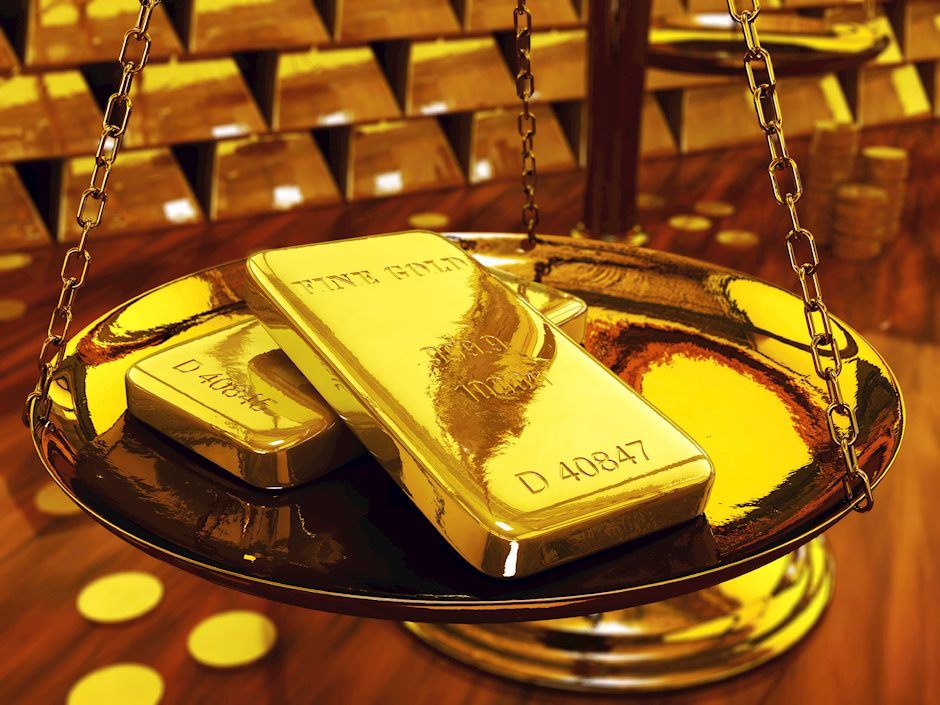
India Gold price Thursday: Gold surges, according to MCX data

Most recent article: India Gold price today: Gold falls, according to MCX data
Gold prices rose in India on Thursday, according to data from India's Multi Commodity Exchange (MCX).
Gold price stood at 66,647 Indian Rupees (INR) per 10 grams, up INR 1,169 compared with the INR 65,478 it cost on Wednesday.
As for futures contracts, Gold prices increased to INR 66,687 per 10 gms from INR 65,750 per 10 gms.
Prices for Silver futures contracts decreased to INR 75,224 per kg from INR 75,313 per kg.
| Major Indian city | Gold Price |
|---|---|
| Ahmedabad | 68,990 |
| Mumbai | 68,830 |
| New Delhi | 69,045 |
| Chennai | 69,000 |
| Kolkata | 68,935 |
Global Market Movers: Comex Gold price eases from record high amid upbeat risk tone
- The Federal Reserve on Wednesday maintained its projection of three rate cuts for this year, which weighs on the US Dollar for the second straight day and lifts the Gold price to a fresh all-time peak.
- Policymakers now see the US economy to grow at 2.1% this year compared to the 1.4% expected previously, and the jobless rate is seen at 4% by the end of this year, versus 4.1% anticipated in December.
- The Personal Consumption Expenditures Price Index, excluding food and energy, is projected to rise at a 2.6% rate by year-end, compared to the 2.4% increase in the previous quarterly economic projections.
- In the post-meeting press conference, Fed Chair Jerome Powell said that inflation is moving down gradually on a somewhat bumpy road; the recent high inflation readings kept officials on a cautious footing.
- According to the CME Group's FedWatch Tool, traders are now pricing in a greater chance, around 75%, that the Fed will begin cutting interest rates at the June policy meeting, up from 59% on Tuesday.
- This leads to a modest decline in the US Treasury bond yields, dragging the US Dollar to a one-week low during the Asian session on Thursday and lending some support to the precious metal.
- A slightly overbought condition on the daily chart prompts some profit-taking at higher levels amid a positive tone around the equity markets, which tends to undermine the safe-haven XAU/USD.
(An automation tool was used in creating this post.)
Gold FAQs
Gold has played a key role in human’s history as it has been widely used as a store of value and medium of exchange. Currently, apart from its shine and usage for jewelry, the precious metal is widely seen as a safe-haven asset, meaning that it is considered a good investment during turbulent times. Gold is also widely seen as a hedge against inflation and against depreciating currencies as it doesn’t rely on any specific issuer or government.
Central banks are the biggest Gold holders. In their aim to support their currencies in turbulent times, central banks tend to diversify their reserves and buy Gold to improve the perceived strength of the economy and the currency. High Gold reserves can be a source of trust for a country’s solvency. Central banks added 1,136 tonnes of Gold worth around $70 billion to their reserves in 2022, according to data from the World Gold Council. This is the highest yearly purchase since records began. Central banks from emerging economies such as China, India and Turkey are quickly increasing their Gold reserves.
Gold has an inverse correlation with the US Dollar and US Treasuries, which are both major reserve and safe-haven assets. When the Dollar depreciates, Gold tends to rise, enabling investors and central banks to diversify their assets in turbulent times. Gold is also inversely correlated with risk assets. A rally in the stock market tends to weaken Gold price, while sell-offs in riskier markets tend to favor the precious metal.
The price can move due to a wide range of factors. Geopolitical instability or fears of a deep recession can quickly make Gold price escalate due to its safe-haven status. As a yield-less asset, Gold tends to rise with lower interest rates, while higher cost of money usually weighs down on the yellow metal. Still, most moves depend on how the US Dollar (USD) behaves as the asset is priced in dollars (XAU/USD). A strong Dollar tends to keep the price of Gold controlled, whereas a weaker Dollar is likely to push Gold prices up.
Author
FXStreet Team
FXStreet