India Gold price Wednesday: Gold rises, according to MCX data

Most recent article: India Gold price today: Gold falls, according to MCX data
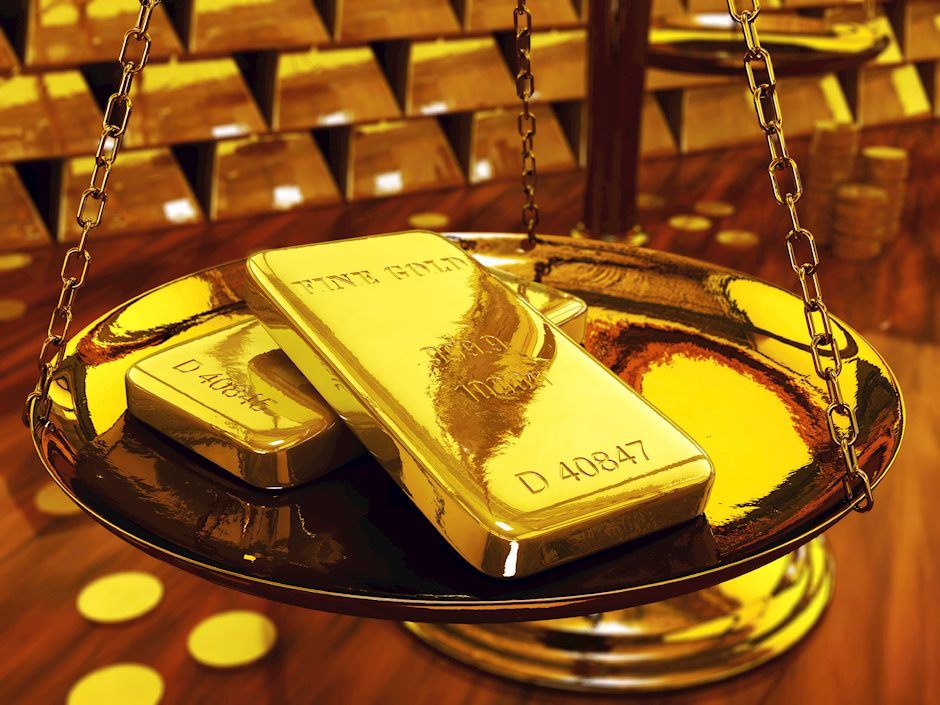
Gold prices rose in India on Wednesday, according to data from India's Multi Commodity Exchange (MCX).
Gold price stood at 73,880 Indian Rupees (INR) per 10 grams, up INR 27 compared with the INR 73,853 it cost on Tuesday.
As for futures contracts, Gold prices decreased to INR 73,813 per 10 gms from INR 74,021 per 10 gms.
Prices for Silver futures contracts decreased to INR 94,331 per kg from INR 94,725 per kg.
Global Market Movers: Comex Gold price struggles amid heightened tension ahead of Fed Minutes
- Fed Governor Christopher Waller said that he does not think further rate hikes will be necessary, adding he will need some convincing data before he backs cuts anytime soon.
- Atlanta Fed President Raphael Bostic noted that the US central bank has to be cautious about the first-rate move. Bostic further stated that he would “rather wait longer for a rate cut to be sure inflation does not start to bounce around.”
- Cleveland Fed President Loretta Mester said that keeping rates restrictive is not a concern right now given the strength of the jobs market.
- Boston Fed President Susan Collins said on Wednesday that progress toward a lower interest rate adjustment will take longer.
- Financial markets expect the first cut to happen in September at the earliest, with two reductions of a quarter percentage point before the end of the year, according to the CME Group’s FedWatch tool.
- On Tuesday, the US officially announced tariff hikes on a wide range of Chinese goods, while China may consider increasing temporary tariff rates on imported cars equipped with large-displacement engines.
(An automation tool was used in creating this post.)
Gold FAQs
Gold has played a key role in human’s history as it has been widely used as a store of value and medium of exchange. Currently, apart from its shine and usage for jewelry, the precious metal is widely seen as a safe-haven asset, meaning that it is considered a good investment during turbulent times. Gold is also widely seen as a hedge against inflation and against depreciating currencies as it doesn’t rely on any specific issuer or government.
Central banks are the biggest Gold holders. In their aim to support their currencies in turbulent times, central banks tend to diversify their reserves and buy Gold to improve the perceived strength of the economy and the currency. High Gold reserves can be a source of trust for a country’s solvency. Central banks added 1,136 tonnes of Gold worth around $70 billion to their reserves in 2022, according to data from the World Gold Council. This is the highest yearly purchase since records began. Central banks from emerging economies such as China, India and Turkey are quickly increasing their Gold reserves.
Gold has an inverse correlation with the US Dollar and US Treasuries, which are both major reserve and safe-haven assets. When the Dollar depreciates, Gold tends to rise, enabling investors and central banks to diversify their assets in turbulent times. Gold is also inversely correlated with risk assets. A rally in the stock market tends to weaken Gold price, while sell-offs in riskier markets tend to favor the precious metal.
The price can move due to a wide range of factors. Geopolitical instability or fears of a deep recession can quickly make Gold price escalate due to its safe-haven status. As a yield-less asset, Gold tends to rise with lower interest rates, while higher cost of money usually weighs down on the yellow metal. Still, most moves depend on how the US Dollar (USD) behaves as the asset is priced in dollars (XAU/USD). A strong Dollar tends to keep the price of Gold controlled, whereas a weaker Dollar is likely to push Gold prices up.
Author
Dhwani Mehta
FXStreet
Residing in Mumbai (India), Dhwani is a Senior Analyst and Manager of the Asian session at FXStreet. She has over 10 years of experience in analyzing and covering the global financial markets, with specialization in Forex and commodities markets.