India Gold price Friday: Gold rises, according to MCX data

Most recent article: India Gold price Monday: Gold falls, according to MCX data
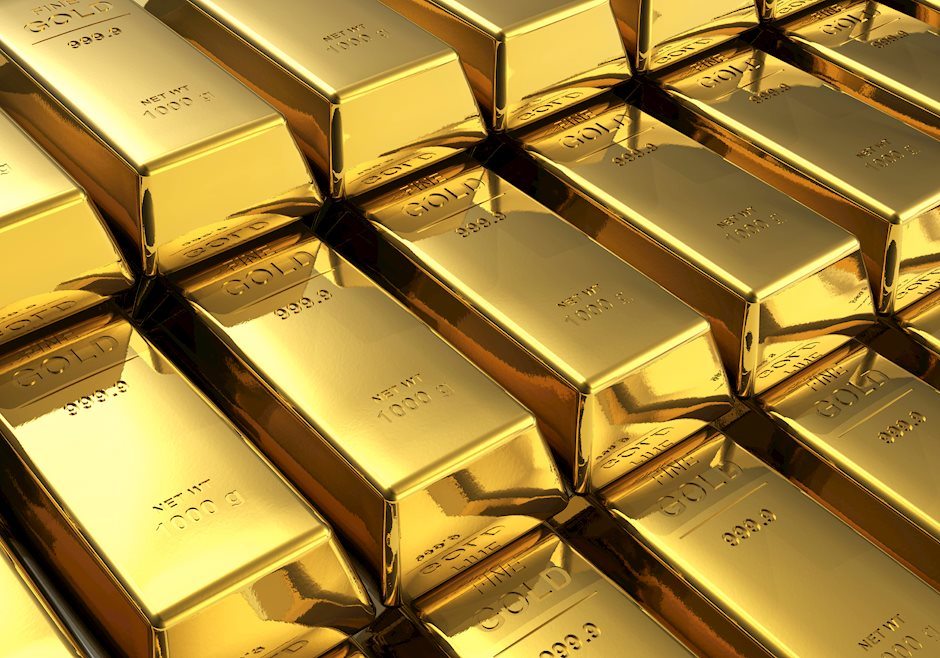
Gold prices rose in India on Friday, according to data from India's Multi Commodity Exchange (MCX).
Gold price stood at 62,875 Indian Rupees (INR) per 10 grams, up INR 166 compared with the INR 62,709 it cost on Thursday.
As for futures contracts, Gold prices decreased to INR 62,906 per 10 gms from INR 62,965 per 10 gms.
Prices for Silver futures contracts increased to INR 72,309 per kg from INR 72,218 per kg.
| Major Indian city | Gold Price |
|---|---|
| Ahmedabad | 65,165 |
| Mumbai | 64,925 |
| New Delhi | 65,065 |
| Chennai | 65,060 |
| Kolkata | 65,145 |
Global Market Movers: Comex Gold price remains on the sidelines amid risk-on, ahead of US NFP
- A series of unsubstantiated reports of a ceasefire between Israel and Hamas boosts investors' confidence, capping the upside for the safe-haven Comex Gold price on the last trading day of the week.
- Reports suggest that Hamas received its first proposal for an extended pause to the fighting in Gaza in exchange for releasing the remaining hostages it holds, though has not yet responded to it.
- The Houthi rebels claimed that it struck a US merchant ship in the Red Sea, while the US launched new air strikes in Yemen, targeting ten drones reportedly being set up to launch.
- Concerns about the health of regional lenders in the US resurfaced on Thursday after New York Community Bancorp reported increased stress in its commercial real estate portfolio.
- China's official Manufacturing PMI contracted for a fourth successive month in January, suggesting that the world's second-largest economy is struggling to regain momentum.
- Fed Chair Jerome Powell said on Wednesday that interest rates had peaked and would move lower in coming months, though tempered market expectations for any such a move in March.
- The yield on the benchmark 10-year US government bond remains below the 4% mark amid bets for a steep rate cut by the Federal Reserve in 2024 and undermines the US Dollar.
- The Labor Department reported that Initial Jobless Claims increased by 9,000, to 224K during the week ended January 27 from the previous week's upwardly revised reading of 215 K.
- Separately, the Institute for Supply Management's (ISM) Manufacturing PMI improved from 47.4 to 49.1 in January, while the Prices Paid Index climbed to 52.9 from 45.2 in December.
- The XAU/USD seems poised to snap a two-week losing streak as investors now look to the US jobs data for cues about the Fed's policy path and some meaningful trading opportunities.
- The popularly known NFP report is expected to show that the US economy added 180K jobs in January, down from the 216K previous, and the jobless rate edged higher to 3.8% from 3.7%
(An automation tool was used in creating this post.)
Gold FAQs
Why do people invest in Gold?
Gold has played a key role in human’s history as it has been widely used as a store of value and medium of exchange. Currently, apart from its shine and usage for jewelry, the precious metal is widely seen as a safe-haven asset, meaning that it is considered a good investment during turbulent times. Gold is also widely seen as a hedge against inflation and against depreciating currencies as it doesn’t rely on any specific issuer or government.
Who buys the most Gold?
Central banks are the biggest Gold holders. In their aim to support their currencies in turbulent times, central banks tend to diversify their reserves and buy Gold to improve the perceived strength of the economy and the currency. High Gold reserves can be a source of trust for a country’s solvency. Central banks added 1,136 tonnes of Gold worth around $70 billion to their reserves in 2022, according to data from the World Gold Council. This is the highest yearly purchase since records began. Central banks from emerging economies such as China, India and Turkey are quickly increasing their Gold reserves.
How is Gold correlated with other assets?
Gold has an inverse correlation with the US Dollar and US Treasuries, which are both major reserve and safe-haven assets. When the Dollar depreciates, Gold tends to rise, enabling investors and central banks to diversify their assets in turbulent times. Gold is also inversely correlated with risk assets. A rally in the stock market tends to weaken Gold price, while sell-offs in riskier markets tend to favor the precious metal.
What does the price of Gold depend on?
The price can move due to a wide range of factors. Geopolitical instability or fears of a deep recession can quickly make Gold price escalate due to its safe-haven status. As a yield-less asset, Gold tends to rise with lower interest rates, while higher cost of money usually weighs down on the yellow metal. Still, most moves depend on how the US Dollar (USD) behaves as the asset is priced in dollars (XAU/USD). A strong Dollar tends to keep the price of Gold controlled, whereas a weaker Dollar is likely to push Gold prices up.
Author
Dhwani Mehta
FXStreet
Residing in Mumbai (India), Dhwani is a Senior Analyst and Manager of the Asian session at FXStreet. She has over 10 years of experience in analyzing and covering the global financial markets, with specialization in Forex and commodities markets.