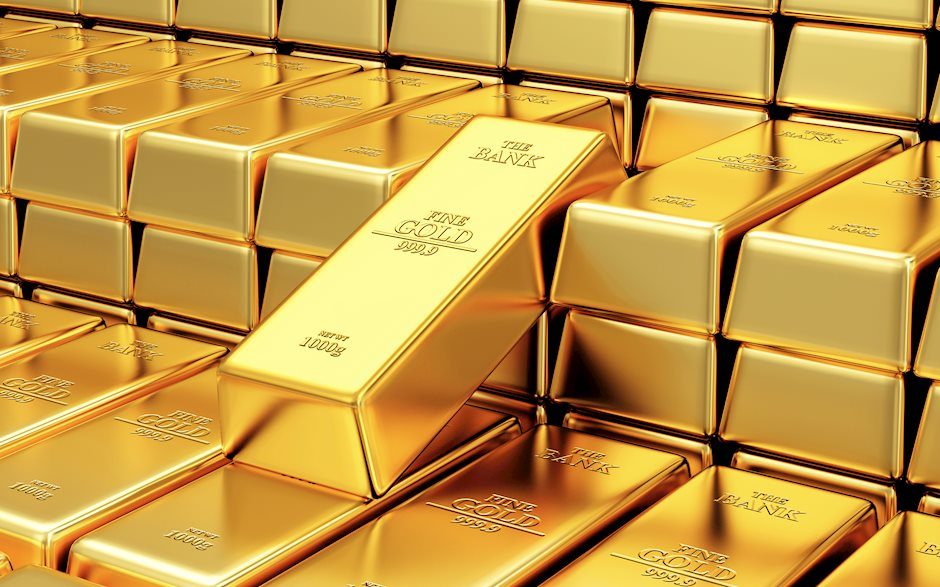
India Gold price Thursday: Gold rises, according to MCX data

Most recent article: India Gold price Friday: Gold edges higher, according to MCX data
Gold prices rose in India on Thursday, according to data from India's Multi Commodity Exchange (MCX).
Gold price stood at 62,050 Indian Rupees (INR) per 10 grams, up INR 83 compared with the INR 61,967 it cost on Wednesday.
As for futures contracts, Gold prices increased to INR 62,178 per 10 gms from INR 61,996 per 10 gms.
Prices for Silver futures contracts decreased to INR 72,138 per kg from INR 71,969 per kg.
| Major Indian city | Gold Price |
|---|---|
| Ahmedabad | 64,210 |
| Mumbai | 64,015 |
| New Delhi | 64,170 |
| Chennai | 64,210 |
| Kolkata | 64,210 |
Global Market Movers: Comex Gold price awaits US CPI inflation data for a fresh direction
- The uncertainty over the Federal Reserve's rate-cut path keeps the US Dollar bulls on the defensive and assists the Comex Gold price in gaining some positive traction amid some repositioning trade ahead of the US consumer inflation figures.
- The markets were quick to react to the Fed's surprising dovish tilt at the December policy meeting and are now pricing in five interest rate cuts by the end of 2024, summing up to a cumulative of around 140 basis points (bps) of easing.
- The incoming US macro data underscored the fundamental resilience of the American economy, which, along with mixed signals from Fed officials, forced investors to scale back their expectations for more aggressive policy easing.
- New York Fed President John Williams said on Wednesday that the US central bank is in a ‘good place’ and has time to think about what’s next for rates, though would eventually need to get policy back to more neutral levels.
- US Treasury Secretary Janat Yellen spoke from Boston on Wednesday, saying that said more work is required to get inflation under control and pledging to use “all tools at our disposal” to bring costs down.
- The yield on the benchmark 10-year US government bond holds steady above the 4.0% threshold and should help limit deeper losses for the USD, capping any further gains for the non-yielding yellow metal ahead of the US data.
- The headline US CPI is expected to rise by 0.2% in December, lifting the yearly rate to 3.2% from 3.1%, while the core gauge (excluding food and energy prices) is anticipated to ease to 3.8% YoY from 4.0% in the previous month.
- Cooler-than-expected inflation data will give the Fed more reason to cut interest rates this year and turn out to be a negative trigger for the Greenback, which, in turn, should lead to a fresh leg up for the precious metal.
- Conversely, a stronger US CPI print should provide the US central bank headroom to keep interest rates higher for longer and boost the buck, forcing the XAU/USD to break through a multi-week low touched on Monday.
(An automation tool was used in creating this post.)
Gold FAQs
Why do people invest in Gold?
Gold has played a key role in human’s history as it has been widely used as a store of value and medium of exchange. Currently, apart from its shine and usage for jewelry, the precious metal is widely seen as a safe-haven asset, meaning that it is considered a good investment during turbulent times. Gold is also widely seen as a hedge against inflation and against depreciating currencies as it doesn’t rely on any specific issuer or government.
Who buys the most Gold?
Central banks are the biggest Gold holders. In their aim to support their currencies in turbulent times, central banks tend to diversify their reserves and buy Gold to improve the perceived strength of the economy and the currency. High Gold reserves can be a source of trust for a country’s solvency. Central banks added 1,136 tonnes of Gold worth around $70 billion to their reserves in 2022, according to data from the World Gold Council. This is the highest yearly purchase since records began. Central banks from emerging economies such as China, India and Turkey are quickly increasing their Gold reserves.
How is Gold correlated with other assets?
Gold has an inverse correlation with the US Dollar and US Treasuries, which are both major reserve and safe-haven assets. When the Dollar depreciates, Gold tends to rise, enabling investors and central banks to diversify their assets in turbulent times. Gold is also inversely correlated with risk assets. A rally in the stock market tends to weaken Gold price, while sell-offs in riskier markets tend to favor the precious metal.
What does the price of Gold depend on?
The price can move due to a wide range of factors. Geopolitical instability or fears of a deep recession can quickly make Gold price escalate due to its safe-haven status. As a yield-less asset, Gold tends to rise with lower interest rates, while higher cost of money usually weighs down on the yellow metal. Still, most moves depend on how the US Dollar (USD) behaves as the asset is priced in dollars (XAU/USD). A strong Dollar tends to keep the price of Gold controlled, whereas a weaker Dollar is likely to push Gold prices up.
Author
Dhwani Mehta
FXStreet
Residing in Mumbai (India), Dhwani is a Senior Analyst and Manager of the Asian session at FXStreet. She has over 10 years of experience in analyzing and covering the global financial markets, with specialization in Forex and commodities markets.