Gold price falls back as more interest rates from Fed in pipeline
- Gold price comes back inside the woods despite a recovery in the US Dollar Index.
- One more interest-rate hike from the Fed is widely expected to return the United States stubborn inflation to 2%.
- Diverging views among Fed officials and investors about interest-rate guidance likely to keep the US Dollar Index on edge.
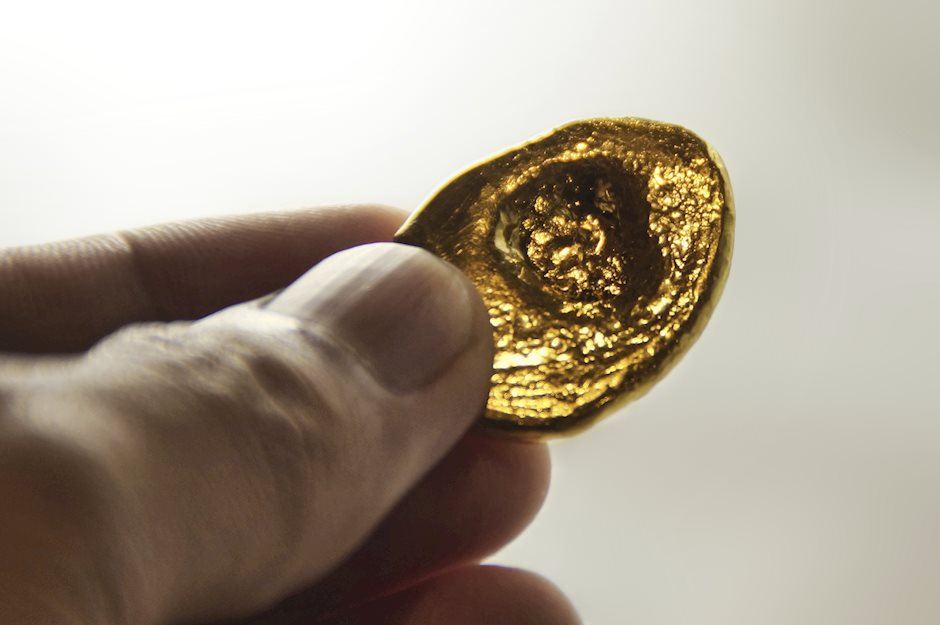

Gold price (XAU/USD) has climbed above $1,960.00 after portraying a non-direction performance ahead of the interest-rate decision by the Federal Reserve (Fed) for further guidance. The precious metal is expected to continue its lackluster performance as a small interest-rate hike from the Fed is widely expected despite softening inflation and loosening labor market conditions.
There is little doubt among investors that the Fed will increase interest rates to the 5.25-5.50% range as the core Consumer Price Index (CPI) is still stubbornly high partly due to the resilience in consumer spending. A catalyst to which investors are keeping an eye is the interest-rate guidance from the Fed. Fed officials and investors have divergent views about where interest rates will peak for the current year as the former signaled that two more interest-rate hikes are appropriate while market participants are expecting that the upcoming interest-rate increase will be the last one this year.
Daily Digest Market Movers: Gold price faces pressure ahead of US PMI
- Gold price struggles to maintain an auction above $1,960.00 as investors prepare for a fresh interest-rate hiking cycle by global central banks.
- The Federal Reserve, the European Central Bank (ECB), and the Bank of England (BoE) are set to raise interest rates further to tame stubborn inflation.
- Investors are anticipating 25 basis points (bps) interest-rate hike from the ECB but are mixed about the scale of policy tightening by the BoE.
- Headline inflation in the United States softened in June due to lower gasoline prices while core inflation is still stubborn due to expanding consumer spending, boosting hopes of one more interest-rate hike from the Fed.
- It is widely expected that the Fed will raise interest rates by 25 bps to 5.25-5.50%, according to the CME Group FedWatch tool.
- Fed Chair Jerome Powell skipped its aggressive rate-hike cycle in June to buy some time to assess the impact of interest-rate hikes in the past 17 months.
- As the Fed looks set to raise interest rates further in July, investors’ major focus will be on guidance for the entire year.
- Jerome Powell announced in his testimony that two more interest rate hikes are appropriate by the year-end.
- Contrary to Powell’s commentary, investors are hoping that July’s rate hike would be the last nail in the coffin. Also, Goldman Sachs cited that the Federal Reserve's widely-expected interest- rate hike at its upcoming policy meeting next week will be "the last" of the US central bank's current tightening cycle.
- The Fed is not expected to discuss rate cuts for this year as the foremost priority is to bring down inflation to 2% and its consistent maintenance around desired levels.
- Meanwhile, US S&P preliminary PMI data for July will be keenly watched. Manufacturing PMI is seen improving marginally to 46.4 vs. the former release of 46.3. This would be the second straight in factory activity as the figure would be below 50.0. Services PMI is seen lower at 54.1 against the former release of 54.4.
- US factory activity has remained weak amid aggressive policy-tightening by the Fed and tight credit conditions at commercial banks.
- The upside in the US Dollar Index seems restricted to around 101.00 as an interest-rate hike of 25 bps from the Fed is widely anticipated. Meanwhile, 10-year US Treasury Yields have jumped to 3.85%.
Technical Analysis: Gold price remains topsy-turvy
Gold price juggles in a narrow range after a three-day correction from the immediate high of $1,984.00. A mean-reversion is expected in the precious metal toward the 20-period Exponential Moving Average (EMA) around $1,950.00. The yellow metal is under pressure due to a decent recovery in the US Dollar Index.
Momentum oscillators show that the upside impulse has faded. However, the north-side bias looks still solid.
Fed FAQs
What does the Federal Reserve do, how does it impact the US Dollar?
Monetary policy in the US is shaped by the Federal Reserve (Fed). The Fed has two mandates: to achieve price stability and foster full employment. Its primary tool to achieve these goals is by adjusting interest rates.
When prices are rising too quickly and inflation is above the Fed’s 2% target, it raises interest rates, increasing borrowing costs throughout the economy. This results in a stronger US Dollar (USD) as it makes the US a more attractive place for international investors to park their money.
When inflation falls below 2% or the Unemployment Rate is too high, the Fed may lower interest rates to encourage borrowing, which weighs on the Greenback.
How often does the Fed hold monetary policy meetings?
The Federal Reserve (Fed) holds eight policy meetings a year, where the Federal Open Market Committee (FOMC) assesses economic conditions and makes monetary policy decisions.
The FOMC is attended by twelve Fed officials – the seven members of the Board of Governors, the president of the Federal Reserve Bank of New York, and four of the remaining eleven regional Reserve Bank presidents, who serve one-year terms on a rotating basis.
What is Quantitative Easing (QE) and how does it impact USD?
In extreme situations, the Federal Reserve may resort to a policy named Quantitative Easing (QE). QE is the process by which the Fed substantially increases the flow of credit in a stuck financial system.
It is a non-standard policy measure used during crises or when inflation is extremely low. It was the Fed’s weapon of choice during the Great Financial Crisis in 2008. It involves the Fed printing more Dollars and using them to buy high grade bonds from financial institutions. QE usually weakens the US Dollar.
What is Quantitative Tightening (QT) and how does it impact the US Dollar?
Quantitative tightening (QT) is the reverse process of QE, whereby the Federal Reserve stops buying bonds from financial institutions and does not reinvest the principal from the bonds it holds maturing, to purchase new bonds. It is usually positive for the value of the US Dollar.
Author
Sagar Dua
FXStreet
Sagar Dua is associated with the financial markets from his college days. Along with pursuing post-graduation in Commerce in 2014, he started his markets training with chart analysis.