Gold price strengthens as Fed rate cut bets increases, Middle East tensions deepen
- Gold price climbs slightly above $2,050 as investors are optimistic about Fed rate cuts.
- Investors ignore United States’ high consumer inflation data while US PPI remains soft.
- Fed policymakers reiterate a restrictive monetary policy stance to achieve price stability.
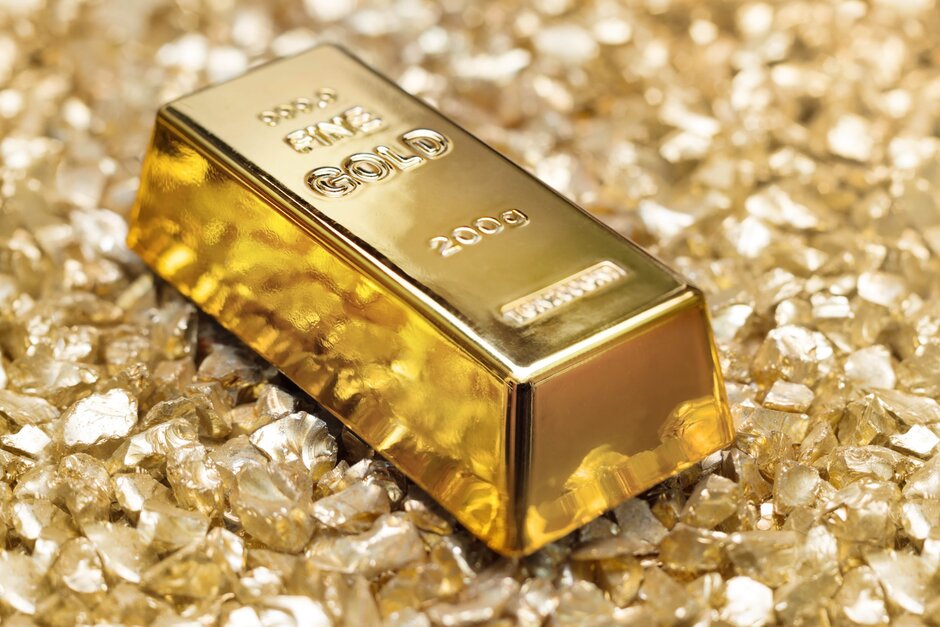

Gold price (XAU/USD) has generated significant gains as investors are confident about an interest rate cut by the Federal Reserve (Fed) at its monetary policy meeting on March 20 – such a move would support non-yielding assets such as Gold. The probabilities of an early interest rate cut are assessed as firmer despite consumer price inflation in the United States remaining stubbornly high in December, amid a significant increase in rental prices and healthcare costs.
Meanwhile, soft US Producer Price Index (PPI) numbers for December and deepening Middle East tensions have strengthened near-term demand for bullions.
Monthly headline PPI continues to contract by 0.1% against expectations of 0.1% growth. The annual headline PPI accelerated at a slower pace of 1.0% while investors projected a 1.3% growth against 0.8% increase in November. The monthly core PPI continues to remain stagnant against a 0.2% growth projection while prices of core goods and services at factory gates were decelerated to 1.8% versus. consensus of 1.9% and the former reading of 2.0% on an annual basis.
Tensions in Middle East have deepened as the US & UK military have launched airstrikes on Houthi targets in Yemen in retaliation for attacking merchant vessels shipping from Red Sea. This has increased fears of widening conflicts in the Middle East as Iran could potentially enter in Israel-Hamas war at Gaza.
While market participants continue to commit funds toward Gold amid optimism over early rate cuts, Fed policymakers will stick to a restrictive interest rate stance as price pressures in addition to the required rate of 2% are highly sticky, due mainly to stable labor market conditions. Fed policymakers have been reiterating that a lot of work has yet to be done in order to gain confidence that the underlying inflation will return to 2% in a sustainable manner.
Bank of Chicago Federal Reserve President Austan Goolsbee, on Thursday, stressed a data-dependent approach and said that there were weeks and months of data to come, to help guide when and how much rates should be reduced. Cleveland Fed President Loretta Mester said she needed more evidence to confirm inflation declining towards 2% in a timely manner before jumping on the bandwagon of rate-cut discussions.
Daily Digest Market Movers: Gold price strengthens as geopolitical tensions improve safe-haven appeal
- Gold price moves sharply higher, close to $2,040 as investors remain optimistic about a rate cut by the Federal Reserve in March despite a healthy increase in the headline inflation and sticky core CPI data for December.
- The annual core inflation rate decelerated slightly to 3.9% (from 4.0% in November) while headline CPI rose significantly to 3.4% due to elevated rentals and healthcare costs. Gasoline and food prices were up at a moderate pace of 0.2%.
- According to the CME FedWatch tool, chances lean towards an interest rate cut by 25 basis points (bps) in March, with a probability of above 66%.
- Investors are ignoring the fact that US labor market conditions are still healthy and the last mile in achieving price stability is turning out extremely stubborn. This could allow Fed policymakers to maintain arguments towards keeping interest rates elevated, at least until the second quarter ends.
- Stubbornly higher US inflation has set a hawkish undertone for the first interest rate policy of 2024 on January 31.
- The Fed is widely anticipated to keep interest rates unchanged in the range of 5.25-5.50% for the fourth straight time, but the outlook for interest rates in March is expected to remain slightly hawkish.
- After Fed policymakers: Raphael Bostic and John Williams, Cleveland Fed President Loretta Mester said March is probably too early for an interest rate cut decision as the Fed needs to see more evidence to be confident that inflation is progressively declining towards 2%.
- Loretta Mester added that there is more work to do including the continued maintenance of a restrictive monetary policy. She further added that goods, housing and shelter costs need to ease further along with a slowdown in wage growth.
- The US Dollar Index (DXY) struggles for a firm-footing as investors are not ready to ditch support for rate cuts in March.
Technical Analysis: Gold price aims stability above $2,050
Gold price delivers a V-shape recovery after printing a fresh three-week low below $2,015. The 50-day Exponential Moving Average (EMA) has acted as a strong support for the Gold price bulls. The precious metal has managed to climb slightly above the 20-day EMA, which trades around $2,036. While the upside bias is intact, a bullish momentum has faded as the 14-period Relative Strength Index (RSI) is oscillating near 50.00.
Gold FAQs
Why do people invest in Gold?
Gold has played a key role in human’s history as it has been widely used as a store of value and medium of exchange. Currently, apart from its shine and usage for jewelry, the precious metal is widely seen as a safe-haven asset, meaning that it is considered a good investment during turbulent times. Gold is also widely seen as a hedge against inflation and against depreciating currencies as it doesn’t rely on any specific issuer or government.
Who buys the most Gold?
Central banks are the biggest Gold holders. In their aim to support their currencies in turbulent times, central banks tend to diversify their reserves and buy Gold to improve the perceived strength of the economy and the currency. High Gold reserves can be a source of trust for a country’s solvency. Central banks added 1,136 tonnes of Gold worth around $70 billion to their reserves in 2022, according to data from the World Gold Council. This is the highest yearly purchase since records began. Central banks from emerging economies such as China, India and Turkey are quickly increasing their Gold reserves.
How is Gold correlated with other assets?
Gold has an inverse correlation with the US Dollar and US Treasuries, which are both major reserve and safe-haven assets. When the Dollar depreciates, Gold tends to rise, enabling investors and central banks to diversify their assets in turbulent times. Gold is also inversely correlated with risk assets. A rally in the stock market tends to weaken Gold price, while sell-offs in riskier markets tend to favor the precious metal.
What does the price of Gold depend on?
The price can move due to a wide range of factors. Geopolitical instability or fears of a deep recession can quickly make Gold price escalate due to its safe-haven status. As a yield-less asset, Gold tends to rise with lower interest rates, while higher cost of money usually weighs down on the yellow metal. Still, most moves depend on how the US Dollar (USD) behaves as the asset is priced in dollars (XAU/USD). A strong Dollar tends to keep the price of Gold controlled, whereas a weaker Dollar is likely to push Gold prices up.
Author
Sagar Dua
FXStreet
Sagar Dua is associated with the financial markets from his college days. Along with pursuing post-graduation in Commerce in 2014, he started his markets training with chart analysis.

















