Gold Price Forecast: XAU/USD trades with mild gains near $2,450, eyes on US Retail Sales
- Gold price posts modest gains around $2,450 in Thursday’s early Asian session.
- The US CPI inflation rose as expected in July.
- Any signs of rising geopolitical tensions might lift safe-haven assets like Gold.
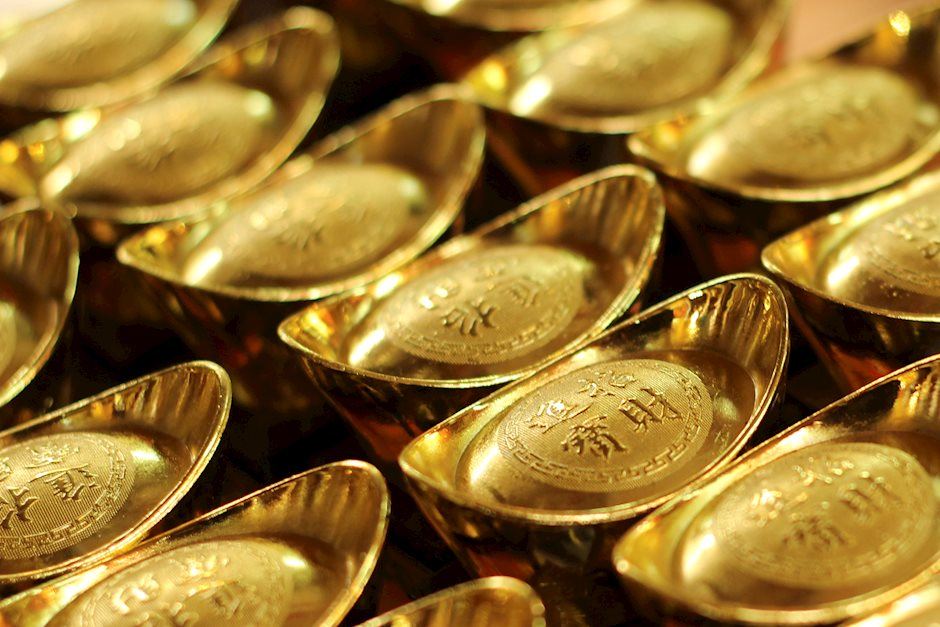

Gold price (XAU/USD) edges higher to nearly $2,450, snapping the two-day losing streak during the early Asian session on Thursday. The weaker US Dollar (USD) provides some support for the precious metal on the day. Investors will take more cues from US Retail Sales, weekly Initial Jobless Claims, the Philly Fed Manufacturing Index and Industrial Production, which are due later on Thursday.
Data released by the Labor Department on Wednesday showed that inflation in the US rose as expected in July. The headline Consumer Price Index (CPI) increased 0.2% MoM in July, putting an annual inflation rate at 2.9%. Meanwhile, the core CPI, excluding food and energy, came in at a 0.2% MoM in July and a 3.2% annual rate, which is in line with the consensus.
“Expectations now have shifted back in favour of just a 25 basis point cut, so that could be taking some of the momentum away from the gold market,” said Phillip Streible, chief market strategist at Blue Line Futures. The markets are now pricing in nearly a 41% chance of a 50 basis points (bps) rate cut by the Fed in September, down from 50% prior to the release of US CPI data, according to the CME FedWatch Tool.
The Federal Reserve (Fed) officials indicated a willingness to ease the policy, though they’ve been careful not to commit to a specific timetable and the pace of rate cuts. Atlanta Fed President Raphael Bostic said on Tuesday he wanted to see more evidence before supporting lower interest rates.
On the other hand, the ongoing geopolitical tensions and economic uncertainty might boost the safe-haven flows, benefiting the yellow metal. Iran dismissed calls from the United Kingdom and other Western nations to refrain from retaliating against Israel after the assassination of Hamas leader Ismail Haniyeh in Tehran last month, according to the BBC.
Gold FAQs
Gold has played a key role in human’s history as it has been widely used as a store of value and medium of exchange. Currently, apart from its shine and usage for jewelry, the precious metal is widely seen as a safe-haven asset, meaning that it is considered a good investment during turbulent times. Gold is also widely seen as a hedge against inflation and against depreciating currencies as it doesn’t rely on any specific issuer or government.
Central banks are the biggest Gold holders. In their aim to support their currencies in turbulent times, central banks tend to diversify their reserves and buy Gold to improve the perceived strength of the economy and the currency. High Gold reserves can be a source of trust for a country’s solvency. Central banks added 1,136 tonnes of Gold worth around $70 billion to their reserves in 2022, according to data from the World Gold Council. This is the highest yearly purchase since records began. Central banks from emerging economies such as China, India and Turkey are quickly increasing their Gold reserves.
Gold has an inverse correlation with the US Dollar and US Treasuries, which are both major reserve and safe-haven assets. When the Dollar depreciates, Gold tends to rise, enabling investors and central banks to diversify their assets in turbulent times. Gold is also inversely correlated with risk assets. A rally in the stock market tends to weaken Gold price, while sell-offs in riskier markets tend to favor the precious metal.
The price can move due to a wide range of factors. Geopolitical instability or fears of a deep recession can quickly make Gold price escalate due to its safe-haven status. As a yield-less asset, Gold tends to rise with lower interest rates, while higher cost of money usually weighs down on the yellow metal. Still, most moves depend on how the US Dollar (USD) behaves as the asset is priced in dollars (XAU/USD). A strong Dollar tends to keep the price of Gold controlled, whereas a weaker Dollar is likely to push Gold prices up.
Author
Lallalit Srijandorn
FXStreet
Lallalit Srijandorn is a Parisian at heart. She has lived in France since 2019 and now becomes a digital entrepreneur based in Paris and Bangkok.