Gold Price Forecast: XAU/USD drifts lower to near $2,600 amid thin trading
- Gold price edges lower to $2,600 in Tuesday’s early Asian session.
- The Fed's cautious stance might drag the precious metal lower.
- Uncertainty and geopolitical tensions could boost Gold price, a traditional safe-haven asset.
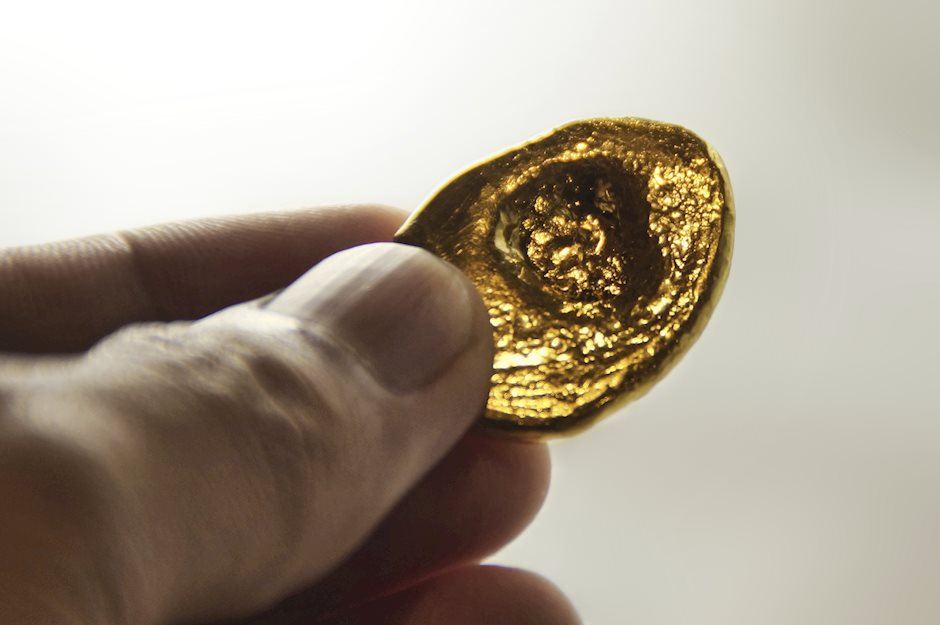

The Gold price (XAU/USD) attracts some sellers to near $2,600 during the early Asian section on Tuesday. Traders await fresh catalysts, including the US interest rate outlook and potential tariffs under President-elect Donald Trump. The markets are likely to be quiet before year-end.
The cautious stance of the US Federal Reserve (Fed) could weigh on the yellow metal as higher interest rates tend to reduce the appeal of holding the non-yielding asset. Fed Chair Jerome Powell hinted earlier this month that the US central bank might be cautious on further rate cuts after delivering a 25 basis points (bps) rate cut. The latest Summary of Economic Projections (SEP), or “dot plot”, indicated the Fed's intention to reduce the number of interest rate cuts next year from four to just two quarter-percent reductions.
On the other hand, geopolitical tensions and Donald Trump's potential return to the White House might intensify global trade tensions, fueling geopolitical crises and likely lifting the Gold price. "Geopolitical tensions have driven gold’s rise this year and will likely continue into 2025, especially with Trump’s return to office," noted Kelvin Wong, OANDA’s senior market analyst for Asia Pacific.
Gold FAQs
Gold has played a key role in human’s history as it has been widely used as a store of value and medium of exchange. Currently, apart from its shine and usage for jewelry, the precious metal is widely seen as a safe-haven asset, meaning that it is considered a good investment during turbulent times. Gold is also widely seen as a hedge against inflation and against depreciating currencies as it doesn’t rely on any specific issuer or government.
Central banks are the biggest Gold holders. In their aim to support their currencies in turbulent times, central banks tend to diversify their reserves and buy Gold to improve the perceived strength of the economy and the currency. High Gold reserves can be a source of trust for a country’s solvency. Central banks added 1,136 tonnes of Gold worth around $70 billion to their reserves in 2022, according to data from the World Gold Council. This is the highest yearly purchase since records began. Central banks from emerging economies such as China, India and Turkey are quickly increasing their Gold reserves.
Gold has an inverse correlation with the US Dollar and US Treasuries, which are both major reserve and safe-haven assets. When the Dollar depreciates, Gold tends to rise, enabling investors and central banks to diversify their assets in turbulent times. Gold is also inversely correlated with risk assets. A rally in the stock market tends to weaken Gold price, while sell-offs in riskier markets tend to favor the precious metal.
The price can move due to a wide range of factors. Geopolitical instability or fears of a deep recession can quickly make Gold price escalate due to its safe-haven status. As a yield-less asset, Gold tends to rise with lower interest rates, while higher cost of money usually weighs down on the yellow metal. Still, most moves depend on how the US Dollar (USD) behaves as the asset is priced in dollars (XAU/USD). A strong Dollar tends to keep the price of Gold controlled, whereas a weaker Dollar is likely to push Gold prices up.
Author
Lallalit Srijandorn
FXStreet
Lallalit Srijandorn is a Parisian at heart. She has lived in France since 2019 and now becomes a digital entrepreneur based in Paris and Bangkok.