Gold Price Analysis: XAU/USD slides back under $1,850 after hitting eight-month highs as geopolitical tensions ease
- Gold has pulled back under $1,850 after hitting fresh eight-month highs earlier in the session near-$1,880.
- Signs of geopolitical de-escalation have eased nerves about an imminent Ukraine/Russia war, weighing on safe-haven assets like gold.


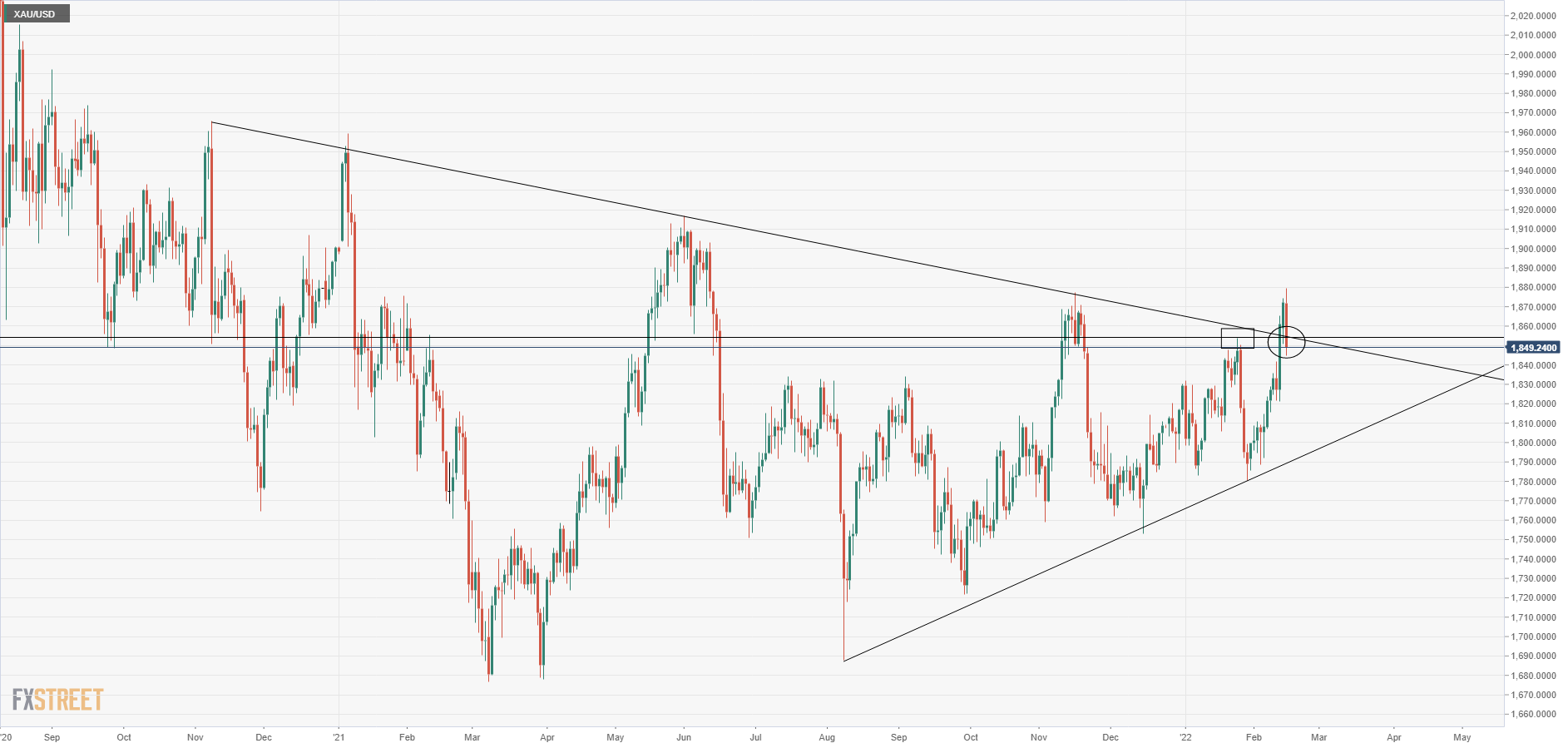
Amid hopes of geopolitical de-escalation at the Ukraine/Russia border as reports suggest some Russian troops are returning to their bases following the completion of military drills, risk assets have been rallying on Tuesday whilst safe-havens, including gold, have been falling. Spot gold (XAU/USD) prices recently dipped back below the $1,850 mark as the heightened geopolitical risk premia embedded in prices since last Friday is unwound. That marks a more than 1.3% drop on the day and pullback of over 1.5% from eight-month highs hit earlier in the session near $1,880.
Geopolitical developments remain in the spotlight ahead of talks between German Chancellor Olaf Scholz and Russian President Vladimir Putin on Tuesday and as the head of NATO warned that everything was still in place for a Russian attack on Ukraine. That suggests XAU/USD, as other asset classes, is set to remain choppy and headline driven. Gold traders will also need to keep an eye on upcoming US data releases, including the January Producer Price Inflation report and February NY Fed Manufacturing survey, both out at 1330GMT.
Another key theme driving precious metals and macro risk appetite at the moment is expectations regarding Fed tightening, with upcoming US data releases to be viewed in this context. For now, the technical picture continues to look promising for the bulls, after XAU/USD broke to the north of a long-term pennant structure and has since retraced to retest the pennant. Some technicians may view this retracement as an opportunity to reload on longer-term long positions. But for gold to mount a more meaningful break above November’s highs in the $1,875 region, geopolitical tensions will likely need to remain elevated.
Author
Joel Frank
Independent Analyst
Joel Frank is an economics graduate from the University of Birmingham and has worked as a full-time financial market analyst since 2018, specialising in the coverage of how developments in the global economy impact financial asset