Germany: political uncertainty could have a knock-on effect on the economy - Wells Fargo
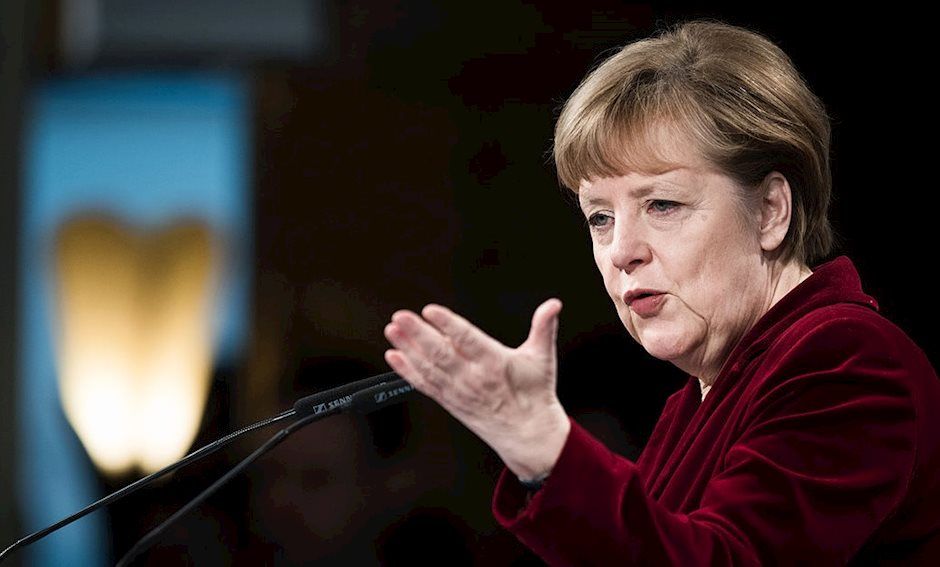

Negotiations to form a new governing coalition in Germany collapsed this week, which could lead to a potentially unstable minority government according to analysts from Wells Fargo. They see that not only could political uncertainty have a knock-on effect on the German economy, but it also makes it harder to pursue further integration in Europe
Key Quotes:
“This has been a rather quiet week in terms of foreign economic data releases, so we focus on recent political and economic developments in Germany. Following the German general election on September 24, Chancellor Merkel and her Christian Democratic Union (CDU) entered into negotiations with the Free Democrats (FDP) and the Green Party on forming the next government. The collapse of the coalition negotiations that was announced on Sunday is not a huge surprise given the ideological differences among the center-right CDU, the economically liberal FDP and the environmentally-conscious Greens.”
“If voters cared only about pocketbook issues the CDU would have been returned overwhelmingly to power in the September elections, because the German economy is booming at present. Real GDP was up 2.8 percent in Q3-2017, the strongest year-overyear rate of growth in six years. Moreover, growth is broad-based at present with consumer spending, investment spending and exports all contributing positively to the overall rate of real GDP growth. Growth in real retail sales has strengthened markedly this year, and unemployment has declined to the lowest rate in the post-reunification era. The Ifo index of German business sentiment stood at an all-time high in October, suggesting that growth has remained buoyant thus far in the fourth quarter.”
“But pocketbook issues are not the only considerations that motivate citizens to vote for individual candidates or political parties, and Germany has not been immune to the populist/nativist voices that have affected elections in other western countries in recent years. Political uncertainty could have a marginal negative effect on the German economy in the near term, although it is not likely to derail the expansion that is underway in Germany. However, Chancellor Merkel was weakened by the election results, and she will be weakened further if she needs to govern via a minority government. There could also be implications for Europe from the inability to form a coalition. A weakened Merkel will find it harder to persuade other German politicians to agree to the deeper European integration proposals that French President Macron has proposed.”
Author
Matías Salord
FXStreet
Matías started in financial markets in 2008, after graduating in Economics. He was trained in chart analysis and then became an educator. He also studied Journalism. He started writing analyses for specialized websites before joining FXStreet.

















