GBP/USD holds gains near 1.2550, driven by a decline in US Treasury yields
- GBP/USD edges higher as the US Dollar remains subdued amid weaker Treasury yields.
- US Treasury yields declined by approximately 2% on Monday, with 2-year and 10-year yields at 4.24% and 4.53%, respectively.
- The Pound Sterling remains subdued due to increased dovish bets on the BoE’s policy outlook for 2025.
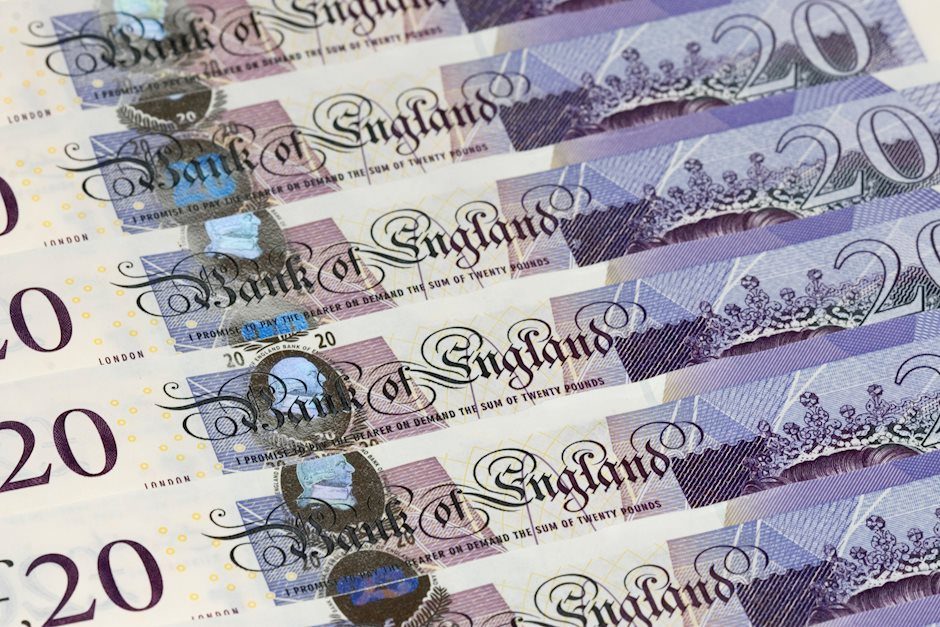

GBP/USD retraces its recent losses from the previous session, trading around 1.2550 during the Asian hours on Tuesday. This upside of the pair could be attributed to the subdued US Dollar (USD) amid weaker US Treasury yields.
The US Dollar Index (DXY), which measures the value of the US Dollar (USD) against its six major peers, remains subdued at around 108.00. The Greenback faced challenges as US Treasury bond yields depreciated by around 2% on Monday. 2-year and 10-year yields stood at 4.24% and 4.53%, respectively.
The Federal Reserve signaled a more cautious outlook for additional rate cuts in 2025, marking a shift in its monetary policy stance. This development highlights uncertainties surrounding future policy adjustments amid the anticipated economic strategies of the incoming Trump administration.
The risk-sensitive Pound Sterling (GBP) could face challenges due to the heightened geopolitical risks stemming from the prolonged Russia-Ukraine conflict and ongoing tensions in the Middle East. Israel's ambassador to the United Nations, Danny Danon, issued a stern warning on Monday to Yemen's Iran-backed Houthi militants, urging them to cease their missile attacks on Israel, per Reuters.
Additionally, the British Pound came under pressure as traders slightly increased their dovish bets on the Bank of England’s (BoE) policy stance in 2025. Market expectations now reflect a 53-basis-point (bps) interest rate reduction for next year, up from the 46 bps projected following the December 19 policy announcement, during which the BoE held rates steady at 4.75% with a 6-3 vote split.
Pound Sterling FAQs
The Pound Sterling (GBP) is the oldest currency in the world (886 AD) and the official currency of the United Kingdom. It is the fourth most traded unit for foreign exchange (FX) in the world, accounting for 12% of all transactions, averaging $630 billion a day, according to 2022 data. Its key trading pairs are GBP/USD, also known as ‘Cable’, which accounts for 11% of FX, GBP/JPY, or the ‘Dragon’ as it is known by traders (3%), and EUR/GBP (2%). The Pound Sterling is issued by the Bank of England (BoE).
The single most important factor influencing the value of the Pound Sterling is monetary policy decided by the Bank of England. The BoE bases its decisions on whether it has achieved its primary goal of “price stability” – a steady inflation rate of around 2%. Its primary tool for achieving this is the adjustment of interest rates. When inflation is too high, the BoE will try to rein it in by raising interest rates, making it more expensive for people and businesses to access credit. This is generally positive for GBP, as higher interest rates make the UK a more attractive place for global investors to park their money. When inflation falls too low it is a sign economic growth is slowing. In this scenario, the BoE will consider lowering interest rates to cheapen credit so businesses will borrow more to invest in growth-generating projects.
Data releases gauge the health of the economy and can impact the value of the Pound Sterling. Indicators such as GDP, Manufacturing and Services PMIs, and employment can all influence the direction of the GBP. A strong economy is good for Sterling. Not only does it attract more foreign investment but it may encourage the BoE to put up interest rates, which will directly strengthen GBP. Otherwise, if economic data is weak, the Pound Sterling is likely to fall.
Another significant data release for the Pound Sterling is the Trade Balance. This indicator measures the difference between what a country earns from its exports and what it spends on imports over a given period. If a country produces highly sought-after exports, its currency will benefit purely from the extra demand created from foreign buyers seeking to purchase these goods. Therefore, a positive net Trade Balance strengthens a currency and vice versa for a negative balance.
Author
Akhtar Faruqui
FXStreet
Akhtar Faruqui is a Forex Analyst based in New Delhi, India. With a keen eye for market trends and a passion for dissecting complex financial dynamics, he is dedicated to delivering accurate and insightful Forex news and analysis.