Forex Today: US Dollar benefits from cautious mood, focus shifts to Powell testimony

Here is what you need to know on Tuesday, February 11:
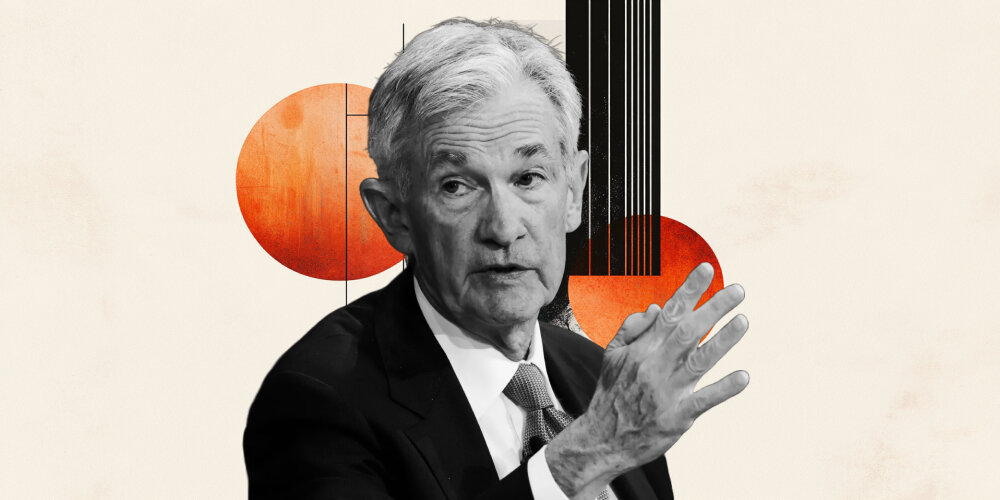
The US Dollar (USD) holds its ground early Tuesday after posting small gains against its major rivals on Monday, as markets turn cautious. The economic calendar will not offer any high-impact data releases but Federal Reserve (Fed) Chairman Jerome Powell's testimony before the Congress could ramp up the market volatility. Later in the American session, several other Fed policymakers are scheduled to deliver speeches as well.
US Dollar PRICE This week
The table below shows the percentage change of US Dollar (USD) against listed major currencies this week. US Dollar was the strongest against the Japanese Yen.
| USD | EUR | GBP | JPY | CAD | AUD | NZD | CHF | |
|---|---|---|---|---|---|---|---|---|
| USD | 0.22% | 0.36% | 0.43% | 0.33% | -0.05% | 0.26% | 0.26% | |
| EUR | -0.22% | 0.20% | 0.33% | 0.22% | -0.28% | 0.12% | 0.12% | |
| GBP | -0.36% | -0.20% | -0.04% | -0.02% | -0.48% | -0.08% | -0.10% | |
| JPY | -0.43% | -0.33% | 0.04% | -0.13% | -0.40% | -0.17% | -0.16% | |
| CAD | -0.33% | -0.22% | 0.02% | 0.13% | -0.35% | -0.10% | -0.12% | |
| AUD | 0.05% | 0.28% | 0.48% | 0.40% | 0.35% | 0.40% | 0.37% | |
| NZD | -0.26% | -0.12% | 0.08% | 0.17% | 0.10% | -0.40% | -0.02% | |
| CHF | -0.26% | -0.12% | 0.10% | 0.16% | 0.12% | -0.37% | 0.02% |
The heat map shows percentage changes of major currencies against each other. The base currency is picked from the left column, while the quote currency is picked from the top row. For example, if you pick the US Dollar from the left column and move along the horizontal line to the Japanese Yen, the percentage change displayed in the box will represent USD (base)/JPY (quote).
US President Donald Trump has signed an order to impose a sweeping 25% tariffs on all steel and aluminum imports into the US. Trump also noted that his administration will look into tariffs on automobiles, microchips, and pharmaceuticals next. Although the White House said there won't be any exemptions on tariffs, Australian Prime Minister Anthony Albanese announced that Trump has agreed to consider an exemption for Australia over steel and aluminum tariffs.
The USD Index stays comfortably above 108.00 after closing modestly higher on Monday. Meanwhile, US stock index futures were last seen losing between 0.2% and 0.35%. Powell will deliver a prepared statement and respond to questions in his testimony on the semiannual Monetary Policy Report before the Senate Banking, Housing and Urban Affairs Committee, starting at 15:00 GMT.
EUR/USD closed the first trading day of the week marginally lower. The pair stays relatively quiet and trades in a tight channel at around 1.0300 in the European morning on Tuesday.
GBP/USD posted losses for the third consecutive trading day on Monday. The pair struggles to regain its traction and trades in the negative territory at around 1.2350.
USD/JPY corrected higher Monday following the previous week's sharp decline before stabilizing near 152.00 on Tuesday.
Gold extended its uptrend and gained more than 1.5% on Monday. XAU/USD preserved its bullish momentum during the Asian trading hours and set a new all-time high above $2,940. The pair retreats in the European morning but holds comfortably above $2,900.
Fed FAQs
Monetary policy in the US is shaped by the Federal Reserve (Fed). The Fed has two mandates: to achieve price stability and foster full employment. Its primary tool to achieve these goals is by adjusting interest rates. When prices are rising too quickly and inflation is above the Fed’s 2% target, it raises interest rates, increasing borrowing costs throughout the economy. This results in a stronger US Dollar (USD) as it makes the US a more attractive place for international investors to park their money. When inflation falls below 2% or the Unemployment Rate is too high, the Fed may lower interest rates to encourage borrowing, which weighs on the Greenback.
The Federal Reserve (Fed) holds eight policy meetings a year, where the Federal Open Market Committee (FOMC) assesses economic conditions and makes monetary policy decisions. The FOMC is attended by twelve Fed officials – the seven members of the Board of Governors, the president of the Federal Reserve Bank of New York, and four of the remaining eleven regional Reserve Bank presidents, who serve one-year terms on a rotating basis.
In extreme situations, the Federal Reserve may resort to a policy named Quantitative Easing (QE). QE is the process by which the Fed substantially increases the flow of credit in a stuck financial system. It is a non-standard policy measure used during crises or when inflation is extremely low. It was the Fed’s weapon of choice during the Great Financial Crisis in 2008. It involves the Fed printing more Dollars and using them to buy high grade bonds from financial institutions. QE usually weakens the US Dollar.
Quantitative tightening (QT) is the reverse process of QE, whereby the Federal Reserve stops buying bonds from financial institutions and does not reinvest the principal from the bonds it holds maturing, to purchase new bonds. It is usually positive for the value of the US Dollar.
Author
Eren Sengezer
FXStreet
As an economist at heart, Eren Sengezer specializes in the assessment of the short-term and long-term impacts of macroeconomic data, central bank policies and political developments on financial assets.

















