Fed raises rates by 25 bps; second hike of 2017
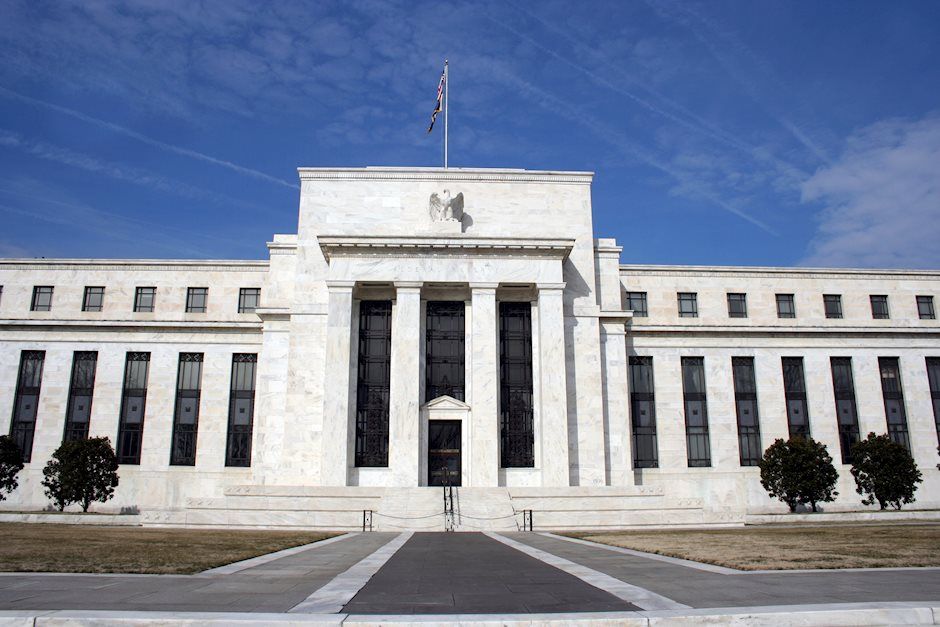

The Federal Reserve said on Wednesday that it would hike the benchmark interest rate by 25 basis points (target range of 1.00% - 1.25%); a decision that was widely expected. Fed’s Chairwoman Janet Yellen is expected to hold a press conference at 18:30 GMT.
Key headlines (via Reuters):
- Fed raises target interest rate to 1.00-1.25 pct, sees one more rate hike in 2017, longer-run path unchanged
- Expects to implement its balance sheet normalization this year, initially trimming revinvestments in treasury securities by $6 bln per month and mortgage backed securities by $4 bln
- Cut to reinvestment is seen expanding on a quarterly basis until it reaches $30 bln per month for treasuries and $20 bln per month in mortgage backed securities
- Fed does not specify long run size of balance sheet, says would suspend normalization and use 'full range of tools" if economic conditions change
- Fed says near-term risks to the economy appear "roughly balanced" but expects inflation to remain below target at 1.6 pct in near term and is monitoring developments "closely"
- Fed sees economy, job market on more solid footing, now sees unemployment rate dipping to 4.2 pct through 2019
- Fed says household spending picked up and fixed investment has continued to expand
- Fed says for now it will reinvest principal payments from its holdings until rate normalization is well under way
- Fed vote in favor of policy was eight to 1, Kashkari dissented, preferring to maintain the target range for the Fed funds rate
Full statement:
Information received since the Federal Open Market Committee met in May indicates that the labor market has continued to strengthen and that economic activity has been rising moderately so far this year. Job gains have moderated but have been solid, on average, since the beginning of the year, and the unemployment rate has declined. Household spending has picked up in recent months, and business fixed investment has continued to expand. On a 12-month basis, inflation has declined recently and, like the measure excluding food and energy prices, is running somewhat below 2 percent. Market-based measures of inflation compensation remain low; survey-based measures of longer-term inflation expectations are little changed, on balance.
Consistent with its statutory mandate, the Committee seeks to foster maximum employment and price stability. The Committee continues to expect that, with gradual adjustments in the stance of monetary policy, economic activity will expand at a moderate pace, and labor market conditions will strengthen somewhat further. Inflation on a 12-month basis is expected to remain somewhat below 2 percent in the near term but to stabilize around the Committee's 2 percent objective over the medium term. Near term risks to the economic outlook appear roughly balanced, but the Committee is monitoring inflation developments closely.
In view of realized and expected labor market conditions and inflation, the Committee decided to raise the target range for the federal funds rate to 1 to 1-1/4 percent. The stance of monetary policy remains accommodative, thereby supporting some further strengthening in labor market conditions and a sustained return to 2 percent inflation.
In determining the timing and size of future adjustments to the target range for the federal funds rate, the Committee will assess realized and expected economic conditions relative to its objectives of maximum employment and 2 percent inflation. This assessment will take into account a wide range of information, including measures of labor market conditions, indicators of inflation pressures and inflation expectations, and readings on financial and international developments. The Committee will carefully monitor actual and expected inflation developments relative to its symmetric inflation goal. The Committee expects that economic conditions will evolve in a manner that will warrant gradual increases in the federal funds rate; the federal funds rate is likely to remain, for some time, below levels that are expected to prevail in the longer run. However, the actual path of the federal funds rate will depend on the economic outlook as informed by incoming data.
The Committee is maintaining its existing policy of reinvesting principal payments from its holdings of agency debt and agency mortgage-backed securities in agency mortgage-backed securities and of rolling over maturing Treasury securities at auction. The Committee currently expects to begin implementing a balance sheet normalization program this year, provided that the economy evolves broadly as anticipated. This program, which would gradually reduce the Federal Reserve's securities holdings by decreasing reinvestment of principal payments from those securities, is described in the accompanying addendum to the Committee's Policy Normalization Principles and Plans.
Voting for the FOMC monetary policy action were: Janet L. Yellen, Chair; William C. Dudley, Vice Chairman; Lael Brainard; Charles L. Evans; Stanley Fischer; Patrick Harker; Robert S. Kaplan; and Jerome H. Powell. Voting against the action was Neel Kashkari, who preferred at this meeting to maintain the existing target range for the federal funds rate.
Market updates post-FED:
EUR/USD remains bid around 1.1260; 10-yr yield hovers at 2.12% on Fed’s hawkish rate hike
USD/JPY rises modestly as Fed hikes rates as expected
US Dollar rebounds post-FOMC, remains below 97 ahead of Yellen's remarks
GBP/USD trading 30 pips around 1.28 handle post FOMC statement
Dow clocks fresh session high after Fed maintains outlook for three rate hikes this year
USD/CAD slightly higher after Fed’s decision, still negative for the day
Gold, capped on $1,280 post FOMC, bears take back control, eyes on $1,258/Yellen presser
AUD/USD backs away from session highs after Fed delivered a hawkish rate hike
Author
Felipe Erazo
FXStreet
Born in Colombia, Felipe Erazo is the American Session Manager at FXStreet. He has been studying journalism with a degree in social communication at the Universidad de Chile.