EUR/USD: Pennant breakdown confirmed, but multi-week range still intact
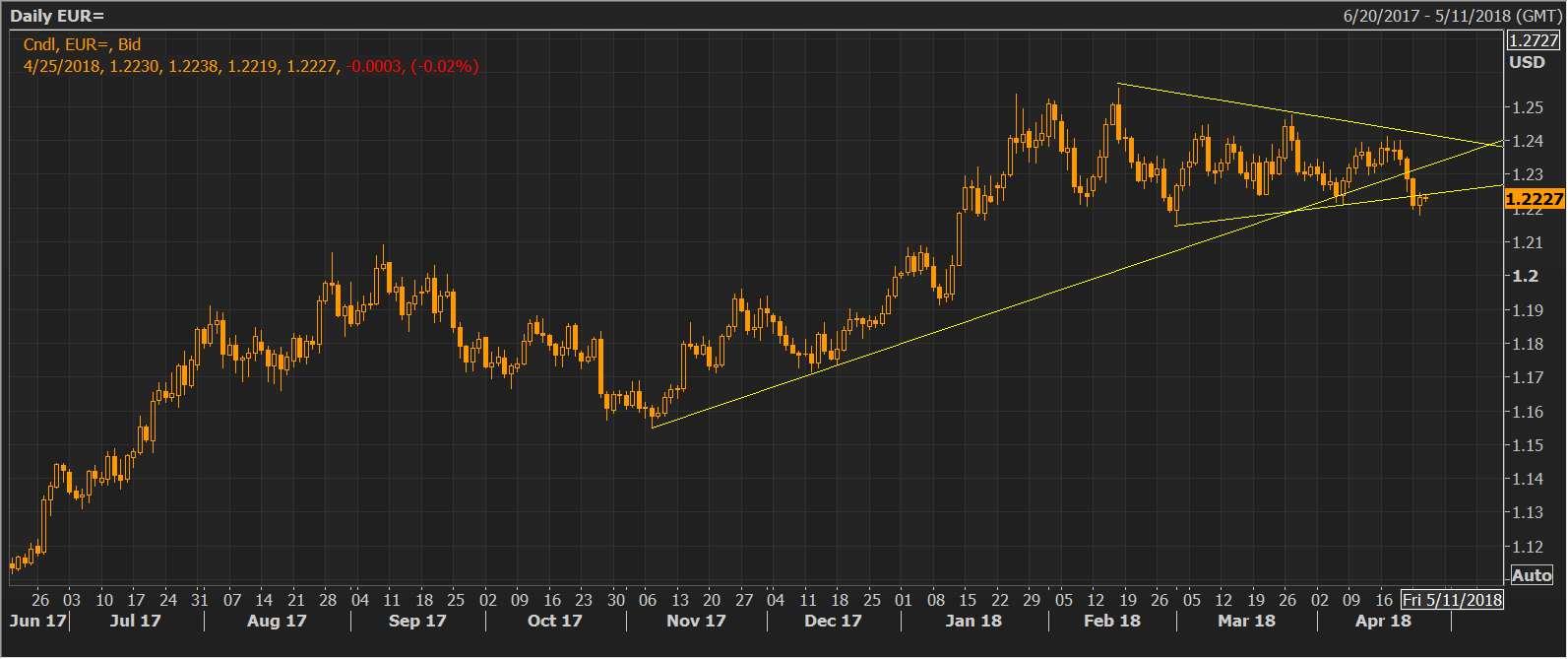
- Bears on the front foot as the EUR/USD sees a downside break of the pennant pattern.
- The multi-week trading range of 1.2150-1.2550 is still intact.


The EUR/USD pair closed at 1.2208 on Monday, signaling a downside break of the bullish pennant pattern and despite the positive tone, it failed to re-enter the pattern on Tuesday.
As of writing, the currency pair is trading at 1.2230, while the resistance of the lower end of the pennant is seen at 1.2250. The downside break of the bullish pennant pattern has weakened the bulls and boosted the odds of the bearish breakdown of the multiweek trading range of 1.2150-1.2550.
Further, the yield spread also favors the bears. Currently, the spread between the 10-year US treasury yield and the German 10-year bond yield stands at 236.8 basis points - the highest level since 1989 and could rise further as the 10-year treasury yield looks set to scale the 3 percent mark in a convincing manner.
Meanwhile, the bearish bias in the options market seems to have strengthened as well. The one-month 25 delta risk reversals show the implied volatility for EUR puts (sell EUR) is 0.375 - the highest since March 1.
ECB: No fireworks expected
Traders expecting the European Central Bank (ECB) to lend a helping hand to the EUR bulls risk being disappointed as the central bank is expected to make no changes to its monetary policy meeting when it meets this Thursday and reiterate very gradual approach to removing the unconventional monetary policy measures.
EUR/USD Technical Levels
A break below 1.2212 (ascending 100-day moving average) would add credence to the downside break of the pennant pattern and could yield a sell-off to 1.2150. A close lower would confirm a bullish-to-bearish trend change and allow a deeper drop below 1.20. On the higher side, a violation at 1.2216 (April 6 low) would expose resistance lined up at 1.23 (April 12 low) and 1.2307 (10-day MA).
Author
Omkar Godbole
FXStreet Contributor
Omkar Godbole, editor and analyst, joined FXStreet after four years as a research analyst at several Indian brokerage companies.