EUR/GBP drops below 0.8350 due to less likelihood of a BoE rate cut next month
- EUR/GBP remains subdued as Pound Sterling receives support from the hawkish mood surrounding the BoE policy decision in December.
- BoE Deputy Governor Lombardelli requires more evidence of easing price pressures before supporting another rate cut.
- The Euro struggles as the ECB could deliver a rate cut in December amid growing concerns about Eurozone's economic outlook.
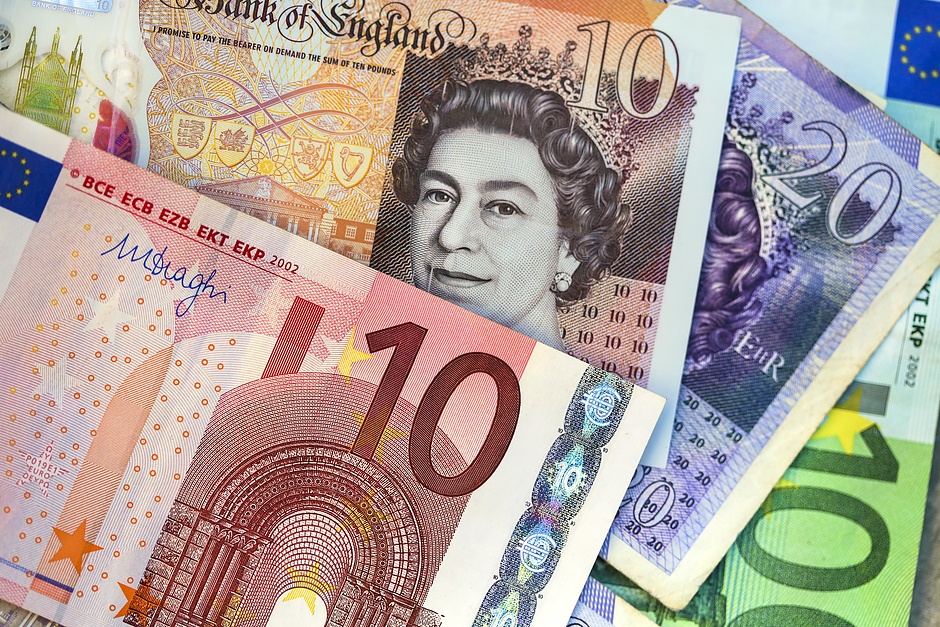

EUR/GBP extends its losses for the second successive session, trading around 0.8330 during the early European hours on Wednesday. This downside of the EUR/GBP cross could be attributed to improved Pound Sterling (GBP) amid reduced expectations of the Bank of England (BoE) cutting interest rates in December.
Most BoE policymakers favor a gradual approach to easing monetary policy. BoE Deputy Governor Clare Lombardelli stated on Tuesday that she would require additional evidence of easing price pressures before supporting another interest rate cut. US trade tariffs could threaten economic growth, though it remains too early to assess the full impact of the proposed measures, Lombardelli added.
In contrast, Eurozone markets have fully priced in a 25-basis-point rate cut by the European Central Bank (ECB) in December, with the probability of a larger 50 bps cut rising to 58%. This reflects growing market concerns about the region's economic prospects.
Meanwhile, US President-elect Donald Trump's renewed tariff threats against China, Mexico, and Canada have further dampened market sentiment, adding downward pressure on European economies and weighing on the risk-sensitive Euro.
Traders are now focused on the upcoming release of the Eurozone Harmonized Index of Consumer Prices (HICP) inflation data on Friday. Preliminary inflation and core inflation figures for November are expected to show annualized increases, potentially raising concerns for investors. Moreover, Bank of England’s Financial Stability Report will also be eyed.
Interest rates FAQs
Interest rates are charged by financial institutions on loans to borrowers and are paid as interest to savers and depositors. They are influenced by base lending rates, which are set by central banks in response to changes in the economy. Central banks normally have a mandate to ensure price stability, which in most cases means targeting a core inflation rate of around 2%. If inflation falls below target the central bank may cut base lending rates, with a view to stimulating lending and boosting the economy. If inflation rises substantially above 2% it normally results in the central bank raising base lending rates in an attempt to lower inflation.
Higher interest rates generally help strengthen a country’s currency as they make it a more attractive place for global investors to park their money.
Higher interest rates overall weigh on the price of Gold because they increase the opportunity cost of holding Gold instead of investing in an interest-bearing asset or placing cash in the bank. If interest rates are high that usually pushes up the price of the US Dollar (USD), and since Gold is priced in Dollars, this has the effect of lowering the price of Gold.
The Fed funds rate is the overnight rate at which US banks lend to each other. It is the oft-quoted headline rate set by the Federal Reserve at its FOMC meetings. It is set as a range, for example 4.75%-5.00%, though the upper limit (in that case 5.00%) is the quoted figure. Market expectations for future Fed funds rate are tracked by the CME FedWatch tool, which shapes how many financial markets behave in anticipation of future Federal Reserve monetary policy decisions.
Author
Akhtar Faruqui
FXStreet
Akhtar Faruqui is a Forex Analyst based in New Delhi, India. With a keen eye for market trends and a passion for dissecting complex financial dynamics, he is dedicated to delivering accurate and insightful Forex news and analysis.