BoC Preview: Forecasts from nine major banks, keeping rates on hold and prospect of further hikes alive
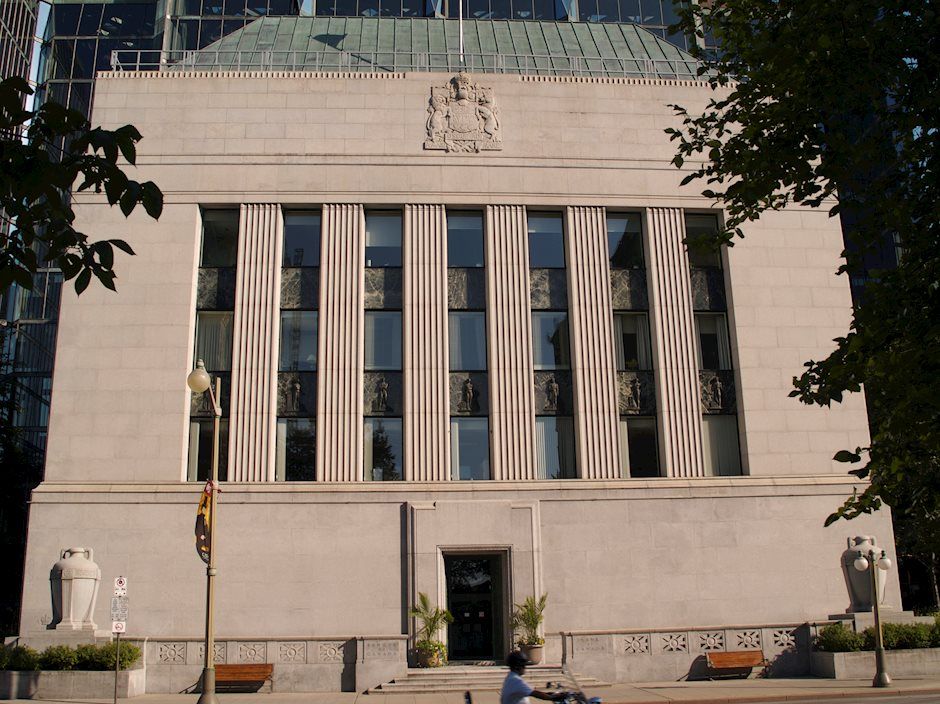

The Bank of Canada (BoC) is set to announce its Interest Rate Decision on Wednesday, October 25, at 14:00 GMT, and as we get closer to the release time, here are the expectations as forecast by the economists and researchers of nine major banks regarding the upcoming announcement.
The BoC is expected to keep rates steady at 5% while leaving the door open to further hikes. Wednesday’s rate statement will be published alongside an updated Monetary Policy Report.
ING
Slower-than-expected inflation, a clouded growth outlook and higher bond yields mean the BoC is likely to overlook jobs tightness and keep rates on hold. There is still interest in keeping a higher-for-longer narrative alive, but markets may start to shed some doubts on it.
TDS
We look for the BoC to stay the course and hold the overnight rate at 5.00%. The key issue will be how the Bank attempts to reconcile a significant downgrade to its growth outlook with signs of more persistent inflation, which should preclude any change in tone. We look for the Bank to maintain a hawkish tone, with an emphasis on persistence of inflation/wage pressures and no change to forward guidance.
RBC Economics
Economic data releases since the Bank of Canada opted to forego an interest rate hike in September have been mixed, but we expect that they on net have made a hike unlikely. Near-term inflation projections will very likely be revised higher given the rise in energy prices into the fall. But with signs the economy is cooling, we expect the BoC will likely maintain their call for a more gradual return back to the target inflation rate, somewhere in late 2024 or early 2025.
NBF
We expect the BoC to leave the overnight target rate unchanged. Saying that, there remain some problematic elements of the inflation outlook that might argue for additional tightening and as such, we’d caution that this is not an open-and-shut decision. At a minimum, policymakers should leave the door open to further tightening via an explicit threat to hike further if needed. That hiking bias will likely remain until more durable progress on inflation is made. It is worth noting that Wednesday’s rate statement will be published alongside an updated Monetary Policy Report. Here we’ll see a material downgrade to the GDP trajectory and an inflation profile that will need to be marked up to reflect stronger-than-expected price pressures in the summer. Governor Macklem and Senior Deputy Governor Rogers will also have media availability shortly after the decision where they’ll be able to fine tune their messaging. We’re particularly interested in hearing how they think of policymaking in a stagflationary environment, which we appear to be in the early stages of.
MUFG
We expect the BoC to leave rates on hold while maintaining guidance that they ‘are prepared to increase the policy rate further if needed’.
CIBC
We look for the BoC to keep the overnight rate on hold at 5%. The statement will cite the ample evidence that economic growth has been curtailed by the rate hikes delivered thus far. We don’t share the Bank’s worry that inflation will prove sticky in the face of an evident economic slowdown, as it’s too soon in the move from a tight economy to one with slack to have expected to see a drop in price pressures tied to domestic demand. But we sense that those worries, and references in the statement to the lack of downside momentum in key core inflation metrics, will see the Bank maintain a somewhat hawkish tone, with the statement’s conclusion leaving the door open to further hikes if we don’t see progress towards the 2% target in the months ahead.
Wells Fargo
With inflation more firmly on a downward trajectory and the economy showing signs of deceleration, we feel more comfortable now saying Bank of Canada interest rates have peaked and additional rate hikes are unlikely to be delivered. We also expect this message to be communicated at the central bank's October monetary policy assessment. In our view, policy rates in Canada are on hold until Q2-2024. Once the easing cycle is initiated, we expect BoC policy rates to continue lower over the course of 2024 and into 2025, eventually reaching a terminal rate of 3.00% by Q1-2025.
BMO
Most data points suggest that the BoC has done enough and should be moving firmly to the sidelines. While inflation is still well above target, which will keep the BoC talking hawkishly for now, it is a lagging indicator, and the weak GDP growth outlook points to further disinflation ahead. Assuming growth doesn’t stage a surprising comeback, the BoC should be increasingly comfortable keeping policy rates steady.
Citi
We think the outcome of the October BoC decision is still a very close call, but softer September CPI data this week pushed the balance of risks from a hike to another pause. The retracement of strong core inflation from August could raise enough doubts about whether policy rates definitely need to be higher. However, with rates unchanged at 5.0%, guidance should remain that rates could still rise further, and could possibly even be updated to reflect that the chance of another hike has risen. We would not rule out the possibility of a rate hike in December, especially as there is just one more CPI print released ahead of that decision.
(This story was corrected on October 24 at 15:23 GMT to say that the BoC decision will be announced on Wednesday, October 25.)
Author
FXStreet Insights Team
FXStreet
The FXStreet Insights Team is a group of journalists that handpicks selected market observations published by renowned experts. The content includes notes by commercial as well as additional insights by internal and external analysts.