BoC Minutes: Some members were more concerned about downside inflation risks
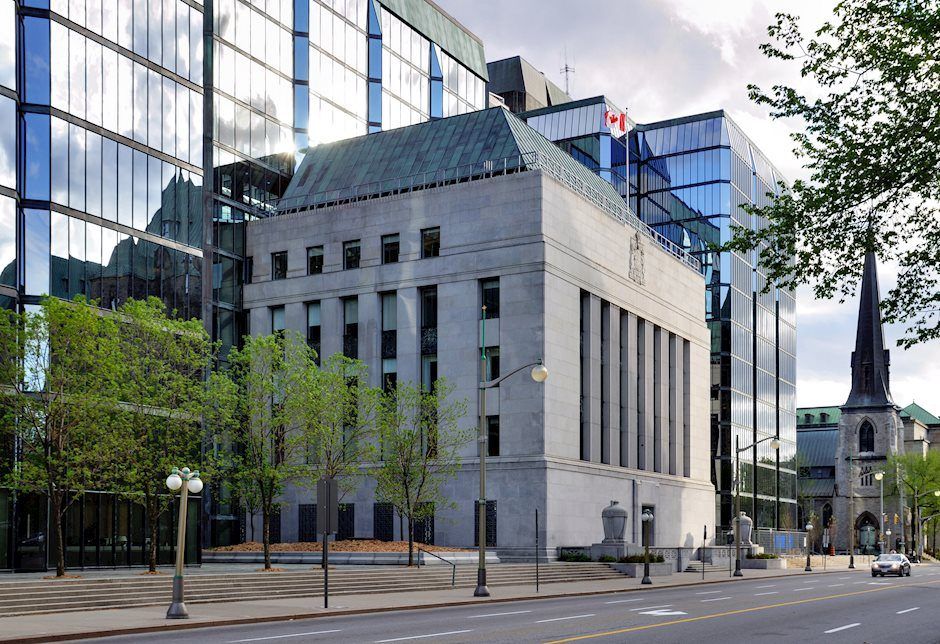

According to the Bank of Canada's (BoC) minutes from a recent meeting that was released Wednesday, some governing council members were more concerned about downside risks to inflation.
Key quotes
- Some Governing Council members were more concerned about downside risks to inflation.
- Concern about downside risks was linked to the potential further weakening of the economy and labor market.
- Other members took the view that risks to the inflation outlook were balanced.
- Members discussed whether weakness in Canadian consumption and housing could partly be due to caution on the part of households.
- Members felt consumers could be waiting for lower rates to make large purchases or enter the housing market.
- Discussed scenario where the economy could weaken and it might be appropriate to speed the pace of cuts.
- Labor market softening, wage growth still elevated.
- Housing market subdued.
- No pre-determined path for rates, decisions to be made meeting-by-meeting.
- Council puzzled by successive upside surprises in US household spending.
- Felt low US saving rate was a possible indicator of weakness going forward.
- In China, continued weakness in domestic demand had increased the downside risk to the growth outlook.
- The Bank of Canada cut rates by 25 bps at the meeting.
- Macklem signalled a willingness to cut more-quickly after the decision.
Market reaction to the BoC Minutes
At the time of writing, USD/CAD was up 0.06% on the day at 1.3612.
Bank of Canada FAQs
The Bank of Canada (BoC), based in Ottawa, is the institution that sets interest rates and manages monetary policy for Canada. It does so at eight scheduled meetings a year and ad hoc emergency meetings that are held as required. The BoC primary mandate is to maintain price stability, which means keeping inflation at between 1-3%. Its main tool for achieving this is by raising or lowering interest rates. Relatively high interest rates will usually result in a stronger Canadian Dollar (CAD) and vice versa. Other tools used include quantitative easing and tightening.
In extreme situations, the Bank of Canada can enact a policy tool called Quantitative Easing. QE is the process by which the BoC prints Canadian Dollars for the purpose of buying assets – usually government or corporate bonds – from financial institutions. QE usually results in a weaker CAD. QE is a last resort when simply lowering interest rates is unlikely to achieve the objective of price stability. The Bank of Canada used the measure during the Great Financial Crisis of 2009-11 when credit froze after banks lost faith in each other’s ability to repay debts.
Quantitative tightening (QT) is the reverse of QE. It is undertaken after QE when an economic recovery is underway and inflation starts rising. Whilst in QE the Bank of Canada purchases government and corporate bonds from financial institutions to provide them with liquidity, in QT the BoC stops buying more assets, and stops reinvesting the principal maturing on the bonds it already holds. It is usually positive (or bullish) for the Canadian Dollar.
Author
Lallalit Srijandorn
FXStreet
Lallalit Srijandorn is a Parisian at heart. She has lived in France since 2019 and now becomes a digital entrepreneur based in Paris and Bangkok.