Australian Dollar adds gains on RBA's hawkish stance
- AUD/USD gains on soft US data and RBA’s hawkish outlook.
- RBA Bullock reiterates hawkish stance, signaling no near-term rate cuts.
- Monetary policy diveargence favors the Aussie as US data softens and RBA remains hawkish.
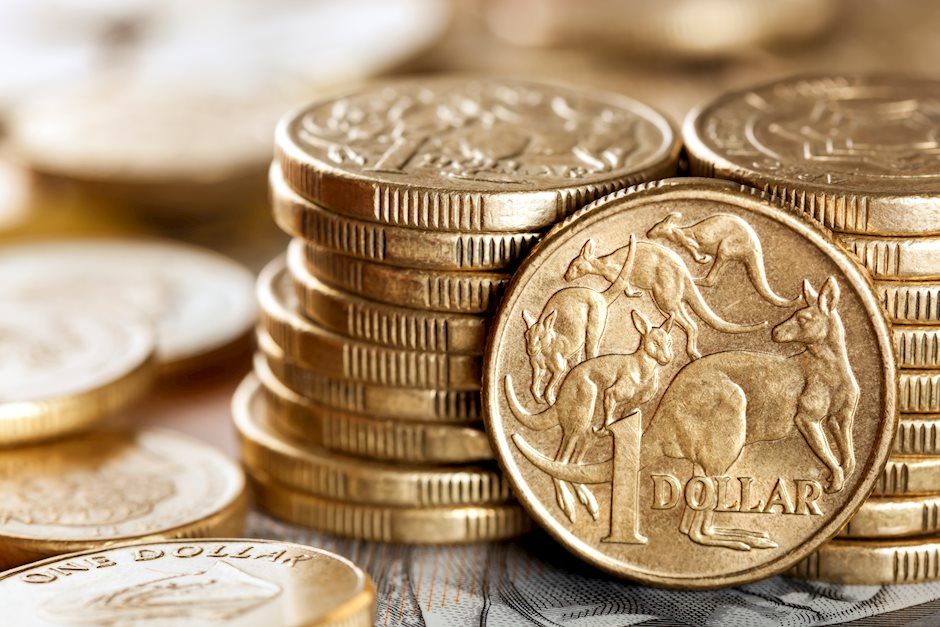

The AUD/USD pair traded in a tight range on Thursday but tallied daily gains after the USD was seen weak after mixed US data.
The Australian economy's uncertain prospects and the Reserve Bank of Australia's (RBA) aggressive stance on interest rates have led to a shift in market expectations. However, the bank hasn't yet embraced cuts in the near term.
Daily digest market movers: Australian Dollar gains slightly after trade figures and hawkish RBA
- Australian exports rose 0.7% MoM and 1.4% YoY in July, while imports fell by 0.8% MoM and 3.0% YoY.
- Exports to China slumped significantly in July, with coal and iron ore prices continuing to decline.
- On Thursday, RBA Governor Bullock maintained a hawkish stance, reiterating that the Board does not expect to cut rates in the near term.
- Across the Pacific, US labor market data disappointed, while ISM Services PMI figures helped the USD recover some losses.
- Monetary policy divergence continues to favor the Aussie, with RBA cash rate futures pricing in a high probability of a 25 bps cut by December.
AUD/USD technical outlook: Indicators flash mixed signals, overall outlook remains positive
On the daily chart, the Relative Strength Index (RSI) points up while the Moving Average Convergence Divergence (MACD) prints a red bar, and both flash mixed signals. However, with the pair above the Simple Moving Average (SMA), the overall outlook is positive, with the pair set to retest the zone above 0.6780.
Interest rates FAQs
Interest rates are charged by financial institutions on loans to borrowers and are paid as interest to savers and depositors. They are influenced by base lending rates, which are set by central banks in response to changes in the economy. Central banks normally have a mandate to ensure price stability, which in most cases means targeting a core inflation rate of around 2%. If inflation falls below target the central bank may cut base lending rates, with a view to stimulating lending and boosting the economy. If inflation rises substantially above 2% it normally results in the central bank raising base lending rates in an attempt to lower inflation.
Higher interest rates generally help strengthen a country’s currency as they make it a more attractive place for global investors to park their money.
Higher interest rates overall weigh on the price of Gold because they increase the opportunity cost of holding Gold instead of investing in an interest-bearing asset or placing cash in the bank. If interest rates are high that usually pushes up the price of the US Dollar (USD), and since Gold is priced in Dollars, this has the effect of lowering the price of Gold.
The Fed funds rate is the overnight rate at which US banks lend to each other. It is the oft-quoted headline rate set by the Federal Reserve at its FOMC meetings. It is set as a range, for example 4.75%-5.00%, though the upper limit (in that case 5.00%) is the quoted figure. Market expectations for future Fed funds rate are tracked by the CME FedWatch tool, which shapes how many financial markets behave in anticipation of future Federal Reserve monetary policy decisions.
Author
Patricio Martín
FXStreet
Patricio is an economist from Argentina passionate about global finance and understanding the daily movements of the markets.