|

What are the environmental concerns around Bitcoin?

The recent sharp falls in Bitcoin have happened as Tesla’s CEO Elon Musk highlighted his environmental concern about Bitcoin. So here is what all the fuss is about.

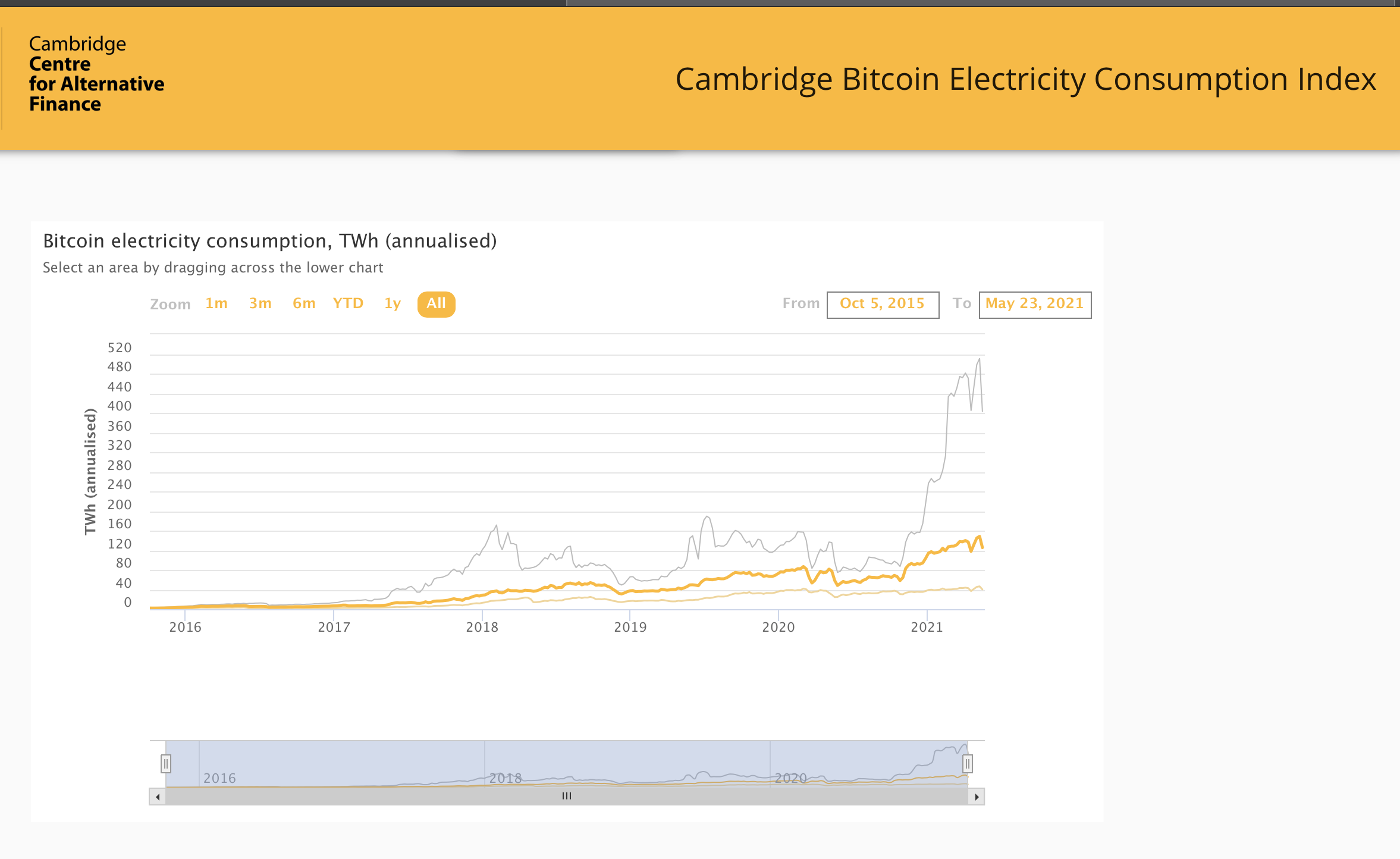
Bitcoin mining is very ‘dirty. The amount of electricity consumed to mine bitcoin is about the same as a medium-sized country taking more electricity than Sweden, Ukraine, & Norway. Here is the FT chart showing that based on research from Cambridge University’s Bitcoin Electricity Consumption Index:
Chart

The estimate on electric use is an estimate that could be wrong. An upper-end estimate eclipses the 133 terawatt estimate and looks for a figure closer to 500 terawatts. This would mean that Bitcoin could in fact be using more electricity than the UK.

About 65% of Bitcoin mining is thought to come from China where around 60% of the energy mix comes from coal.

The basic argument about Bitcoin’s energy consumption has meant Greenpeace has now scrapped their facility accepting Bitcoin’s which they started in 2014. Greenpeace state that their policy was no longer ‘tenable’ as ‘the amount of energy needed to run Bitcoin became clearer’.

This is now a political agenda

Nigel Topping who was appointed by the UK Gov’t to coordinate with businesses over climate goals in light of the COP26 talks says Bitcoin is not on the agenda but it is becoming one of the ‘climate baddies’.

So, this is the heart of the issue.

Bitcoin advocates say that renewable energy sources will come in time and that Bitcoin mining could even accelerate this process.

The takeaway

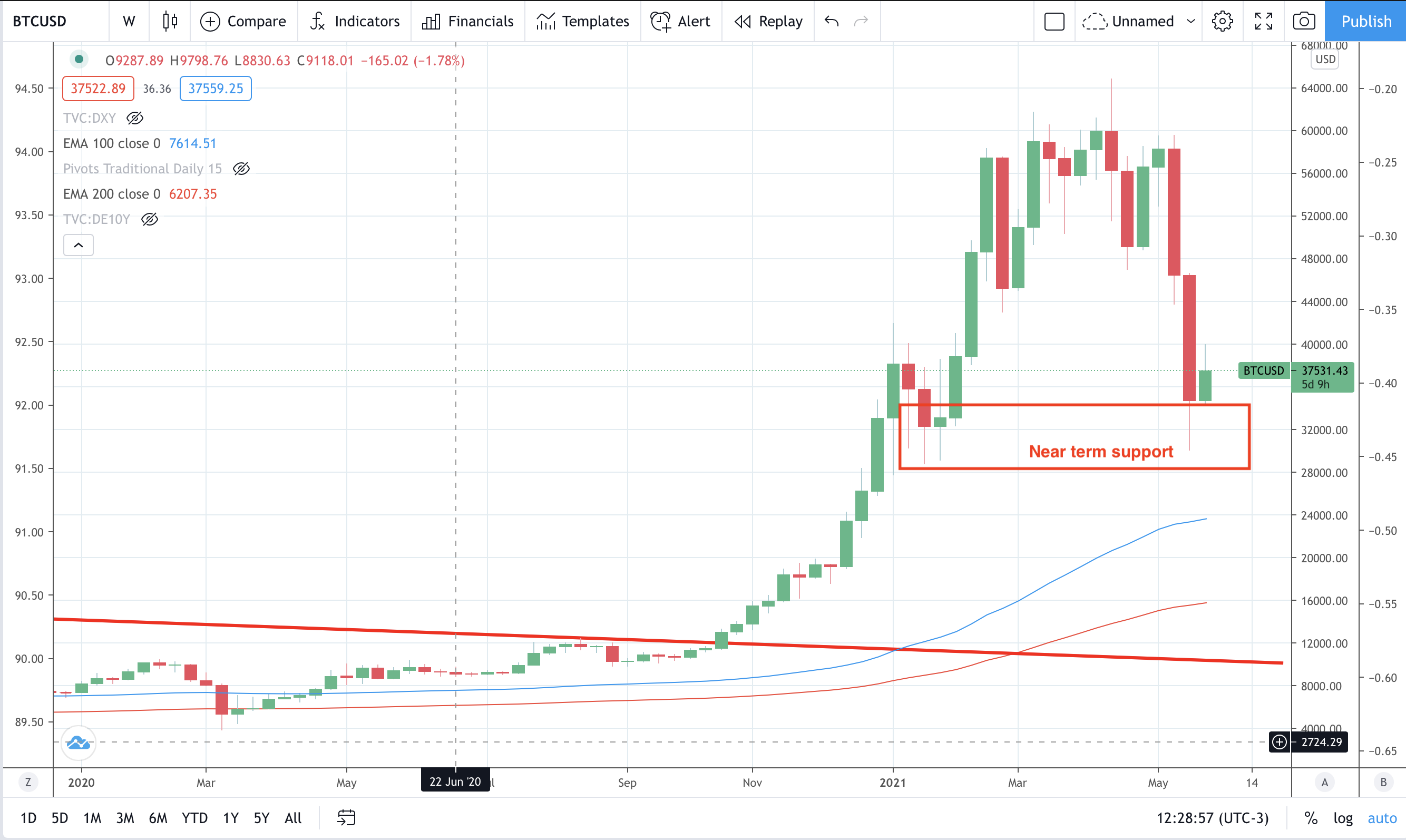
Any other high-profile company or Gov’t that rejects Bitcoin on its environmental impact will cause further selling. It is one headline to watch out for.
BTCUSD

Learn more about HYCM


Author

Giles Coghlan LLB, Lth, MA

Giles is the chief market analyst for Financial Source. His goal is to help you find simple, high-conviction fundamental trade opportunities. He has regular media presentations being featured in National and International Press.


More from Giles Coghlan LLB, Lth, MA
Share:

Editor's Picks

Sonic Labs’ vertical integration fuels recovery in S token

Sonic, previously Fantom (FTM), is extending its recovery trade at $0.048 at the time of writing, after rebounding by over 12% the previous day. The recovery thesis’ strengths lie in the optimism surrounding Sonic Labs’ Wednesday announcement to shift to a vertically integrated model, aimed at boosting S token utility. 

Midnight Price Forecast: NIGHT warms up as Hoskinson reveals March mainnet release

Midnight edges higher by 2% at press time on Thursday, driven by its founder announcing the mainnet release by late March at the Consensus 2026 event. The technical outlook for Midnight highlights a potential bottom formation that could ignite the next bullish trend.

Cardano Price Forecast: ADA eyes short-term rebound as derivatives sentiment improves

Cardano (ADA) is trading at $0.257 at the time of writing on Thursday, after slipping more than 4% so far this week. Derivatives sentiment improves as ADA’s funding rates turn positive alongside rising long bets among traders.

Top Crypto Gainers: Pippin rally logs over 75% gains, Aster and Kaia push higher

Altcoins, such as Pippin (PIPPIN), Aster (ASTER) and Kaia (KAIA) continue to trade in the green, defying the broader market pullback as Bitcoin (BTC) dropped to below $68,000. PIPPIN continues to rally and ASTER and KAIA show short-term recovery with possibilities of a breakout rally.

Bitcoin Price Annual Forecast: BTC holds long-term bullish structure heading into 2026

Bitcoin (BTC) is wrapping up 2025 as one of its most eventful years, defined by unprecedented institutional participation, major regulatory developments, and extreme price volatility.

Bitcoin: The worst may be behind us

Bitcoin (BTC) price recovers slightly, trading at $65,000 at the time of writing on Friday, after reaching a low of $60,000 during the early Asian trading session. The Crypto King remained under pressure so far this week, posting three consecutive weeks of losses exceeding 30%.