Transparency issues surround Ethereum L2 project Blast; $350 million worth of assets to be impacted
- An Ethereum-based DeFi protocol, Blast, has accrued and locked nearly $350 million worth of ETH, USDT, DAI, and other tokens for the next three months.
- The protocol is said to stake users' assets into Lido to earn yield, which has resulted in the surge of funds into the Dapp.
- The protocol, however, has no testnet, transactions, bridge, rollup, or sending of transaction data to Ethereum.
- Furthermore, the code allows for a no-limit withdrawal of the total funds staked onto the protocol.

The emergence of Decentralized Finance (DeFi) on Ethereum brought along the option of making money without having to rely on a central institution. This assured decentralization and safety, resulting in people flocking over to stake Decentralized applications (Dapp). But as always, the mob mentality is the biggest issue here, which might have just caused crypto investors to accept higher risks for future returns.
Mob mentality - The bane of Ethereum and crypto
An Ethereum protocol by the name of Blast has made headlines in the past 48 hours owing to the sudden inflow of funds onto the Dapp. Since November 22, the total value locked (TVL) on the asset has risen to almost $350 million at the time of writing.
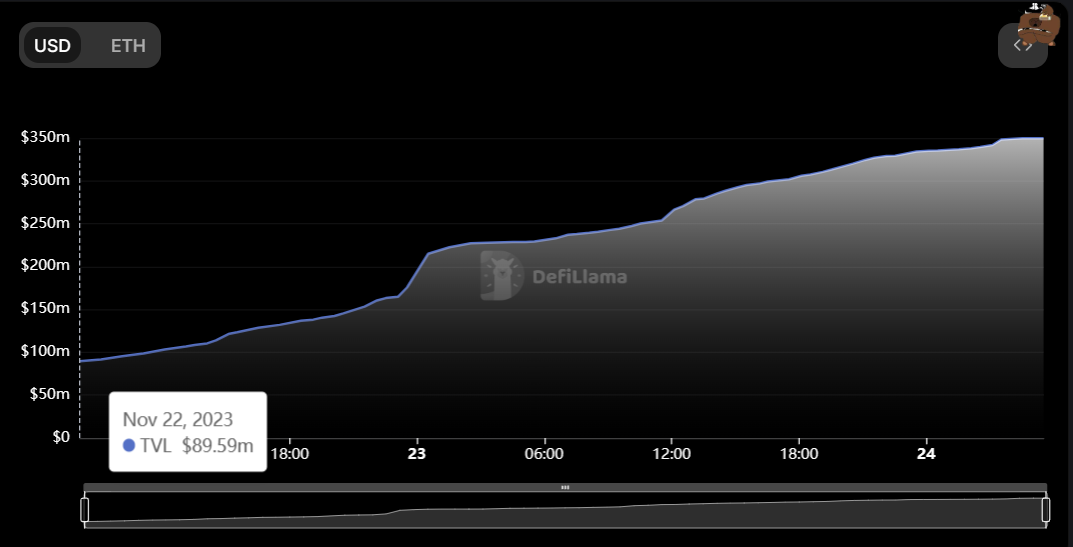
Blast TVL
Users have been staking their assets, such as ETH, USDT, USDC, DAI, and stETH, on the promise of yields. However, what they might have missed is the fundamentals of the protocol that seems to lack transparency.
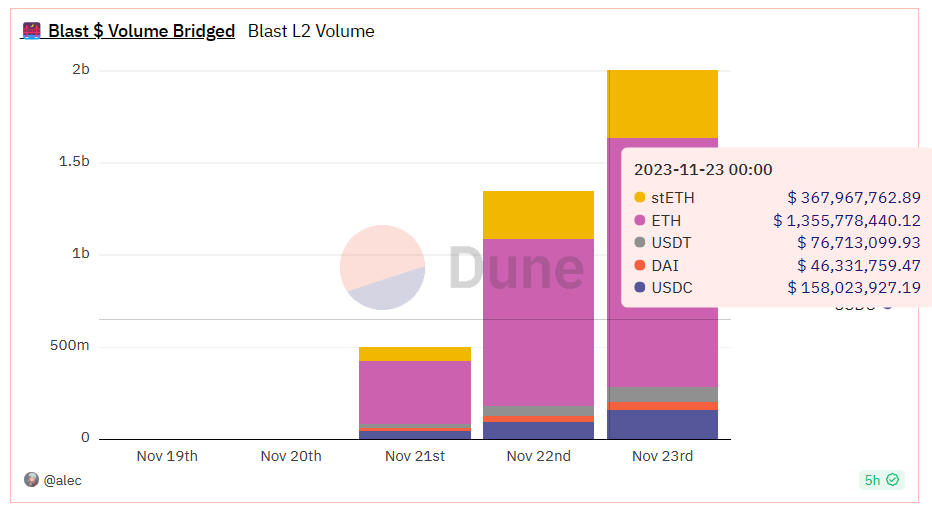
Blast token distribution
Brought to attention by Polygon Developer Relation Jarod Watts, the protocol has a very vulnerable code. Watts stated,
"Blast is not an L2.
The Blast smart contract:
1/ Accepts funds from users.
2/ Stakes users' funds into protocols like LIDO.There's no testnet, no transactions, no bridge, no rollup, and no sending of transaction data to Ethereum.
It's not an L2.
By sending money to the Blast contract, you're basically trusting 3-5 strangers to stake your funds for you.
You won't be able to withdraw that money at any point in time unless those 3-5 people decide to do the right thing in the future.
Again, there's no bridge here.
According to the code of the protocol, the funds staked onto Blast cannot be withdrawn until the lock-in period ends, which will not happen until February 24, 2024. This gives the creators of Blast nearly three months to do as they will with the users' $350 million.
A lack of transparency raises concerns
Looking at the source code of the protocol, a particular function by the name of "enableTransaction" asks for a contract that can access all of the staked ETH and all of the staked DAI, which are the two biggest assets staked on the protocol.
Thus, through this function, all of the $350 million worth of tokens can be received by an Externally Owned Account (EOA) wallet such as MetaMask, Trust Wallet, etc. Furthermore, the function does not place restrictions on the amount of funds that can be withdrawn, making it virtually possible for the owner to extract all the tokens in a go.
The two main threats we've explored are:
— Jarrod Watts (@jarrodWattsDev) November 23, 2023
1/ A malicious code upgrade is approved by the 3/5 multi-sig to steal funds.
2/ A malicious smart contract is made and set as the "mainnetBridge" smart contract to steal funds, again by a 3/5 multi-sig.
(21/24)
This increases the concerns of not just users but the entire crypto market, as the surge in DeFi protocols could see more than one Dapp utilizing such a code. Additionally, this would grab the attention of regulators, making their crackdown more intense.
Blast is proving regulators’ point.
— orlando.btc (@Orlando_btc) November 23, 2023
An onchain hedge fund controlled by a 3/5 anon multisig isn’t defi. It’s “trust me bro.”
And centuries of “trust me bro” is why financial regs exist.
Crypto’s value add—and why crypto needs diff regs—is trust reduction.
We can do better.
This would also emerge as a key example of why regulation is necessary for the crypto market and why it should be done as soon as possible.
Author
Aaryamann Shrivastava
FXStreet
Aaryamann Shrivastava is a Cryptocurrency journalist and market analyst with over 1,000 articles under his name. Graduated with an Honours in Journalism, he has been part of the crypto industry for more than a year now.