Ethereum’s $1.5K support weakens as ETH traders turn slightly bearish


ETH derivatives data shows bulls becoming less inclined to defend the current price level, creating an opportunity for more downside.
The price of Ether declined 10.2% between Jan. 8 and Jan. 10, and has since been range trading near the $1,500 level. More importantly, on a broader time frame, Ether is down 52.5% in twelve months, which partially explains why derivatives metrics were somewhat neutral after Ether’s failed attempt to break $1,700 on Feb. 8.
Currently, investors' biggest concerns are the U.S. Securities and Exchange Commission's (SEC) lawsuits and enforcement actions against crypto firms, which included Kraken’s tanking of its-as-a-service program and PayPal reportedly pausing its stablecoin project due to regulatory concerns.
A crackdown by the SEC on crypto staking is expected to have unintended consequences for decentralized finance (DeFi), according to Jacob Blish, the head of business development at Lido DAO. Blish joined a growing number of people in the crypto industry calling for transparency in crypto sector regulation.
On the bright side, Ethereum developers announced the pre-launch of the Shanghai upgrade on the Zhejiang testnet. According to a blog post on Feb. 10, the transition is required to enable withdrawals from validators' staking positions. The Zhejiang test network is the first of three testnets that simulate Shanghai, which is expected to go live in March 2023, although a specific date has not been released.
Let's look at Ether derivatives data to understand if the $1,700 price rejection has impacted crypto investors' sentiment.
ETH futures show slowing demand for leverage longs
Retail traders usually avoid quarterly futures due to their price difference from spot markets. Professional traders prefer these instruments because they prevent the fluctuation of funding rates in a perpetual futures contract.
The three-month futures annualized premium should trade between 4% to 8% in healthy markets to cover costs and associated risks. However, when the futures trade at a discount versus regular spot markets, it shows a lack of confidence from leverage buyers, which is a bearish indicator.
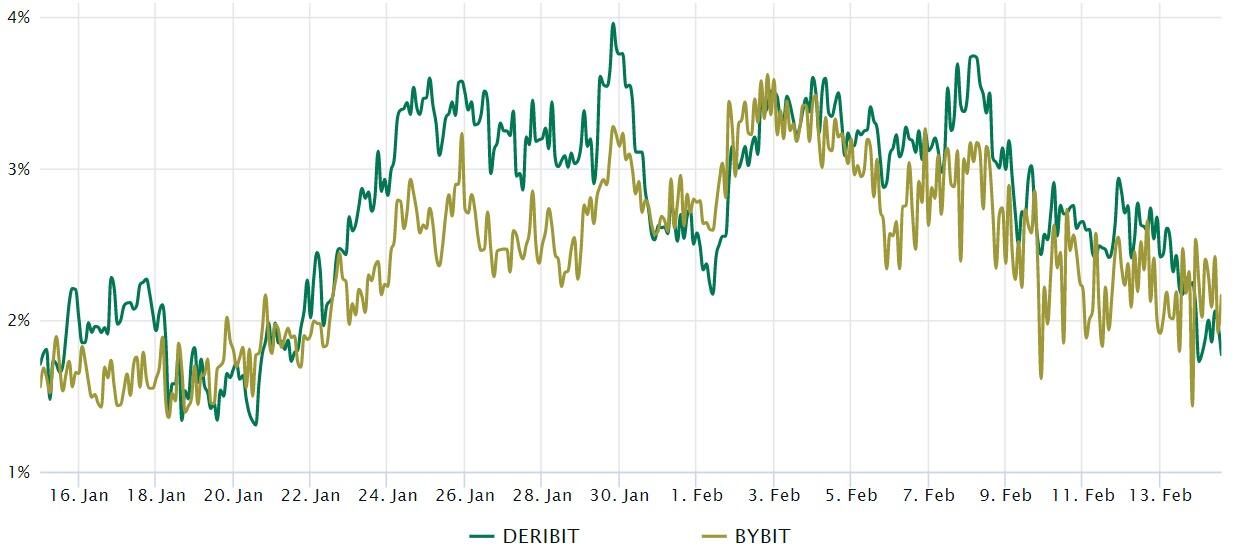
Ether 3-month futures annualized premium. Source: Laevitas.ch
The above chart shows that derivatives traders are more bearish because the Ether futures premium moved below the 4% threshold. Consequently, bears can celebrate that the indicator failed to display a modest premium even as ETH tested $1,700 on Feb. 8.
The absence of demand for leverage longs does not necessarily translate to an expectation of adverse price action. Hence, traders should analyze Ether's options markets to understand how whales and market makers are pricing the odds of future price movements.
A key options risk metric flirted with the bearish sentiment
The 25% delta skew is a telling sign when market makers and arbitrage desks are overcharging for upside or downside protection.
In bear markets, options investors give higher odds for a price dump, causing the skew indicator to rise above 10%. On the other hand, bullish markets tend to drive the skew metric below -10%, meaning the bearish put options are in less demand.
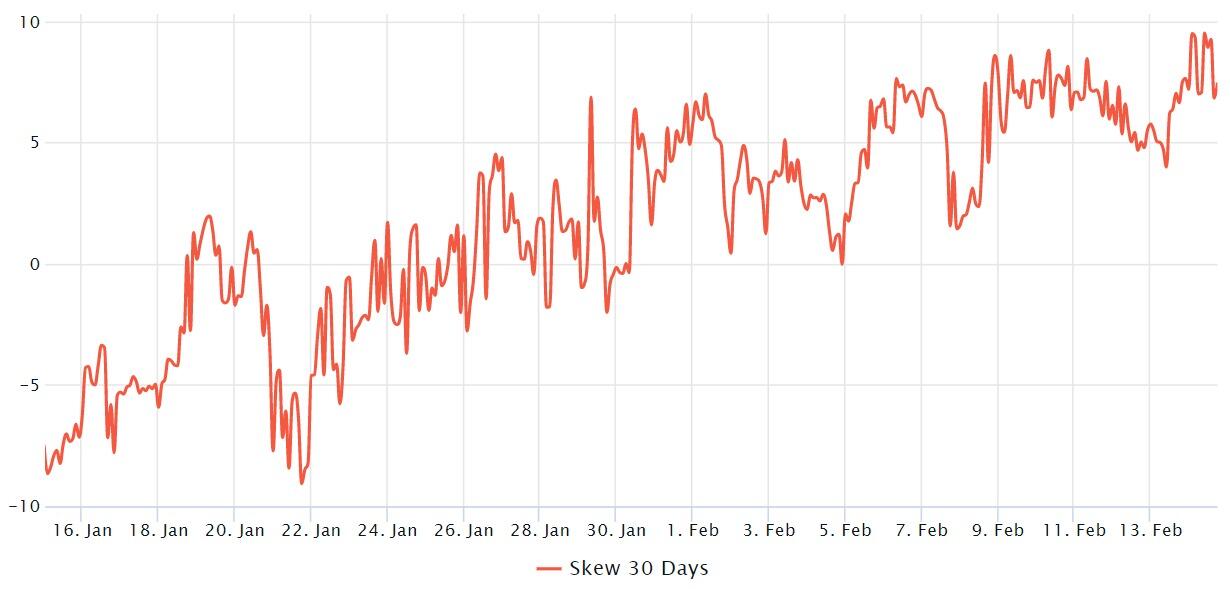
Ether 30-day options 25% delta skew: Source: Laevitas.ch
The delta skew flirted with the bearish 10% level on Feb. 14, signaling stress from professional traders. That is a stark contrast from late January when the 25% skew index hovered near 2% — indicating similar upside and downside risks.
Ultimately, both options and futures markets point to pro traders moving to a neutral-to-bearish sentiment, displaying moderate discomfort after the $1,700 price rejection.
Consequently, the odds favor Ether bears because the hostile regulatory environment tends to amplify the adverse effects of FUD — whether or not it directly impacts the Ethereum network's adoption and use cases.
Author
Cointelegraph Team
Cointelegraph
We are privileged enough to work with the best and brightest in Bitcoin.