Bitcoin futures data hints at $22K as next logical step
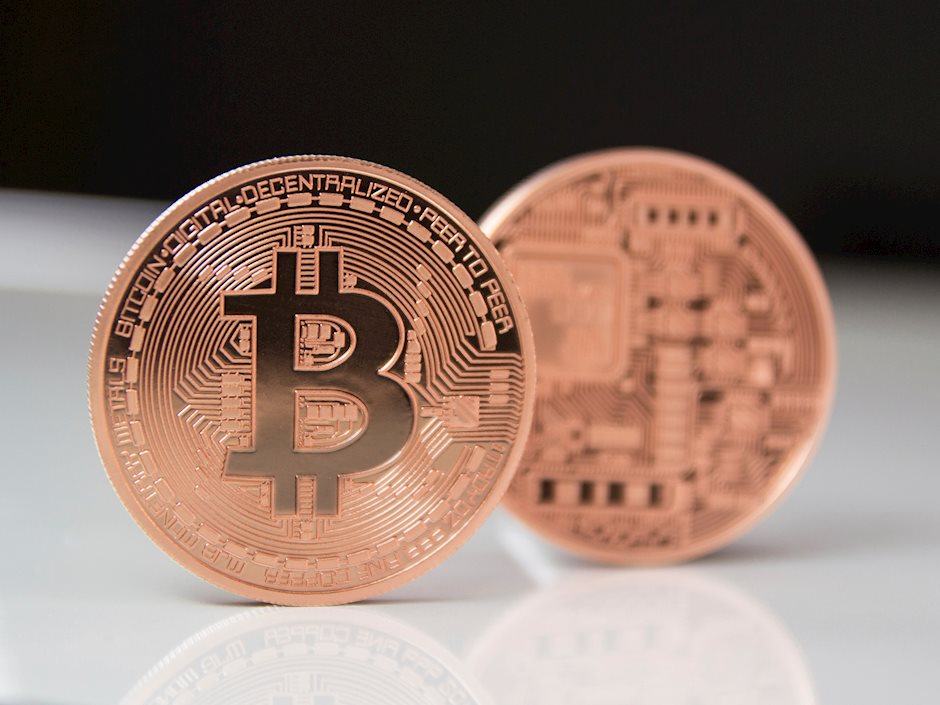

BTC derivatives have flipped bearish after Bitcoin failed to establish bullish momentum despite heightened spot ETF prospects.
A Bitcoin price correction down to $22,000 is becoming increasingly likely, as BTC derivatives have begun to exhibit bearish tendencies.
The price chart of Bitcoin leaves little doubt that investor sentiment has worsened since Grayscale’s much-hyped legal victory against the United States Securities and Exchange Commission on Aug. 29 and the SEC’s subsequent postponement of multiple spot BTC exchange-traded fund (ETF) requests.
The central question remains whether the prospects of an ETF can outweigh the growing risks.
Spot Bitcoin ETF hype is fading
By Aug. 18, the entire 19% rally that occurred following BlackRock's ETF initial filing had fully retracted as Bitcoin moved back to $26,000
Next, there was a failed attempt to reclaim the $28,000 support as investors raised the odds of an ETF approval following the positive news regarding Grayscale’s Bitcoin trust request.
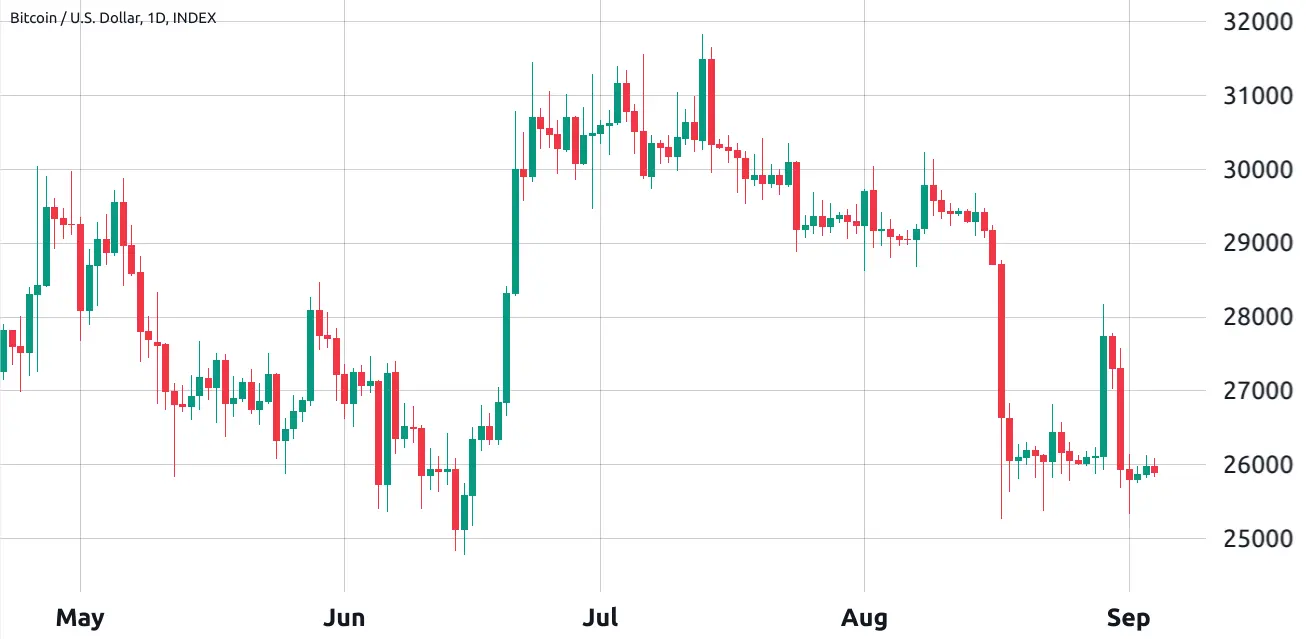
Cryptocurrency investors’ morale deteriorated as the S&P 500 index closed at 4,515 on Sept. 1, merely 6.3% below its all-time high from January 2022. Even gold, which hasn’t been able to break above the $2,000 level since mid-May, is 6.5% away from its all-time high. Consequently, the general feeling for Bitcoin investors just seven months ahead of its halving in 2024 is certainly less positive than expected.
Some analysts pin Bitcoin’s lackluster performance on the ongoing regulatory actions against the two leading exchanges, Binance and Coinbase. Moreover, multiple sources claim that the U.S. Department of Justice (DOJ) is likely to indict Binance in a criminal probe. The claims are based on allegations of money laundering and potential violations of sanctions involving Russian entities.
North Node Capital chief investment officer and Bitcoin supporter Pentoshi expressed the current conditions in a post on X (formerly known as Twitter):
According to Pentoshi, the potential gains from a spot ETF approval outweigh the price impact of regulatory actions against the exchanges. There’s no way to ascertain whether such an assumption is valid, but such an analysis fails to consider that U.S. inflation, as measured by the Consumer Price Index, has come down to 3.2% in July 2023 from 9.1% in June 2022.
Moreover, the U.S. Federal Reserve’s total assets have been reduced to $8.12 trillion, down from the recent $8.73 peak in March 2023. This signals that the monetary authority has been draining liquidity from the markets, which is detrimental to Bitcoin’s inflation protection thesis.
Looking at a longer time frame, Bitcoin’s price has been holding the $25,000 level since mid-March, but taking a closer look at derivatives data shows that bulls’ conviction is getting tested.
Bitcoin derivatives show decreasing demand from bulls
Bitcoin monthly futures typically trade at a slight premium to spot markets, indicating that sellers are asking for more money to delay settlement. As a result, BTC futures contracts in healthy markets should trade at a 5 to 10% annualized premium — a situation known as contango, which is not unique to crypto markets.
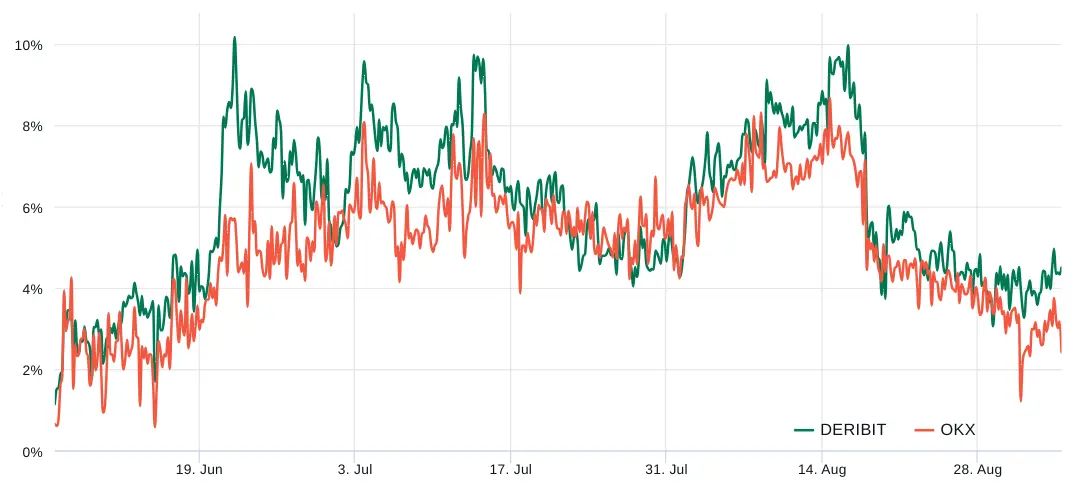
Bitcoin’s current 3.5% futures premium (basis rate) is at its lowest point since mid-June, prior to BlackRock’s filing for a spot ETF. This indicator reflects a decreased demand for leverage buyers utilizing derivatives contracts.
Traders should also analyze options markets to understand whether the recent correction has caused investors to become less optimistic. The 25% delta skew is a telling sign when arbitrage desks and market makers overcharge for upside or downside protection.
In short, if traders anticipate a Bitcoin price drop, the skew metric will rise above 7%, and phases of excitement tend to have a negative 7% skew.
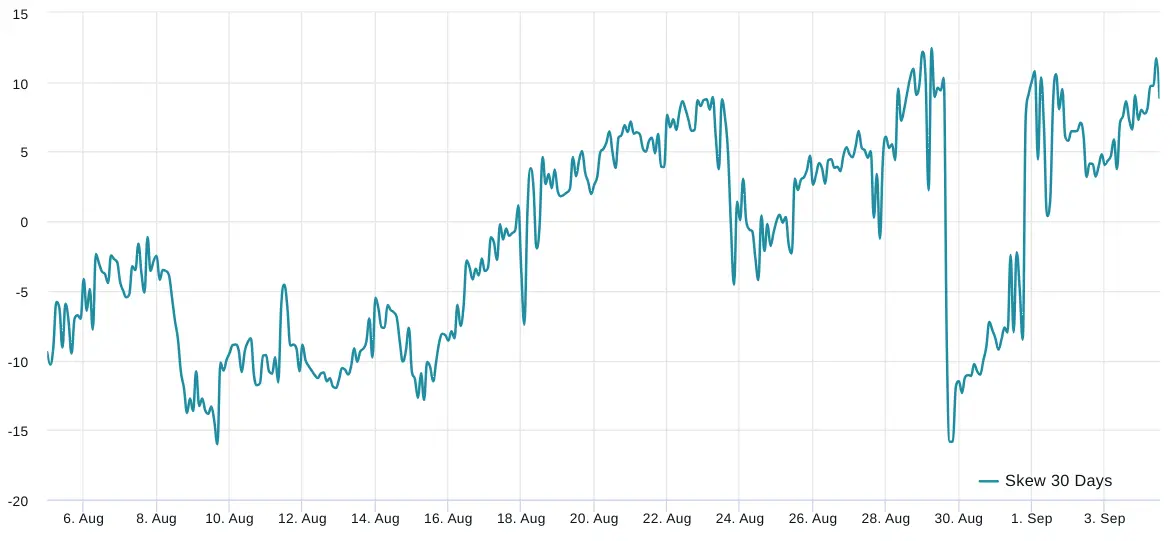
As displayed above, the options’ 25% delta skew has recently entered bearish territory, with protective put (sell) options trading at a 9% premium on Sept. 4 compared with similar call (buy) options.
BTC futures hint at $22,000 next
Bitcoin derivatives data suggests that the bearish momentum is gaining strength, especially since the approval of a spot ETF could potentially be deferred until 2024, given the SEC’s concerns about the lack of measures to prevent a significant portion of trading occurring on unregulated offshore exchanges based on stablecoins.
Meanwhile, the uncertainty in the regulatory landscape does favor the bears, as there’s no way to dismiss the fear, uncertainty and doubt surrounding potential actions from the DOJ or the ongoing lawsuits against exchanges by the SEC.
Ultimately, a retracement down to $22,000 — the level last seen when Bitcoin’s futures premium was 3.5% — is the most likely scenario, considering the recent inability to sustain a positive price momentum despite the heightened chances of a spot Bitcoin ETF approval.
Author
Cointelegraph Team
Cointelegraph
We are privileged enough to work with the best and brightest in Bitcoin.