All 'Ethereum killers' will fail: Blockdaemon’s Freddy Zwanzger
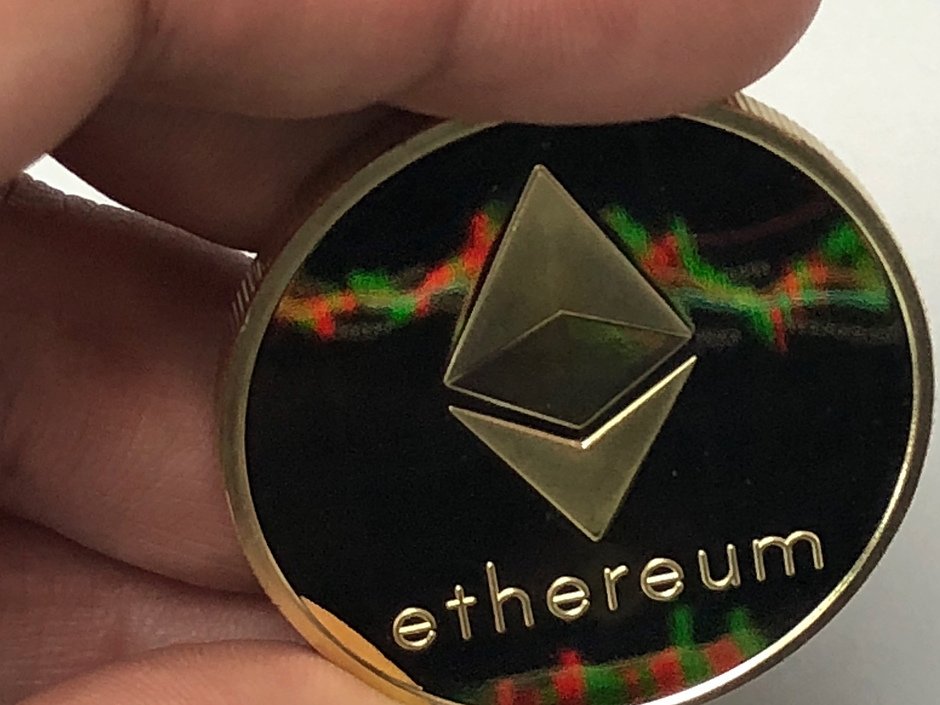

“All the Ethereum killers from back in the day didn't succeed, and I don't expect them to succeed at all,” Blockdaemon’s Ethereum lead told Cointelegraph.
Blockdaemon’s ETH ecosystem lead Freddy Zwanzger believes Ethereum will retain its leadership position in the crypto ecosystem over the coming years due to its utility as a smart contract platform and upgrades to the network following the Merge.
Speaking to Cointelegraph during the Ethereum Community Conference (EthCC) this week, Zwanzger said:
“It'll continue to be a leader. I mean, obviously, the first and most important smart contract platform, and that's not going to change.”
Blockdaemon is an institutional-grade blockchain infrastructure platform that offers node operations and infrastructure tooling for blockchain projects.
The Blockdaemon employee also took aim at so-called “Ethereum killers” — competing Layer 1 blockchains — which have tried to topple Ethereum from its leadership position but failed.
“All the Ethereum killers from back in the day didn't succeed, and I don't expect them to succeed at all.”
Crypto projects that have been touted as “Ethereum killers,” include Solana, Cardano, Tezos, and Polkadot, among others. Many of these blockchains tout lower fees and faster transactions but have fewer active developers and certain blockchains place h less emphasis on decentralization.
To date, none have managed to displace Ethereum from its number two spot in terms of market cap. Cardano and Solana currently sit in the eighth and ninth positions, Polkadot is ranked 11 while Tezos is ranked 37, according to Coinmarketcap.
Zwanzger believes that the upcoming Merge will further propel Ethereum onwards and upwards in terms of technology and price.
“There are so many good things in there, like environmentally-friendliness, [and] all sorts of things that are beneficial to a lot of people. Staking will become more attractive,” he said.
It’s a show of strength and commitment that the roadmap is materializing.
The Ethereum Merge involves transitioning it from the energy-intensive proof-of-work (PoW) mining consensus to a proof-of-stake (PoS) model, and has been tentatively scheduled to be rolled out around September 19.
However, Zwanzger admitted the big future challenge for Ethereum will continue to be scalability.
The original Ethereum roadmap was focused on sharding, but that’s not so much the case anymore. Now we have a roll-up-centric roadmap, so scaling via layer 2 solutions.
Currently, the “proof-of-work” consensus model allows the blockchain to process 15 to 20 transactions per second (TPS) according to data from Blockchair.
A quantum leap in the number of transactions per second is expected sometime in 2023 when the Ethereum network introduces sharding.
Sharding is a multi-phase upgrade to improve Ethereum’s scalability and capacity by splitting the entire network into multiple portions in order to increase the network capacity.
Sharding will work hand in hand with layer 2 solutions to further “supercharge” the scalability of the network.
Post-sharding, cofounder Vitalik Buterin has claimed the network will be capable of transaction speeds up to 100,000 TPS.
Author
Cointelegraph Team
Cointelegraph
We are privileged enough to work with the best and brightest in Bitcoin.