Yen under pressure as USD/JPY hits new highs since 1986


The USD/JPY pair soared to 160.34 on Thursday, reaching levels not seen since 1986, as market participants increasingly anticipate potential interventions from Japanese authorities. Despite repeated verbal assurances, the Japanese government has not taken concrete financial measures, leaving the yen vulnerable.
Finance Minister Shunichi Suzuki reiterated that the government stands ready to counteract sudden and undesirable fluctuations in the yen's value, highlighting its preparedness to engage in market operations if necessary. However, when and how these interventions might occur remains uncertain, adding to the yen's woes.
A significant factor in the yen's ongoing decline is the stark contrast in interest rates between the Bank of Japan, which maintains a rate close to zero, and the Federal Reserve. This disparity has been a primary driver of the yen's weakness, with the currency losing approximately 2% against the dollar in June alone, culminating in a 14% decline over the year.
USD/JPY technical analysis
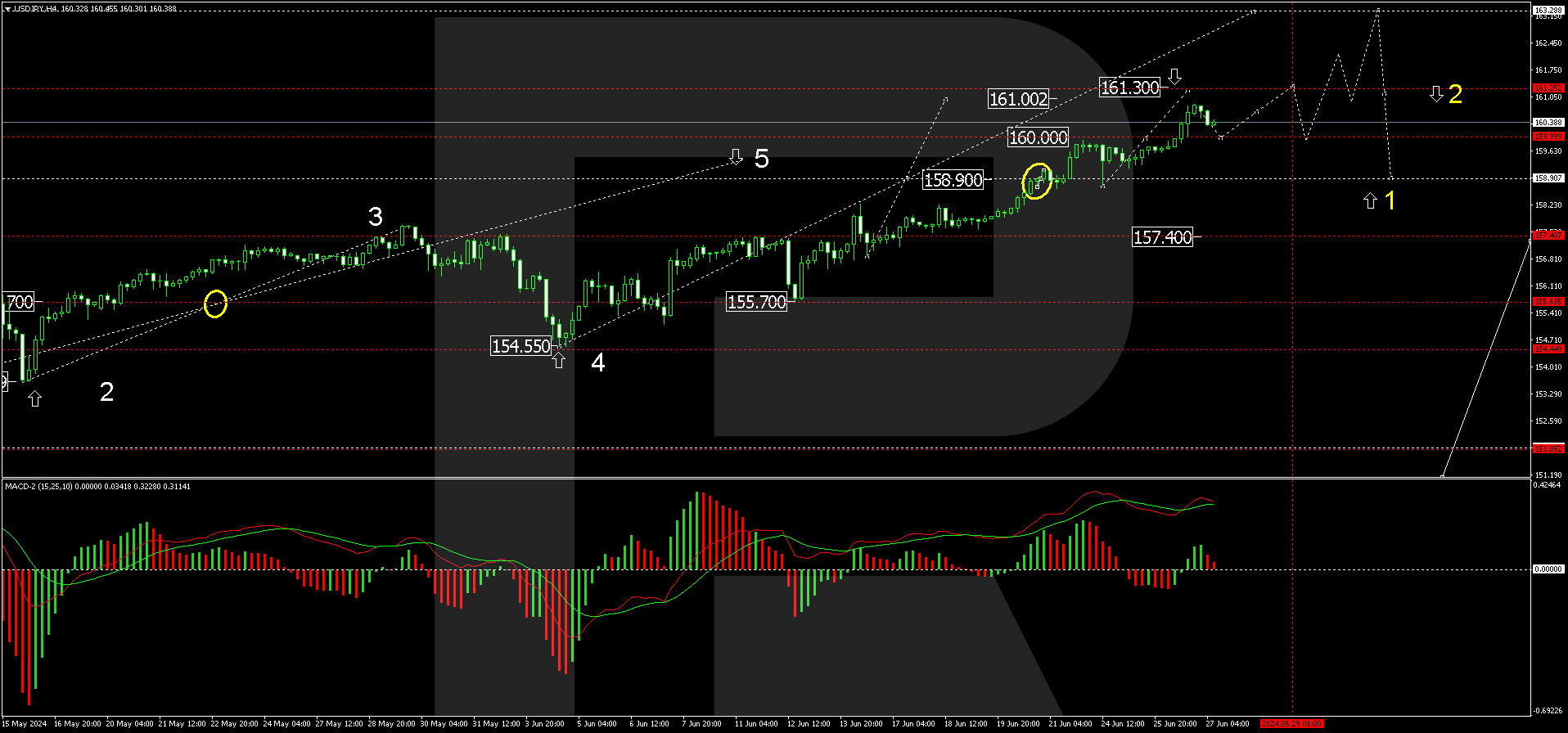
The USD/JPY has broken through the critical 160.00 level, reaching up to 160.85. The market is currently retracing to test the 160.00 level from above. Should this level hold, we anticipate further growth towards 161.30, potentially extending the bullish trend to 163.30. This bullish scenario is supported by the MACD indicator, which shows the signal line well above zero, indicating strong upward momentum.
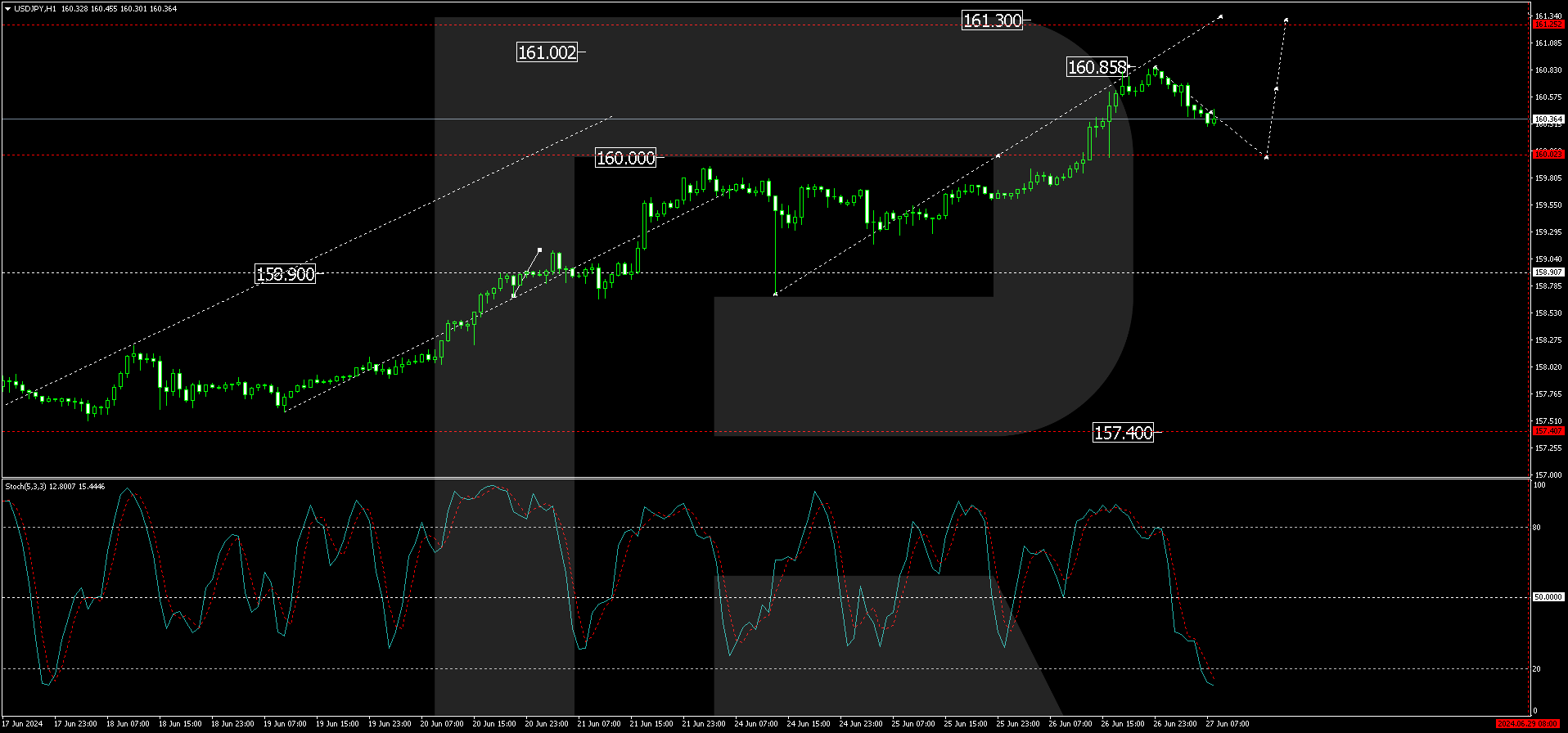
On the H1 chart, after reaching 160.85, the pair is undergoing a correction towards 160.00. Completion of this correction could pave the way for another ascent to 161.30. This view is technically reinforced by the Stochastic oscillator, which is currently below 20 and poised for a rebound towards 80, suggesting a potential resurgence in buying pressure.
Market outlook
As the discrepancy between US and Japanese monetary policies continues to influence the USD/JPY, traders should remain alert to any signs of actual intervention by Japanese authorities. Such intervention could significantly impact market dynamics, potentially stalling or reversing the yen's current depreciation trend.
Author
Andrey Goilov
RoboForex
Higher economic education. Andrey Goilov has been working on the Forex market since 2005. A financial analyst and successful trader. Preference in trading is highly volatile instruments.