Why is the mainstream always dropping Gold?
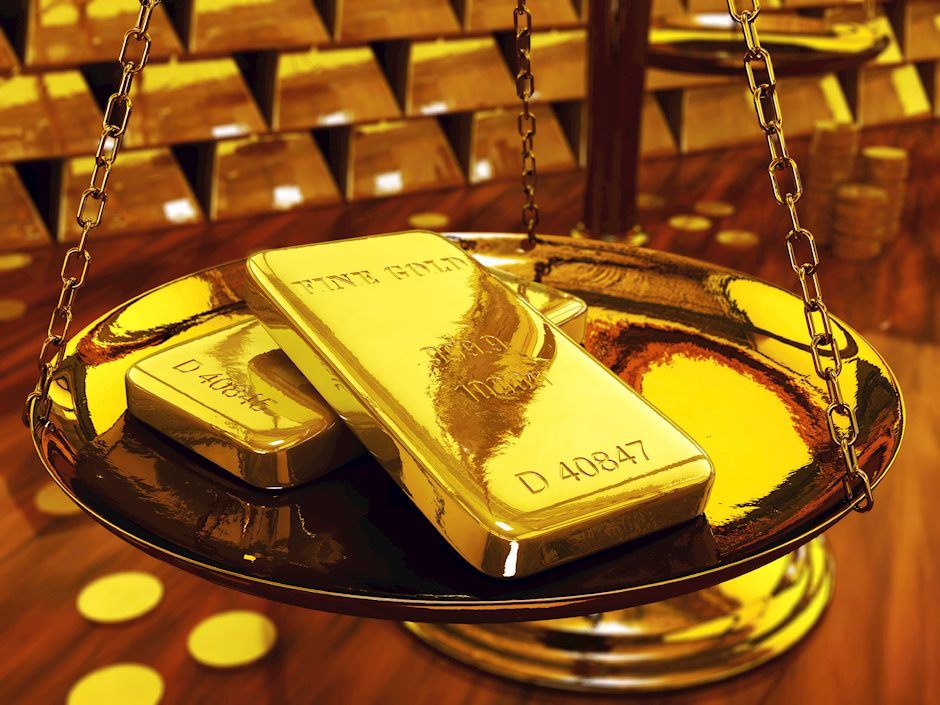

According to the mainstream, it’s always time to sell gold.
Maybe listening to mainstream talking heads isn’t the best strategy.
On March 8, CNBC Fast Money featured TD Securities senior commodity strategist Daniel Ghali arguing that it was time to take profits on gold.
That didn’t age well.
Gold closed around $2,162 that day. Since then, the yellow metal has gone up over 8 percent.
It’s not so much that Ghali made the wrong call. Anybody trying to predict market movements is going to make the wrong call from time to time. The issue is the mainstream constantly poo-poos gold, whether it’s going up, down, or sideways.
A few years ago, CNBC commentator Jim Lebenthal went as far as to say he has no interest in gold because it has “no uses as a metal.”
This is a ridiculous take. Gold has all kinds of uses from jewelry to electronics. The tech sector used nearly 300 tons of gold in 2023.
Meanwhile, the mainstream financial media constantly fawn over Bitcoin. Talk about something with no use in the real world.
A Bloomberg article recently noted that when gold hit a record high a few weeks ago, “no one besides a few gold bugs seemed to care." But when Bitcoin set records, “everybody cared.”
“The Financial Times had a piece on investing in crypto miners, a long read about what crypto still gets wrong, and a cry of pain for UK investors denied the right to hold Bitcoin exchange-traded funds. The Telegraph had almost a full page on how to buy. Bitcoin also made it into the Market Report section of the Daily Mail and got good exposure in the Times too -- with another cry of pain for UK investors and the fusty bureaucrats who won’t let them get easy exposure to the asset of the century.
“Unless I missed it, none of these papers had an article on gold.”
This is nothing new. Dave Ramsey, a darling in some segments of the financial planning world, constantly dumps on gold and silver. While gold historically has retained its purchasing power better than any paper currency ever printed, Ramsey claims, “It has a crummy track record as an investment.”
As Money Metals CEO Stefan Gleason points out, “Ramsey has a crummy grasp of recent history.”
“From 2000-2010, gold gained a cumulative 280 percent. But for the stock market, it was a lost decade. The S&P 500 fell 24 percent over that same period.”
Going back further in time, paper assets got clobbered by inflation in the 1970s, while gold delivered average annual returns of 30.7 percent. The S&P 500 barely eked out nominal gains of 1.6 percent per year. That certainly didn’t keep pace with double-digit inflation.
But most financial planners share Ramsey’s attitude, and it is constantly regurgitated on mainstream financial networks from CNBC to Fox Business.
Why?
I think there are two reasons.
First, selling physical gold doesn't benefit financial planners.
As former stockbroker and financial journalist Guy Christopher once pointed out, gold and silver in your possession have no counterparties and no continuing fees and commissions.
"Once you own gold, that part of your wealth and your future is out of Wall Street's hands."
Since the world of investing and financial planning and the mainstream financial media are connected at the hip, pundits and talking heads tend to reflect this attitude.
As Gleason put it, investments in physical gold and silver are rarely recommended by financial advisors simply because they have little financial incentive to do so.
"These 'investment professionals' prefer to turn over account holdings every year or two because they make commissions every time they do. But when people buy physical precious metals, they tend to hold them very long term, often passing them on to heirs. Few transactions mean few commissions."
A second reason the mainstream tends to poo-poo precious metals is more fundamental. Most mainstream financial planners and pundits simply don’t understand macroeconomics. They are steeped in Keynesian nonsense including the notion that a little inflation is a good thing, money printing and government stimulus can “rescue” a shaky economy with no consequences down the road, and a strong economy creates inflation.
During his CNBC interview, Ghali said the economic backdrop doesn’t support gold in the longer term.
“From here I think the easy part is over. The risk-reward for higher gold prices is now dependent on macro trends.”
He’s not wrong about the importance of macro trends on the trajectory of gold. But he has no clue what those macro trends are. He almost certainly believes the Fed beat inflation, it can go ahead and cut rates, and the economy is going to glide to a soft landing. That, after all, is the mainstream mantra.
But the reality is inflation is sticky and rate cuts ultimately mean more inflation. The mainstream is literally celebrating a victory over inflation so the Fed can create more! Meanwhile, while the interest rate environment and monetary policy are still historically loose, the Fed has raised rates to break things in this debt-riddled bubble economy.
The Fed will most likely cut rates in the foreseeable future. In fact, the cuts will likely be far deeper than anybody in the mainstream anticipates – as in all the way to zero. That’s because they won’t be cutting because they beat inflation. They’ll be cutting because we’re in the midst of another financial crisis. That will also mean a return to quantitative easing.
So, if higher gold prices are dependent on macro trends, now is the time to buy gold and silver – not sell! No matter how the mainstream prattles on.
To receive free commentary and analysis on the gold and silver markets, click here to be added to the Money Metals news service.
Author
Mike Maharrey
Money Metals Exchange
Mike Maharrey is a journalist and market analyst for MoneyMetals.com with over a decade of experience in precious metals. He holds a BS in accounting from the University of Kentucky and a BA in journalism from the University of South Florida.

















