Why are UK assets underperforming?


The Pound is the best performing currency in the G10 FX space so far this year, and earlier this week GBP/USD also hit its highest level since Feb 2022. However, since then it has lost ground against the dollar and the euro and is struggling to break above the $1.34 level. Is this a normal pullback, or is it a sign that traders are losing interest in the pound as we move towards Q4?
There are no fundamental reasons why the pound’s rally has stalled, however, there are some warning signs that the pound could face some hurdles from here. The pound’s strength has been driven by relative interest rate differentials, as you can see in the chart below. This chart shows the spread between market-based expectations for the BOE and the Fed. It also shows GBP/USD. As you can see, GBP/USD is tracking the spread between UK-US December rate expectations closely. The UK is expected to cut at a slower pace than the Fed, and this has been pound positive. In the UK interest rates are expected to be 4.53% by the end of this year, in the US rates are expected to be significantly lower at 4.04%.
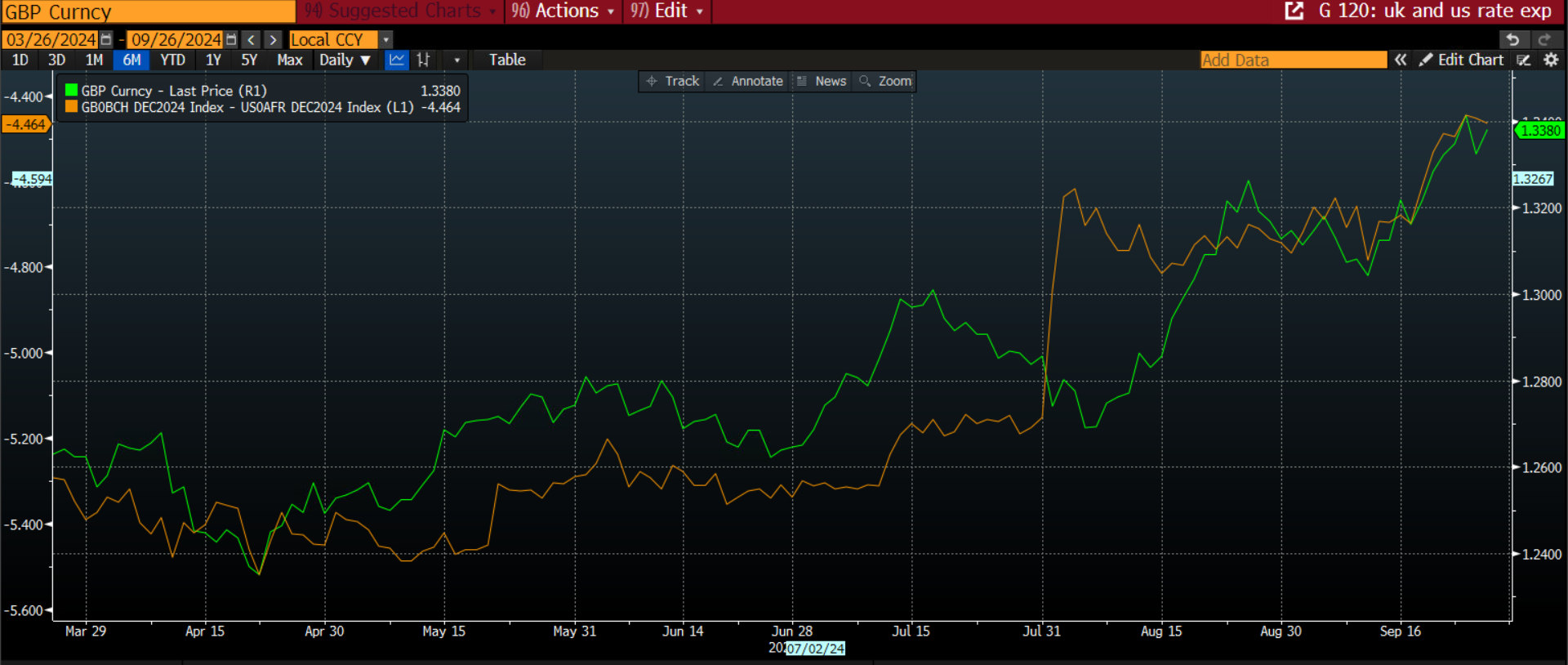
Source: XTB and Bloomberg
The risk for FX traders is that the rate differential is too wide, and this difference will narrow in the coming weeks. We think that it is unlikely that the BOE will cut at a faster pace, instead we think that the market is over its skis when it comes to Fed rate cut expectations for this year, and we could see expectations scaled back. Later on Thursday, we get a raft of Fed speakers, with 8 members talking, including Jay Powell. Could they push back on the narrative of big rate cuts at every meeting? Currently there is a 60% chance of a 50bp rate cut in November, if today’s Fed speak pushes back on this narrative, then the dollar could rally.
Is it time for the Dollar to recover?
The dollar index has been under intense pressure in Q3; however, it has managed to find decent support above the key 100.00 level, and could this be used as a platform for a recovery. Of course, if the dollar is to recover, the Fed and the economic data has to play ball. The last reading of Q2 GDP is released later today. Although this data is backward looking, durable goods orders for August are worth watching, along with pending home sales. Friday’s core PCE index for August is also a key economic data point for the market as it is the Fed’s preferred measure of inflation. If the Fed pushes back on further 50bp rate cuts, and instead suggests that it will follow a more measured path, watch GBP/USD, as this pair could come under pressure. Below $1.33, there is not much solid support until $1.32.
UK stocks also underperform
The FTSE 100 is also underperforming its European counterparts so far this month. In September, the FTSE 100 is down more than 1.1%, the Eurostoxx 50 index is higher by 0.75%. It’s been slim pickings for European stocks for most of September, and European stocks indices have underperformed US indices. However, the FTSE 100 is a notable European under performer. This suggests two things: 1, that the FTSE 100 is getting less of an uptick from China’s stimulus package, which has boosted global risk appetite this week. 2, that a strong pound may be weighing on the UK’s blue-chip index.
FTSE 100 heavyweights weigh on the index
The FTSE 100 is also getting hit hard by the decline in oil prices. Brent crude is down by more than 3.5% in the past 5 days, and it is back below $72.50 per barrel, as the market reacts to news from the Middle East and the prospect of a ceasefire between Israel and Lebanon. BP and Shell are both lower by more than 3% on Thursday and they are the weakest performers on the UK index. This highlights how linked the UK’s main index is to geopolitics due to the large weighting of energy stocks. Added to this, the FTSE 100 tends to get left behind when tech rallies strongly. The Nasdaq 100 index is higher by more than 3% in the past 5 days, which is also leaving the FTSE 100 behind, as global investors favour tech stocks. The corporate news from the UK this week has mostly been good, Mitchells and Butler said that profits would be strong due to a drop in energy costs, Burberry is benefitting from the China stimulus and Ocado is also higher. However, this is benefitting the FTSE 250, while the FTSE 100 heavy weights come under pressure.
Budget fears
UK assets are underperforming this week and that is before we even consider the impact of the Budget. While the Budget next month has dented business and consumer confidence, we think that it is not impacting asset prices right now. We will look more closely at the potential impact from the Budget in the coming weeks, however, for now, we think that UK asset prices are struggling for other reasons. UK bulls will hope the Budget does not make this worse.
Author
Kathleen Brooks
XTB UK
Kathleen has nearly 15 years’ experience working with some of the leading retail trading and investment companies in the City of London.

















