Which is the best trade war proxy in the FX arena?
-
Tariffs remain at the top of investors’ agendas.
-
Wall Street and gold have been very responsive to headlines.
-
But which FX pair is best reflecting the turbulence?
-
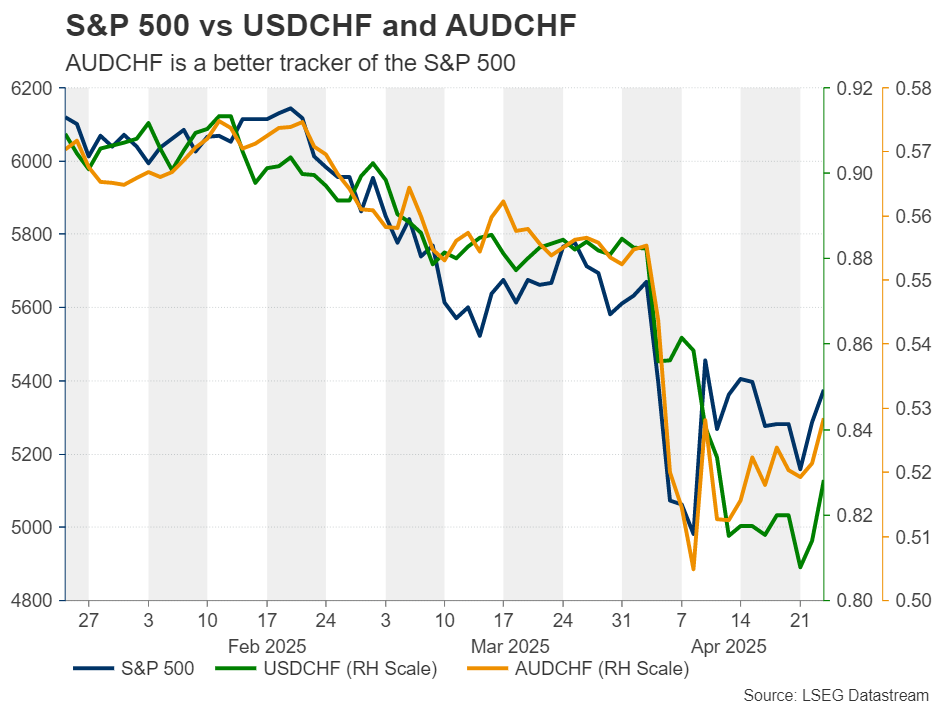
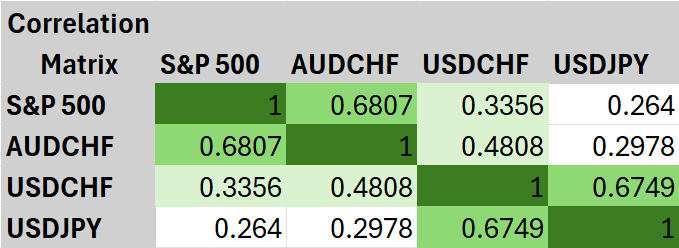
Aussie/franc has the strongest correlation with the S&P 500.


Markets in the mercy of Trump’s tariff rhetoric
Since Donald Trump entered the White House, market participants have been keeping their gaze locked on his remarks and policies, especially when it comes to tariffs and trade.
On April 2, the so-called “Liberation Day”, he announced tariffs on all of the US’s trading partners, and since then, he has been playing a back-and-forth game, adopting aggressive rhetoric on one day, and proceeding with delays or expressing willingness to negotiate on the other.
His chaotic strategy has been well reflected in the markets, with risk-linked assets, like equities, tumbling when the outlook becomes blinker, and rebounding when Trump is softening his stance. The opposite is true for safe havens, like gold, which amidst this turbulence hit a record high of around $3,500 on April 22.
How has the forex market been behaving?
Things are a bit more complicated in this market, as currency pairs consist of two currencies and each of them has their own drivers. The most profound reaction in the current environment is the tumbling of the US dollar but given that the world’s reserve currency has been on the back foot nearly against all its major counterparts, it is very hard to grasp sentiment swings by observing a dollar pair.
Even if someone choses the dollar against the safe-haven Swiss franc, which saw strong gains when the markets entered panic mode, the correlation of dollar/franc with the S&P 500 is not as strong as the correlation of aussie/franc with the Wall Street index.
Is Aussie/Franc the best tariff proxy?
But why is an FX pair that does not include the US currency so strongly correlated with the US stock market? This may have to do with the fact that in Trump’s main enemy when it comes to tariffs is China; and China is the main trading partner of Australia. So, when US-Sino tensions escalate, the aussie slides, while it gains when hopes of a deal between the world’s two largest economies arise.
What about Aussie/Yen?
The yen has also worn its safe-haven suit in this environment, but its responses where less aggressive compared to the Swiss franc. Perhaps investors did not show the same preference for the yen as the tariff-related turmoil and economic concerns prompted market participants to scale back their BoJ rate hike bets. From assigning an 80% chance of a 25bps hike in June, they are not seeing a 50% probability of a hike by the end of the year.
Aussie/Franc has the strongest correlation with the S&P 500
Concluding, the best proxy for Trump’s tariff chaos in the FX arena is aussie/franc and the table below is confirming the argument as it has a stronger correlation with the S&P 500 than other candidates.
Despite the recovery, the outlook remains gloomy
From a technical standpoint, aussie/franc entered a recovery mode after hitting a record low of 0.5000. Although the pair is getting closer to the key resistance (prior support) area of 0.5335/60, it is still trading well below the downtrend line drawn from the high of July 11. This suggests that the bears may feel confident to jump back into the action at any time. If they do so from below 0.5335, they may initially aim for the low of April 21, the break of which could allow for declines and another test near the round number of 0.5000.
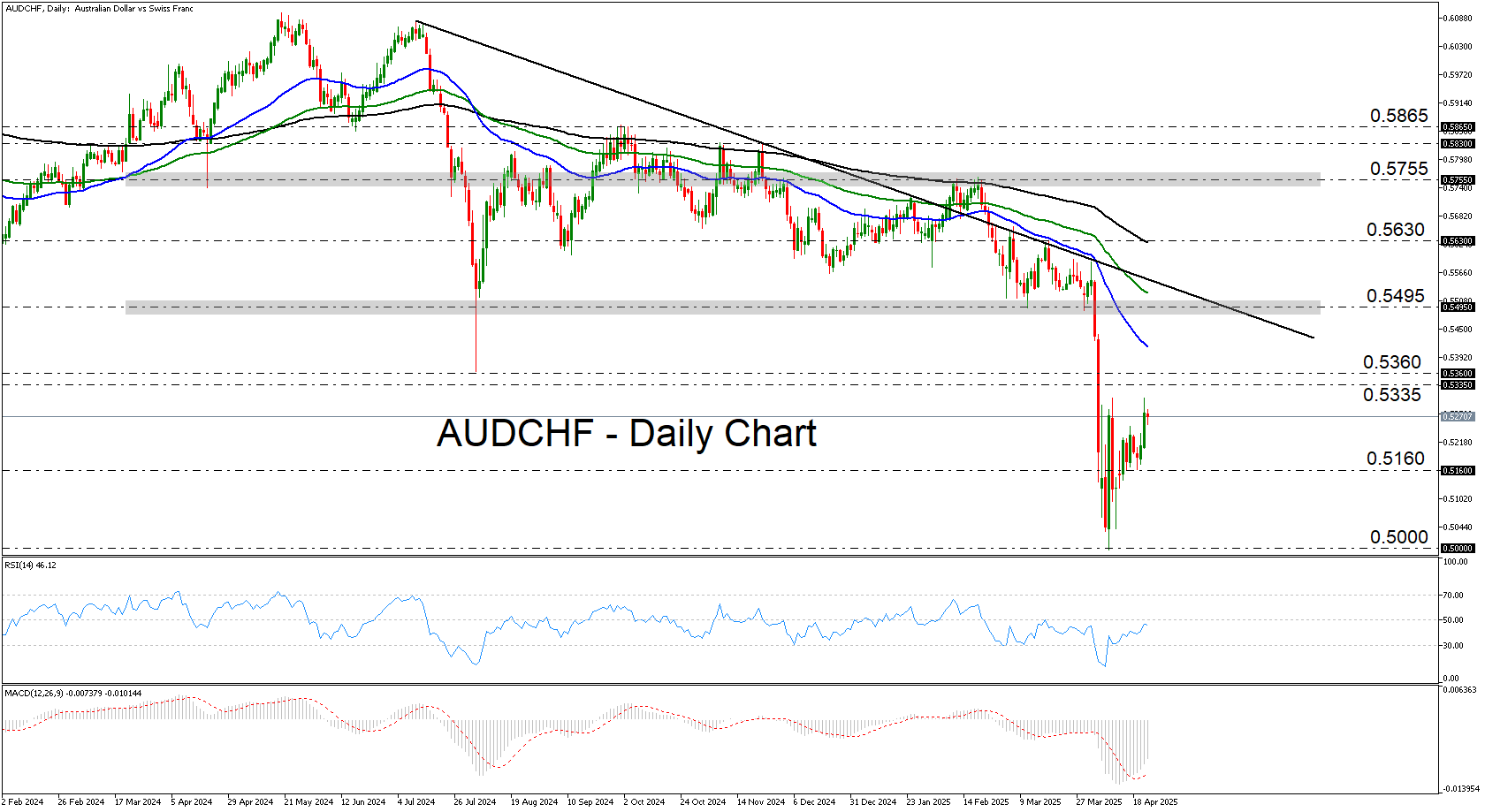
On the upside, a move back above 0.5495 would switch the outlook neutral, while the move that could signal the beginning of a bullish trend may be a break above 0.5755.
Author
Charalampos joined the XM Investment Research department in August 2022 as a senior investment analyst.