Which countries have the most Gold?
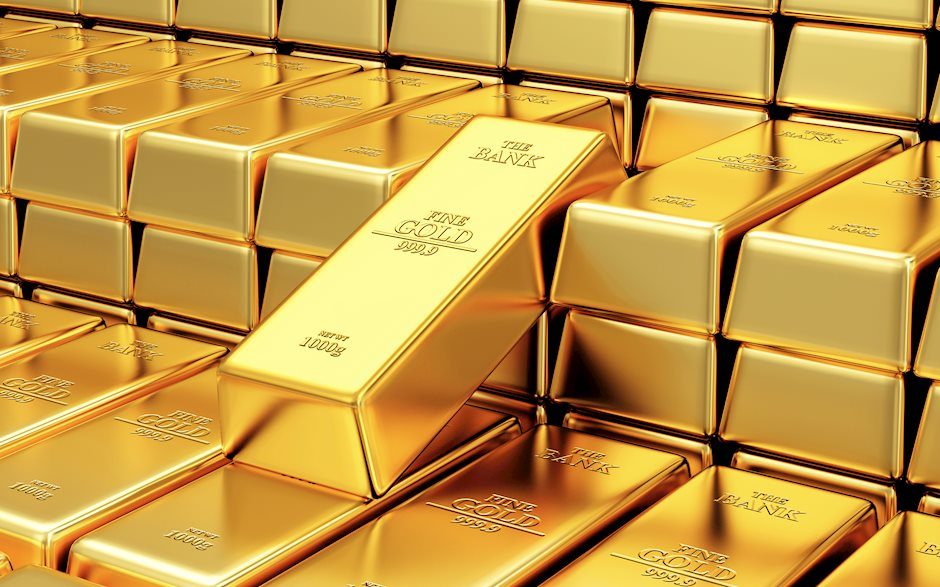

Central banks around the world have aggressively added gold to their reserves over the last several years.
In 2022, central bank gold buying came in at 1,136 tons. It was the highest level of net purchases on record dating back to 1950, including since the suspension of dollar convertibility into gold in 1971. It was the 13th straight year of net central bank gold purchases.
Gold buying continued through 2023, and based on preliminary figures, the World Gold Council said it’s “all but certain that central banks are on course for another colossal year of buying,” after a record-setting 2022.
The strength of buying has, to some degree, exceeded our expectations. While we were confident that central banks would remain net purchasers in 2023, we thought it unlikely that it would match last year’s record buying volume. Should buying continue to be strong in Q4, the full-year total could get closer than we anticipated. Nevertheless, the historically high level of buying in Q4 2022 may be difficult to top.
According to the World Gold Council, two main drivers motivate central bank gold buying — its performance during times of crisis and its role as a long-term store of value.
It’s hardly surprising then that in a year scarred by geopolitical uncertainty and rampant inflation, central banks opted to continue adding gold to their coffers and at an accelerated pace.
National Bank of Poland Governor Adam Glapiński summed up the reason many central banks hold gold.
Gold is the ‘most reserve’ of reserve assets: it diversifies the geopolitical risk and is a kind of anchor of trust, especially in times of tension and crises.
He called holding gold a matter of financial security and stability.
Gold will retain its value even when someone cuts off the power to the global financial system, destroying traditional assets based on electronic accounting records. Of course, we do not assume that this will happen. But as the saying goes – forewarned is always insured. And the central bank is required to be prepared for even the most unfavorable circumstances. That is why we see a special place for gold in our foreign exchange management process.
Through November of 2023, the following central banks had added the most gold to their reserves, according to data from the World Gold Council.
- China (78 tons)
- Poland (56.6 tons)
- Turkey (39.2 tons)
- Uzbekistan (6.5 tons)
- Czech Republic (5.5 tons)
The only significant seller was Kazakhstan.
Here are the top 20 gold gold-holding countries in the world based on the most recent data from the World Gold Council.
Two interesting things to note. First, Poland entered the top 20 for the first time. Second, nearly every country say gold increase as a percent of total reserves thanks to the price going up in nearly every global currency,
- The United States — 8,133.5 tons — 69.6% of total reserves
- Germany — 3,352.6 tons –68.7% of total reserves
- Italy — 2,451.8 tons — 65.5% of total reserves
- France — 2,436.9 tons — 67.1% of total reserves
- Russia — 2,332.7 tons — 25.7% of total reserves
- China — 2,226.4 tons — 4.3% of total reserves
- Switzerland — 1,040.0 tons — 8.4% of total reserves
- Japan — 846.0 tons — 4.4% of total reserves
- India — 803.6 tons — 8.6% of total reserves
- The Netherlands — 612.5 tons — 57.9% of total reserves
- Turkey — 522.5 tons — 30.8% of total reserves
- Taiwan — 422.4 tons — 4.7 % of total reserves
- Portugal — 382.6 tons — 72.9% of total reserves
- Uzbekistan — 362 tons — 72.1% of total reserves
- Poland – 358.7 tons – 12.6% of total reserves
- Saudi Arabia — 323.1 tons — 4.7% of total reserves
- The United Kingdom — 310.3 tons — 11.6% of total reserves
- Kazakhstan – 304.3 tons – 58.5% of total reserves
- Lebanon — 286.8 tons — 53.9 percent of total reserves
- Spain — 281.6 tons — 18.2% of total reserves
The International Monetary Fund (IMF) holds 2,814.0 tons of gold. It would rank third in the world if it were a country. The European Central Bank holds 506.5 tons of gold, ranking it 13th among countries.
Venezuela holds the largest percentage of its total reserves in gold at 84.5%.
To receive free commentary and analysis on the gold and silver markets, click here to be added to the Money Metals news service.
Author
Mike Maharrey
Money Metals Exchange
Mike Maharrey is a journalist and market analyst for MoneyMetals.com with over a decade of experience in precious metals. He holds a BS in accounting from the University of Kentucky and a BA in journalism from the University of South Florida.

















