Venezuela to have 100% digital monetary system

There has been a lot of news floating around during 2020. Many stories took premium spotlight while others simply faded into the background, even though they might be just as important. 2020 was filled with health and political developments from COVID-19 invading the world, to the U.S. Presidential Elections which are still playing a role in today’s markets.
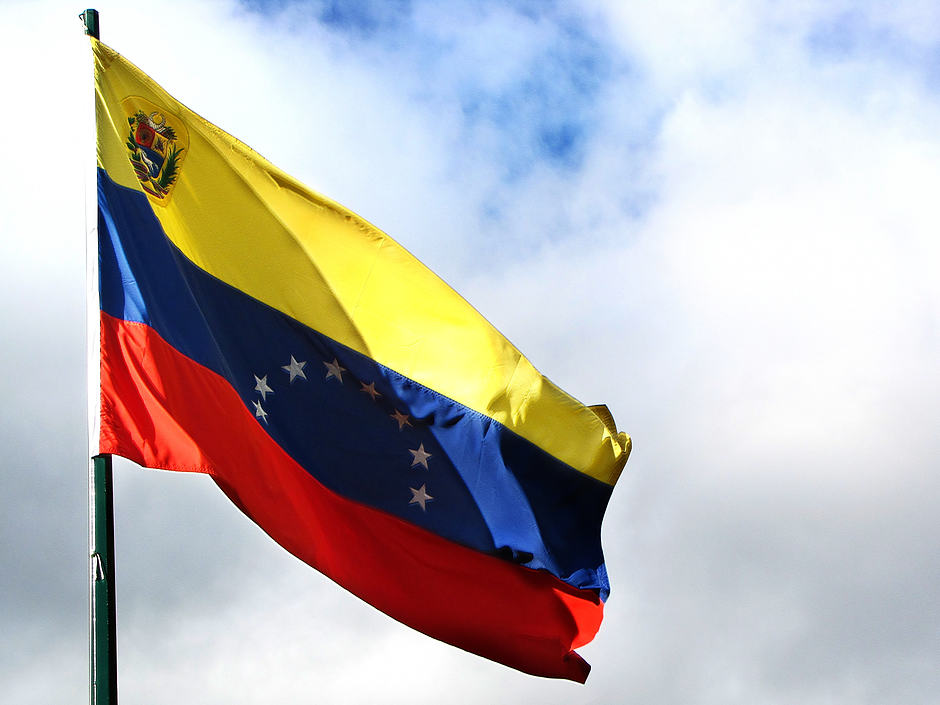
However, one story that didn’t get a lot of attention was how fast and where digital currencies would be rolled out first. There was speculation that China would be the first major economy to distribute a digital currency, however, we were all surprised when Venezuela, yes Venezuela, announced that it would be making the jump to a ‘fully digital’ economy.
President Nicolas Maduro had said in a televised address “They have a war against our physical currency. We are moving this year to a more profound digital economy, in expansion. I’ve set the goal of an economy that’s 100% digital.” He explained that this would make all physical money disappear eventually.
To say that the current economic situation in Venezuela is a disaster would be putting it mildly. Venezuela’s currency has lost 99.999% of its value during three years of hyperinflation, forcing the country to issue higher-denomination notes which however not only become useless in record time, but the mere cost to print them, quickly surpasses their nominal value.
The largest note now in circulation, 50,000 bolivars, is worth about $0.04. The government has prudently delayed plans to issue a 100,000 bolivar bill, which would currently be worth less than $0.10. This is a case study waiting to happen if you ask me.
What’s even more disturbing is the fact that 18.6% of all commercial transactions are in dollars, while 77.3% are carried out in bolivars with debit cards. Only 3.4% are paid with bolivar notes.
However, all of this isn’t exactly new. Just two years ago, the country launched Petro, supported by its Euro-listed Cryptocurrency and oil, gas, gold and diamond reserves. To facilitate the entry of the digital currency, the country began demanding Petro in the form of payment in the country’s oil-related transactions, which turned away some buyers.
To demonstrate the size of the stakes on the ‘new economy’, Venezuela launched a state-owned Cryptocurrency brokerage called the “Venezuelan Exchange” (VEX). Another policy to encourage the creation of Bitcoin mining farms in the country was, in September, another attempt to circumvent the Superintendency (Suncrip) for US policies, crypto and related activities.
As Bloomberg reports, some banks have had technical meetings with Venezuela’s central bank in an attempt to solve the problem amid high skepticism and caution due to U.S. sanctions.
But Maduro vowed to create “payment formats” allowing transactions using savings and checking accounts in U.S. dollars, which is especially bizarre since Venezuela has been technically cut off from SWIFT and so Caracas may have no choice but to become the world's first fully digital monetary regime. It seems that the saying is true “necessity is the mother of creation.”
Central Banks around the world will be looking at Venezuela extremely closely. They’d want to see how this experiment is going as the country becomes the world’s first fully digital economy. However, with the introduction of the ISO 20022, digital currencies are coming to every country in the next 12 to 24 months.
Author
Alexander Douedari
Independent Analyst
Alexander Douedari is an Award Winning Hedge Fund Manager and Selfmade 7-Figure Trader. Now Mentor for Students all around the world.